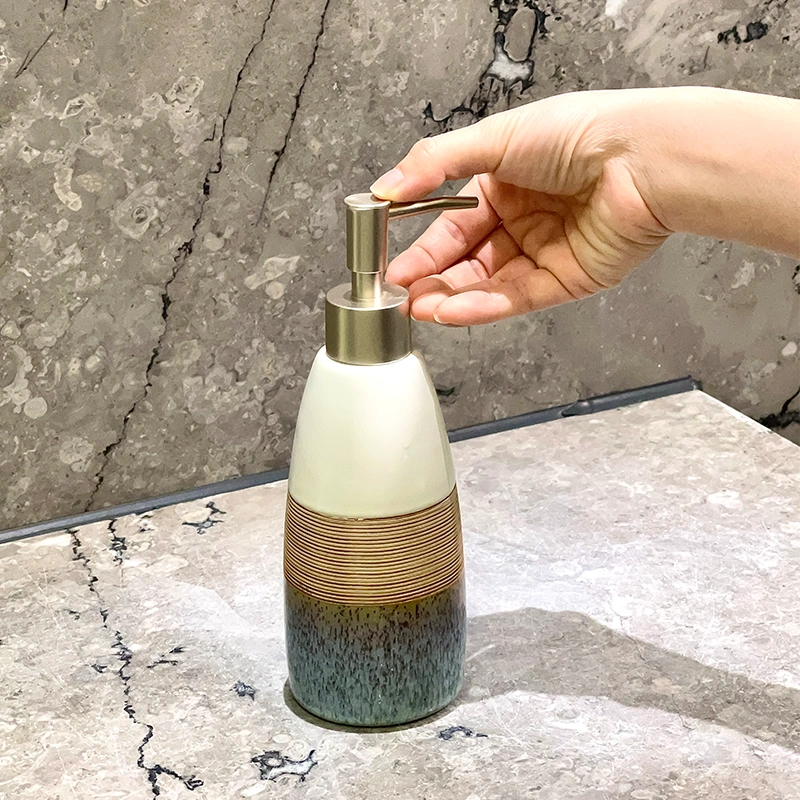
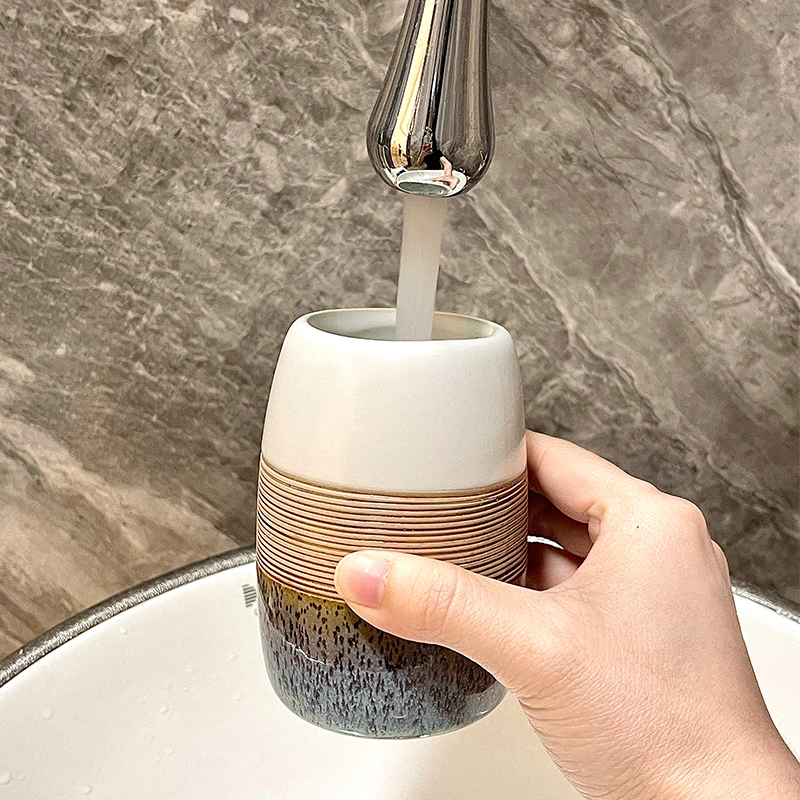
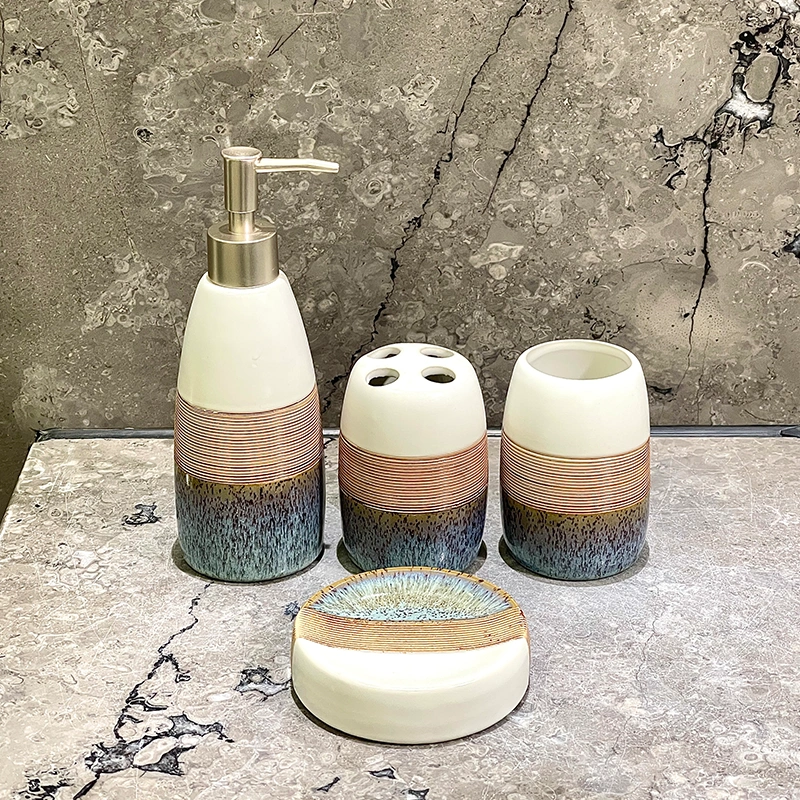
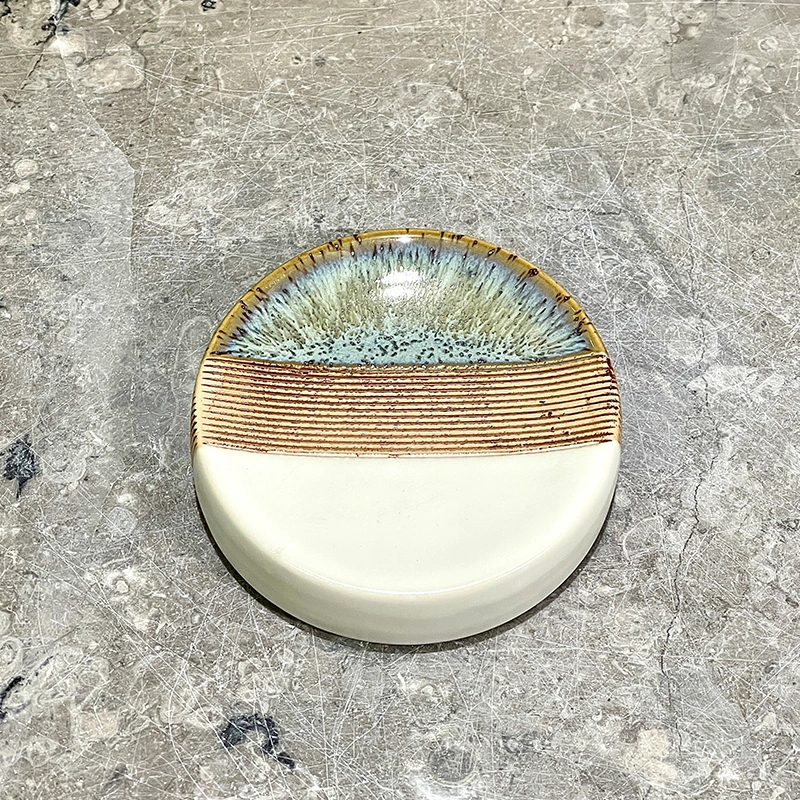
A successful bathroom accessory design is not defined by appearance alone. Shape, size, ergonomics, drainage, manufacturing feasibility, and packaging all determine how a ceramic bathroom accessory performs in real-life use. For importers and private-label brands, good design reduces complaints, improves customer satisfaction, and increases long-term product value.
Yigejia Ceramics is a trusted ceramic bathroom accessories manufacturer. With over 20 years of ceramic manufacturing experience, advanced slip casting, roller forming, high-pressure casting, and automated kiln production lines, we specialize in OEM and ODM ceramic bathroom accessories for customers. Our showroom features thousands of designs, helping global brands create competitive bathroom collections.
The Business & Commercial Value of Superior Design
Why Good Bathroom Accessory Design Creates Better Business Value
Many buyers believe bathroom accessories are relatively simple products.
In reality, experienced manufacturers understand that successful bathroom accessory design directly affects every stage of the product lifecycle—from mold development and production efficiency to transportation, retail presentation, and customer satisfaction.
A well-designed ceramic bathroom accessory offers advantages far beyond aesthetics.
.webp)
.webp)
.webp)
Pros and Cons of Investing in Better Bathroom Accessory Design
| Pros | Cons |
|---|---|
| Enhances user experience | Higher initial design and development costs |
| Strengthens brand identity | Longer product development cycle |
| Improves retail competitiveness | More prototype revisions may be required |
| Reduces customer complaints | Complex designs may increase tooling costs |
| Supports premium pricing | Requires experienced manufacturing partners |
| Improves production consistency | Custom projects need additional testing |
For most OEM and private-label brands, the long-term commercial benefits significantly outweigh the additional development investment.
Designing Bathroom Accessories for Different Market Segments
Different buyers have different priorities.
An effective bathroom accessory design strategy should align with the intended customer group.
Budget Market
Focus on:
- Simple shapes
- Stable production
- Competitive pricing
- Efficient packaging
Mid-range Market
Focus on:
- Modern aesthetics
- Coordinated collections
- Durable finishes
- Strong retail presentation
Premium Market
Focus on:
- Exclusive shapes
- Customized glazes
- High-end packaging
- Distinctive branding
- Luxury user experience
Understanding these market differences helps brands develop products with stronger commercial potential.
What Makes an Excellent Bathroom Accessory Design?
An outstanding bathroom accessory design should answer one simple question:
Does this product make the user’s daily routine easier while enhancing the bathroom’s appearance?
The best ceramic accessories successfully combine aesthetics with functionality.
Professional designers usually evaluate products from several perspectives:
- Ergonomic comfort
- Visual proportion
- Product stability
- Ease of cleaning
- Water drainage
- Material compatibility
- Manufacturing feasibility
- Packaging efficiency
- Cost control
- Brand positioning
Rather than optimizing one factor independently, successful manufacturers balance all of these elements together.
For example, enlarging a soap dispenser increases its capacity but also raises production costs, shipping weight, and countertop space requirements. Similarly, reducing wall thickness may lower material costs while increasing the risk of breakage during firing or transportation.
Excellent bathroom accessory design is therefore the result of careful engineering—not simply artistic creativity.
Core Technical Factors: Shape, Ergonomics & Precision Engineering
How Shape Influences Bathroom Accessory Design
Shape is one of the first things consumers notice, but in professional bathroom accessory design, it serves a much greater purpose than aesthetics. Shape affects ergonomics, stability, cleaning efficiency, packaging, manufacturing complexity, and even shipping costs.
When developing ceramic bathroom accessories, experienced manufacturers evaluate how each shape performs throughout the entire product lifecycle—from mold production to the customer’s daily use.
Round and Cylindrical Designs
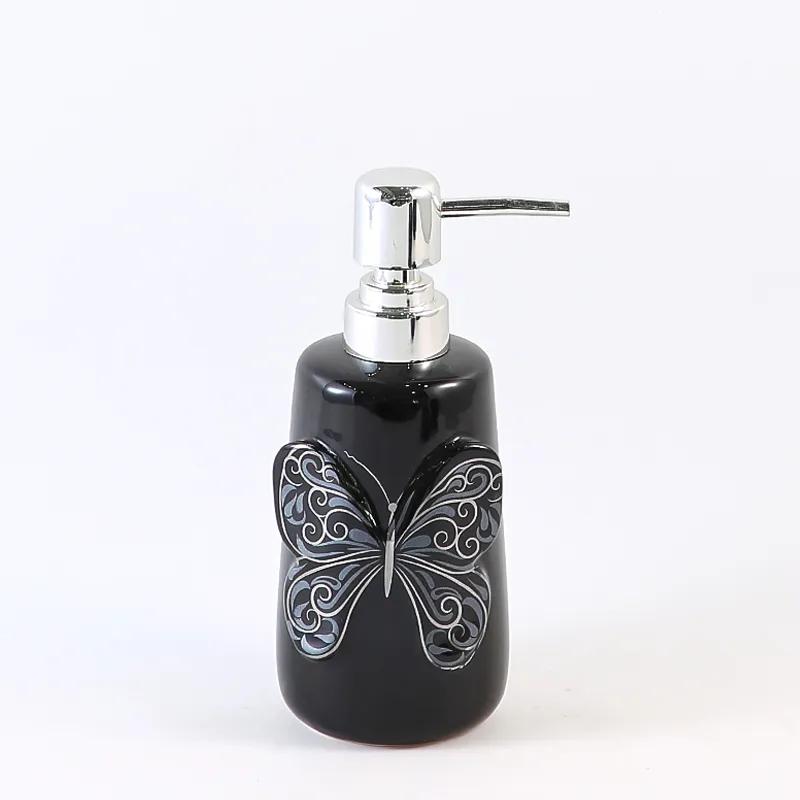
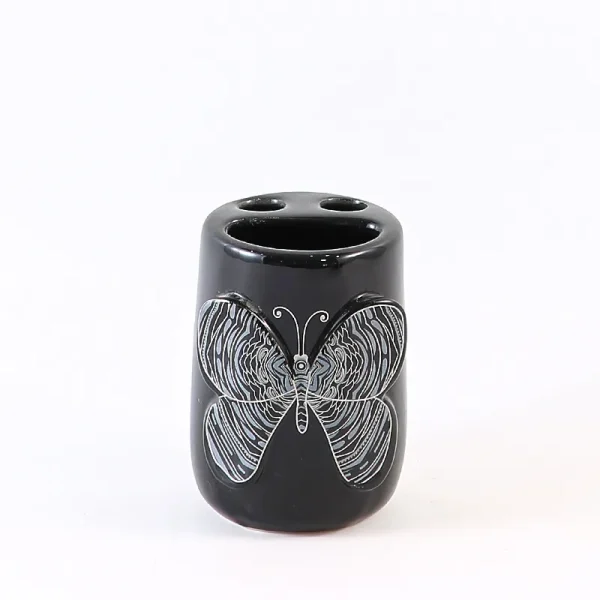
Round and cylindrical shapes remain among the most popular choices because they offer an excellent balance between beauty and practicality.
Typical applications include:
- Soap dispensers
- Toothbrush holders
- Tumblers
- Storage jars
Advantages
- Comfortable to hold
- Timeless appearance
- Easy to clean
- Efficient ceramic molding
- Lower production risk
- Suitable for modern and Scandinavian interiors
Because there are fewer sharp corners, glaze distribution is generally more uniform during firing, helping improve product consistency.
Square and Geometric Designs
Square and rectangular designs create a stronger architectural appearance and are widely used in luxury hotels, commercial projects, and minimalist interiors.
Common features include:
- Straight lines
- Sharp edges
- Modern proportions
- Structured appearance
These products often complement:
- Matte finishes
- Neutral colors
- Brushed metal pumps
- Contemporary bathroom spaces
However, designers should carefully consider corner radii and wall thickness because sharp transitions may increase manufacturing complexity and create areas that collect soap residue.
Organic Shapes
Organic shapes have become increasingly popular as consumers seek products that feel handmade and unique.
Characteristics include:
- Soft curves
- Natural silhouettes
- Irregular outlines
- Artisan-inspired aesthetics
They pair especially well with:
- Reactive glazes
- Hand-brushed finishes
- Earth-tone colors
- Stone-inspired textures
For retail brands, organic bathroom accessory design helps products stand out on crowded shelves and supports premium positioning.
The challenge is ensuring these artistic forms remain practical, stable, and easy to manufacture consistently.
Expert Insight: Attractive Design Should Never Sacrifice Function
One of the most common mistakes in bathroom accessory design is prioritizing appearance over usability.
A highly decorative shape may look impressive in product photography, but if it:
- Tips over easily
- Is difficult to refill
- Collects water
- Is uncomfortable to hold
- Requires expensive packaging
then its commercial value quickly decreases.
Professional ceramic manufacturers therefore evaluate every design from both an engineering and user perspective before moving into mass production.
Why Size and Ergonomics Matter
Many buyers focus on dimensions only when checking product specifications.
In reality, size directly affects how customers interact with ceramic bathroom accessories every day.
Proper bathroom accessory design considers both product proportions and human behavior.
For example, a toothbrush holder should comfortably accommodate modern electric toothbrushes rather than only traditional manual brushes.
Likewise, a soap dispenser should provide sufficient capacity without becoming oversized for a standard bathroom vanity.
Finding the Right Balance
Oversized accessories may create several problems:
- Occupy valuable countertop space
- Increase shipping costs
- Feel bulky during daily use
- Reduce visual balance
Products that are too small may create different issues:
- Limited storage capacity
- Reduced stability
- Lower perceived value
- Poor user experience
Professional designers typically begin by understanding the intended application before determining the final dimensions.
Different Markets Require Different Sizes
| Market | Preferred Product Characteristics |
|---|---|
| Apartments | Compact, space-saving designs |
| Luxury Homes | Larger statement pieces |
| Hotels | Durable, standardized dimensions |
| Retail Sets | Balanced proportions across the collection |
| Boutique Hotels | Decorative yet functional accessories |
Designing products specifically for the target market helps improve customer satisfaction and reduces unnecessary redesigns.
Product-Specific Design Criteria:
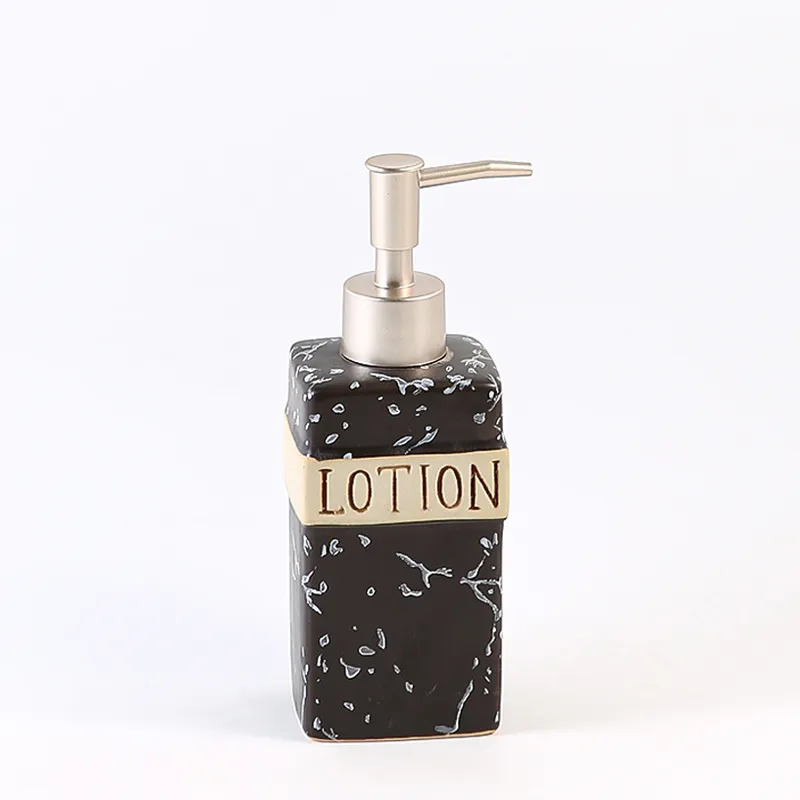
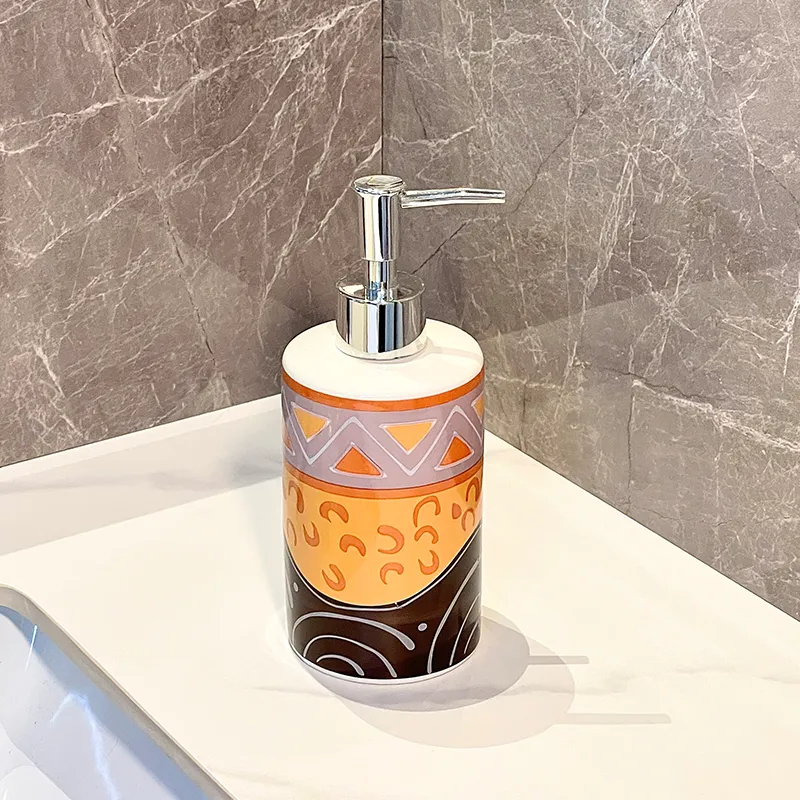
Soap Dispensers
Among all ceramic bathroom accessories, the soap dispenser is often the centerpiece of a collection.
A successful bathroom accessory design for soap dispensers must combine appearance, durability, and everyday usability.
1. Stable Base Design
Every pump press applies downward force.
If the dispenser has:
- a narrow base,
- excessive height, or
- uneven weight distribution,
it may shift or tip during use.
Designers therefore optimize:
- Base diameter
- Center of gravity
- Ceramic thickness
- Product weight
The goal is stability without adding unnecessary material that increases transportation costs.
2. Pump Compatibility
Although customers often notice the ceramic body first, the pump determines much of the user experience.
Manufacturers should evaluate:
- Pump material
- Thread compatibility
- Corrosion resistance
- Dispensing consistency
- Pump height
- Nozzle direction
- Refill opening diameter
A premium ceramic body paired with a low-quality pump can quickly damage customer perception of the entire product.
3. Capacity Selection
Capacity should match actual consumer usage.
Typical ranges include:
- 250–300 ml: Compact residential use
- 350–400 ml: Standard household bathrooms
- 450 ml+: Hotels and commercial applications
Choosing the appropriate capacity helps balance convenience with countertop space.
-

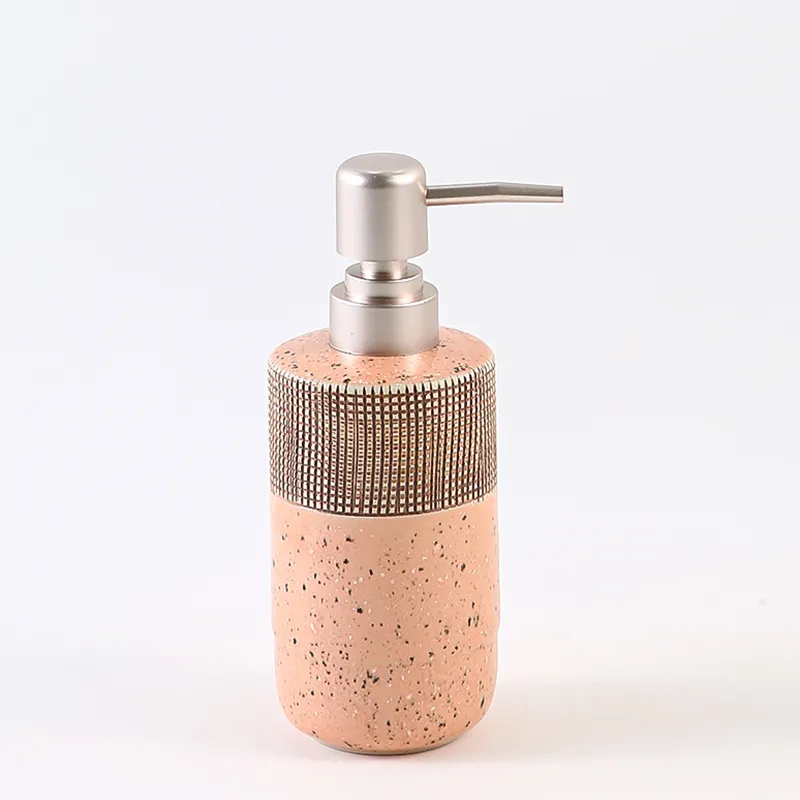
Wholesale Soap Dispensers Manufacturer, Blush Pink Speckled Grid Ceramic Lotion Pump
-
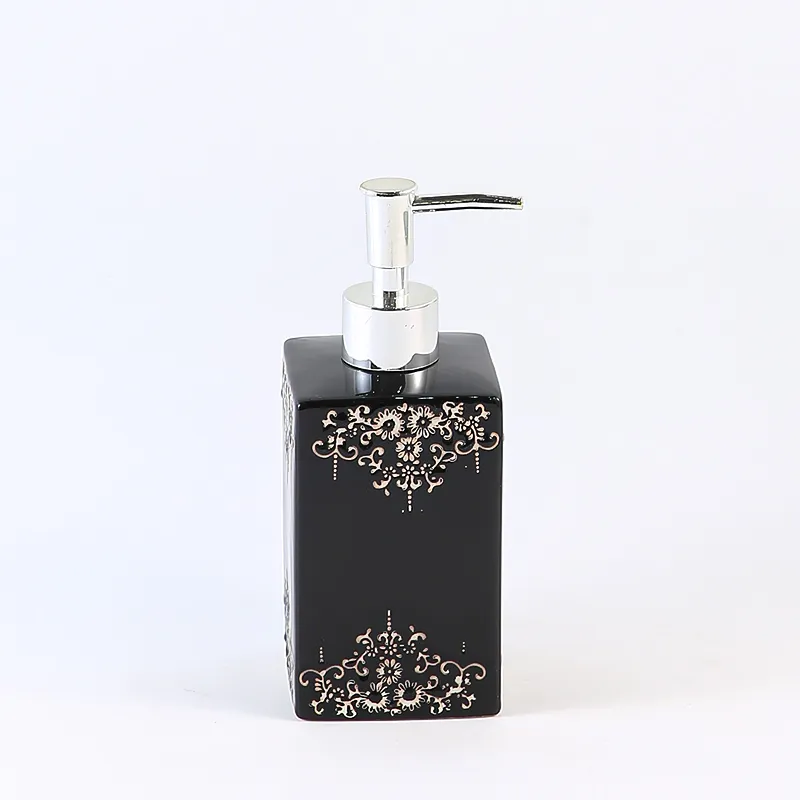
Wholesale Luxury Ceramic Soap Dispenser Supplier Bathroom Lotion Dispenser
-
Wholesale Black Soap Dispenser Ceramics, Gold Pump Bottle, Bathroom Accessory Supplier
-
Vintage Ceramic Soap Dispenser Wholesale, Boho Tribal Pattern Bathroom Lotion Pump, Colorful Vanity Accessory
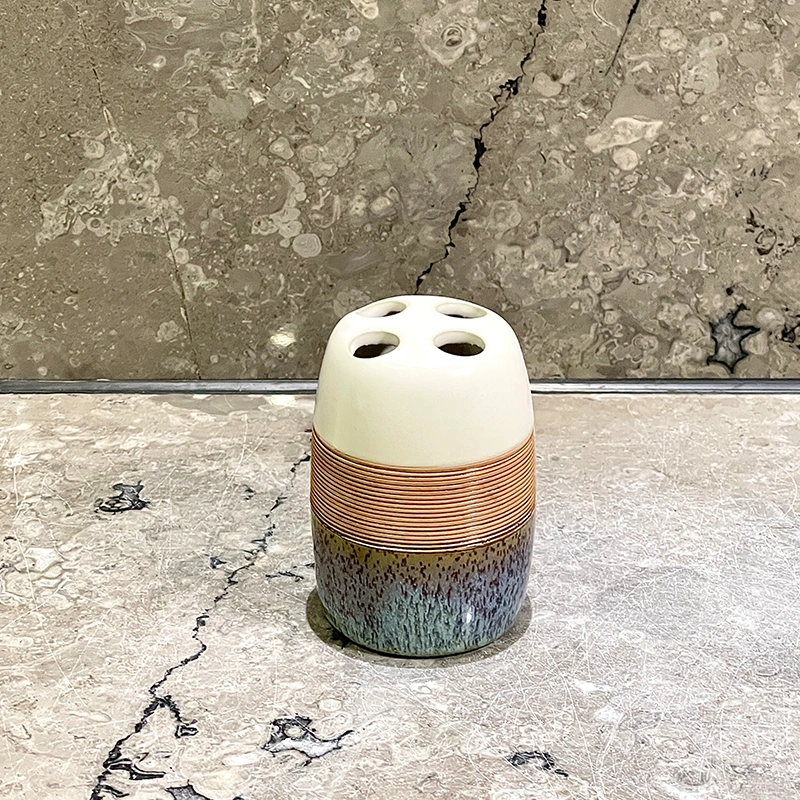
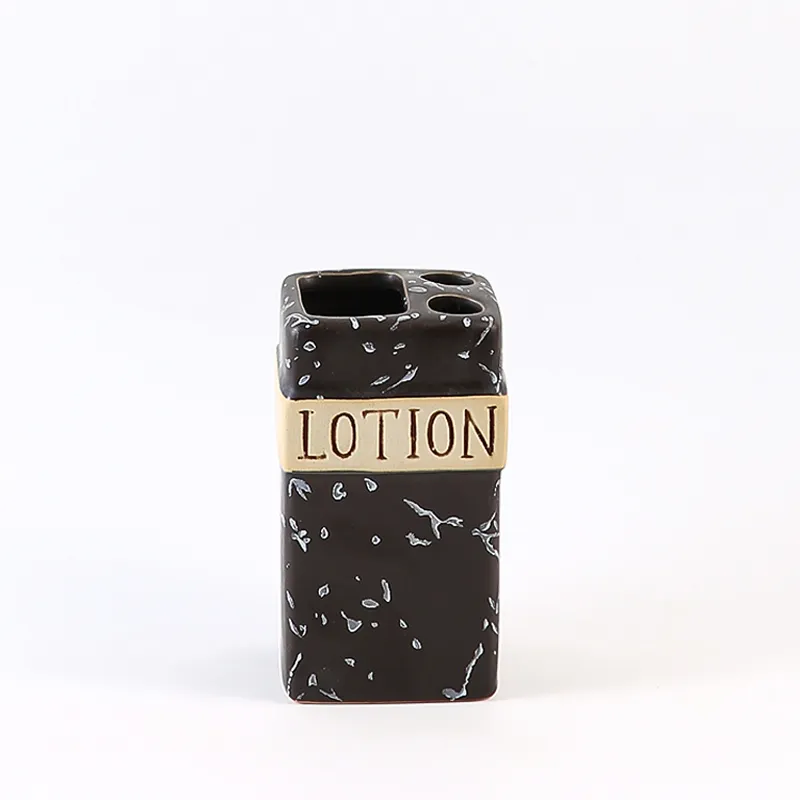
Toothbrush Holder
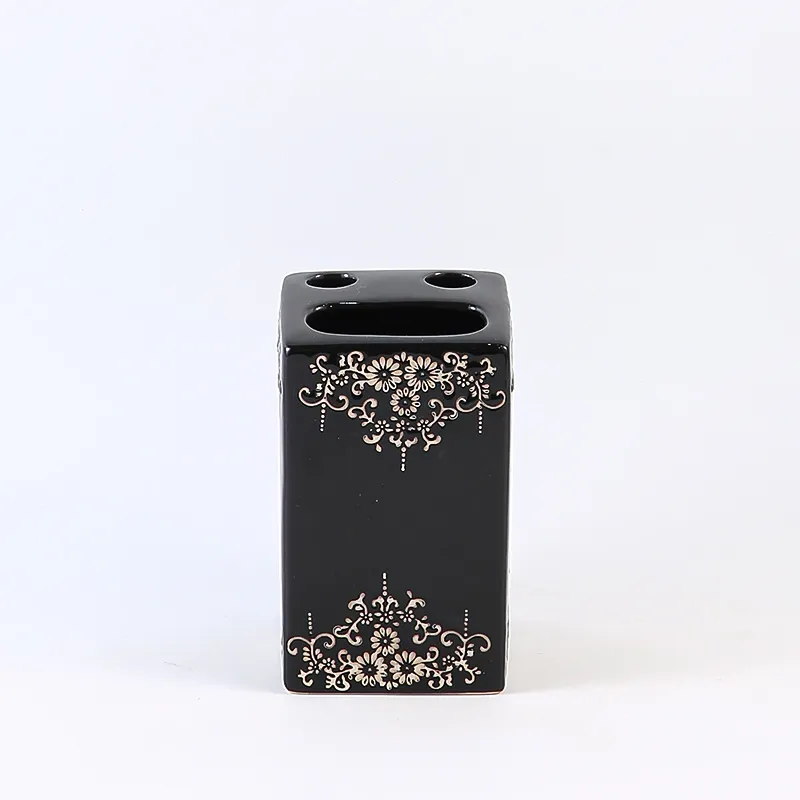
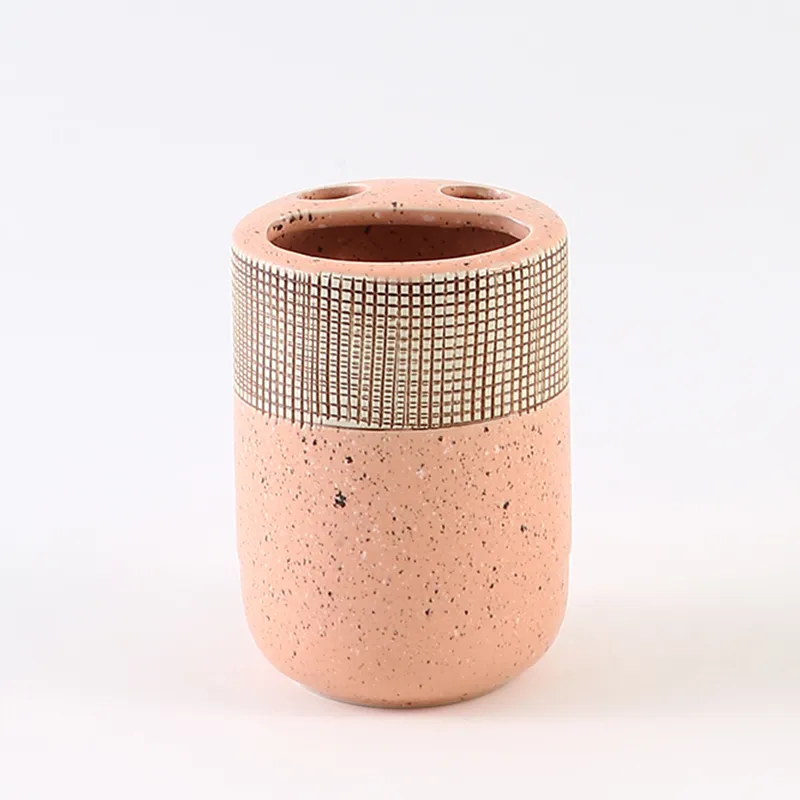
A toothbrush holder appears simple, yet poor design often leads to cleaning difficulties and reduced hygiene.
Good bathroom accessory design considers:
- Number of toothbrushes
- Opening diameter
- Internal spacing
- Water drainage
- Ease of cleaning
- Stability
For example, openings that are too narrow may not fit electric toothbrushes, while excessively deep compartments make cleaning more difficult.
Rounded interior corners and smooth glazed surfaces can further improve hygiene by reducing residue buildup.
-
Wholesale Luxury Ceramic Toothbrush Holder with Elegant Damask Floral Pattern
-
Wholesale Ceramic Toothbrush Holder, Blush Pink Speckled Grid Texture Vanity Organizer
-
Wholesale Ceramic Toothbrush Holder Supply, Two-Tone Reactive Glaze Toothbrush Caddy for Bathroom
-
Wholesale Black Toothbrush Holder Ceramics, Bulk Bathroom Vanity Accessory for Home Hotel
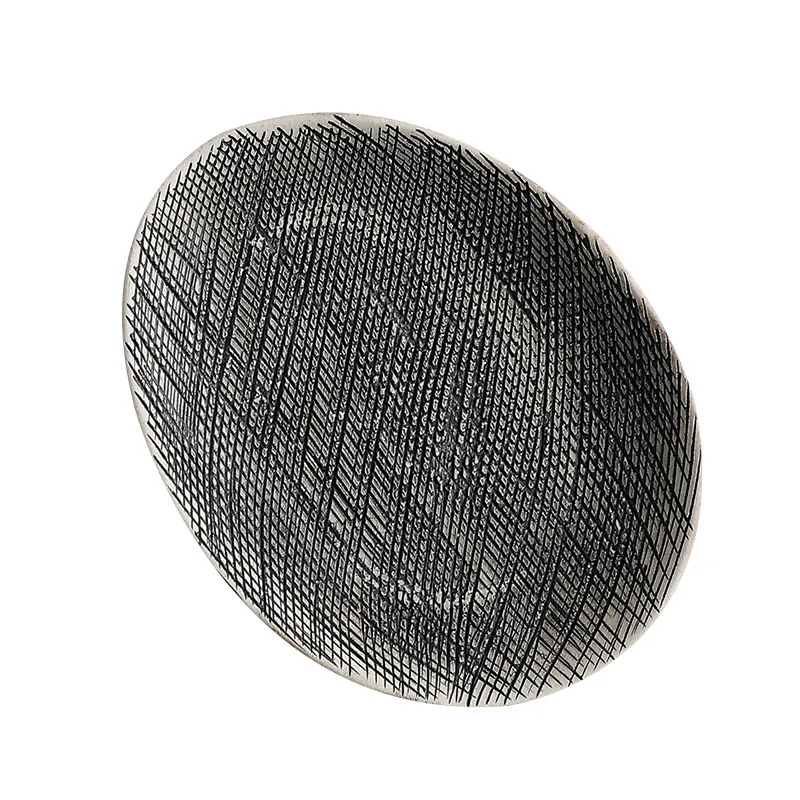
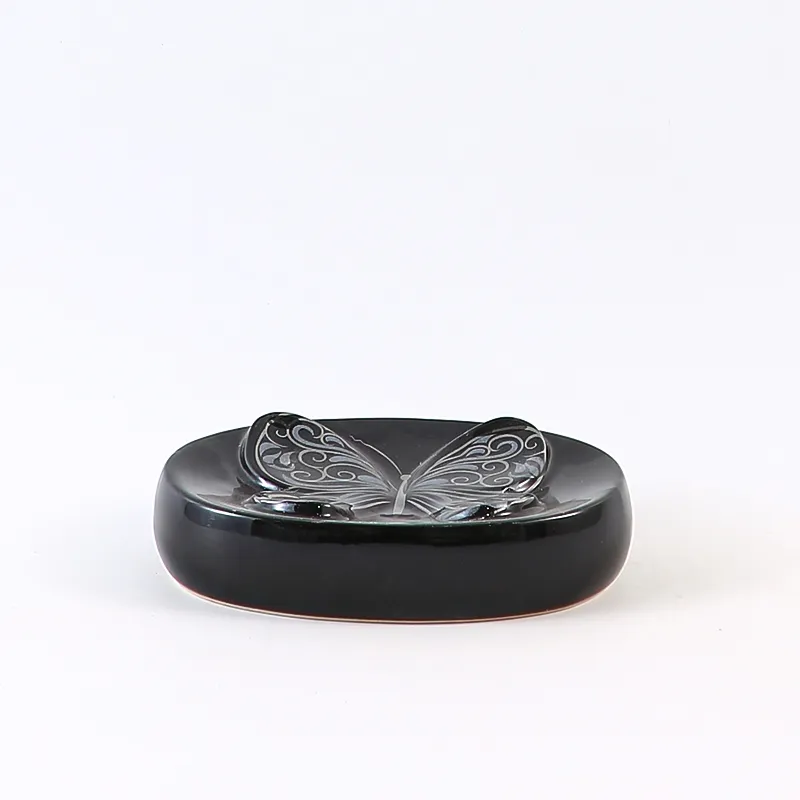
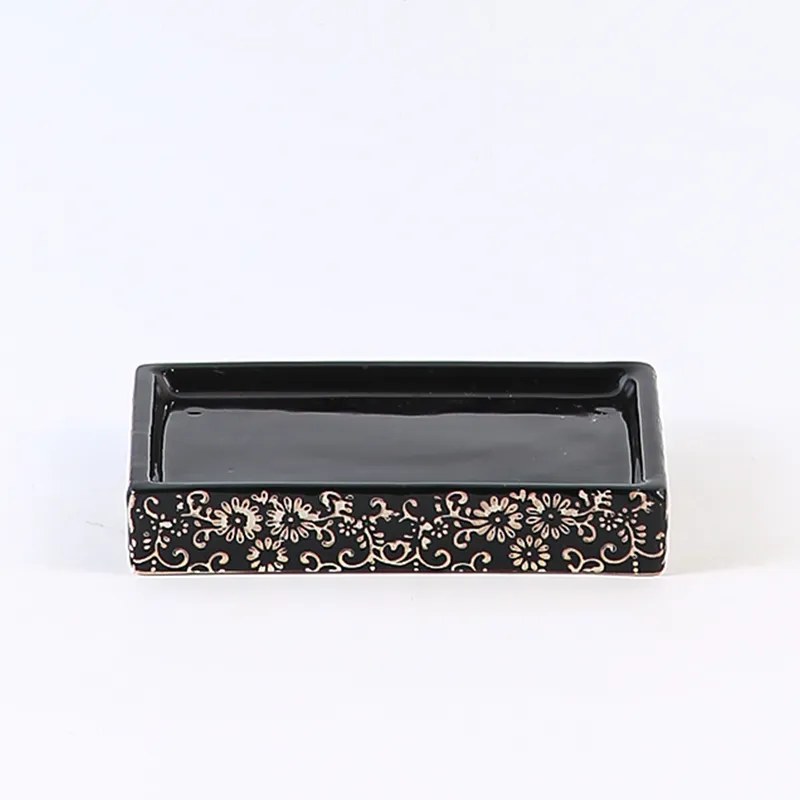
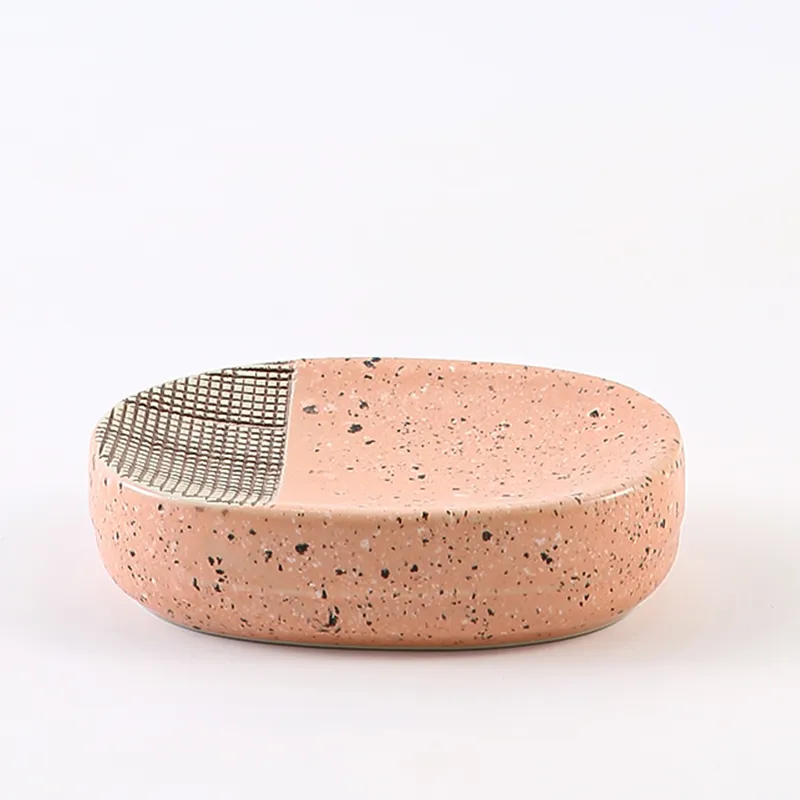
Soap Dish
Soap dishes demonstrate how subtle design decisions directly affect user experience.
Flat surfaces often trap water beneath the soap bar, leading to:
- Softened soap
- Faster product waste
- Soap residue
- Frequent cleaning
A better bathroom accessory design incorporates water management from the beginning.
Effective solutions include:
- Raised ridges
- Drainage grooves
- Slightly sloped surfaces
- Elevated platforms
- Drain holes where appropriate
These simple improvements extend soap life while keeping bathroom countertops cleaner.
-
Wholesale Soap Dishes OEM Custom Textured Oval Bathroom Vanity Accessories Tray – JY3050-D
-
Wholesale Soap Dish, Black Ceramic Holder with Silver Butterfly Design
-
Wholesale Luxury Ceramic Soap Dish Factory, OEM Bathroom Accessory Wholesale for Hotel
-
Wholesale Ceramic Soap Dish, Blush Pink Speckled Grid Texture Bathroom Soap Holder, Rustic Vanity Tray
Why Water Drainage Is Often Overlooked
Bathrooms are naturally humid environments.
Without proper drainage, moisture can accumulate around:
- Soap dishes
- Toothbrush holders
- Bathroom trays
- Cosmetic organizers
- Storage containers
Professional designers always ask one important question: Where will the water go after daily use?
This single consideration often distinguishes premium ceramic bathroom accessories from ordinary products.
Bridging Design and Mass Production
Manufacturability: Optimizing Ceramic Wall Thickness
One of the biggest mistakes buyers make is assuming that every attractive design can be manufactured efficiently.
In reality, excellent bathroom accessory design is the balance between creativity and production feasibility. A product may look stunning in a 3D rendering, but if it is difficult to mold, glaze, fire, inspect, or package, production costs and defect rates can rise dramatically.
Professional manufacturers evaluate every new design from both an aesthetic and engineering perspective.
During product development, they consider:
- Mold complexity
- Ceramic shrinkage rate
- Wall thickness consistency
- Glaze coverage
- Firing stability
- Packaging protection
- Shipping efficiency
- Mass-production consistency
For OEM and ODM projects, involving the manufacturer early in the design stage often shortens development time and reduces production risks.
Wall thickness is one of the most overlooked factors in ceramic manufacturing.
If the ceramic wall is too thin, products may become vulnerable to cracking during firing or transportation.
If it is too thick, manufacturers may encounter:
- Increased material consumption
- Higher firing energy costs
- Longer production cycles
- Heavier shipping weights
- Higher logistics expenses
Professional ceramic manufacturers optimize wall thickness to achieve the right balance between durability, appearance, and production efficiency.
This is another reason why experienced suppliers play a critical role in bathroom accessory design.
Packaging Should Be Considered During Product Design
Packaging is often treated as the final production step.
In reality, packaging should be part of the original bathroom accessory design process.
Certain product shapes require significantly more protection than others.
For example:
| Design Feature | Packaging Impact |
|---|---|
| Thin handles | Higher breakage risk |
| Long pump heads | Requires additional protection |
| Sharp corners | Increased carton damage risk |
| Irregular shapes | Lower packing efficiency |
| Heavy ceramic bases | Higher transportation costs |
By considering packaging during product development, manufacturers can reduce breakage rates, improve shipping efficiency, and lower total landed costs for importers.
This is especially important for international wholesale shipments.
Why Physical Samples Matter Before Mass Production
Digital renderings cannot fully represent how a ceramic product performs in real-world use.
A prototype allows buyers to evaluate:
- Actual size
- Weight balance
- Surface texture
- Glaze appearance
- Pump operation
- Color consistency
- Stability on countertops
- Overall user experience
For OEM and ODM projects, approving production samples before mass manufacturing helps reduce costly revisions later.
A typical product development process includes:
- Design concept
- 3D drawing
- Prototype
- Sample evaluation
- Design adjustments
- Final approval
- Mass production
This workflow improves communication between buyers and manufacturers while ensuring the finished product meets expectations.
Maximizing Orders: Sets & Sourcing Best Practices
Why Matching Bathroom Sets Increase Commercial Value
Retail customers increasingly prefer complete solutions instead of purchasing individual accessories separately.
A coordinated ceramic bathroom accessory set creates stronger visual impact while simplifying purchasing decisions.
Typical collections include:
- Soap dispenser
- Toothbrush holder
- Tumbler
- Soap dish
- Cotton jar
- Vanity tray
Benefits for wholesalers and retailers include:
Advantages
- Higher average order value
- Easier merchandising
- Stronger brand identity
- Better gift appeal
- Improved cross-selling opportunities
- Simplified inventory planning
For hospitality projects, coordinated collections also help maintain consistent interior aesthetics across multiple rooms.
How Buyers Can Evaluate a New Bathroom Accessory Design
Before approving a new product, ask the following questions:
Does it look attractive?
Visual appeal remains the first factor influencing purchasing decisions.
Is it comfortable to use?
Check whether users can easily:
- Press the dispenser
- Hold the tumbler
- Remove soap
- Clean every surface
Is it stable?
Products should remain balanced during normal daily use.
Is maintenance easy?
Avoid designs that trap water, collect dust, or create difficult-to-clean corners.
Can it be manufactured consistently?
Ask the supplier whether the design has been evaluated for mold production, firing stability, glaze consistency, and packaging safety.
Professional buyers evaluate products from both a consumer and manufacturing perspective, rather than relying on appearance alone.
Future Trends in Bathroom Accessory Design
The ceramic bathroom accessories industry continues to evolve as consumer lifestyles, sustainability goals, and interior design preferences change.
Rather than following short-lived trends, leading brands are investing in bathroom accessory design that delivers lasting functionality, stronger brand identity, and better user experiences.
Here are four trends shaping the future of the industry.
1. Minimalism with Functional Innovation
Minimalist design is no longer just about clean lines and neutral colors.
Modern consumers expect products that combine simplicity with practical performance.
Popular design features include:
- Hidden drainage structures
- Fingerprint-resistant matte glazes
- Refillable soap dispensers
- Stackable storage solutions
- Compact designs for smaller bathrooms
The best bathroom accessory design removes unnecessary complexity while improving daily usability.
2. Sustainable Materials and Longer Product Life
Environmental responsibility is becoming an important purchasing factor for both consumers and commercial buyers.
According to the United Nations Environment Programme (UNEP), designing durable products that last longer helps reduce resource consumption and overall environmental impact.
For ceramic bathroom accessories, sustainability can be achieved through:
- Durable ceramic materials
- Long service life
- Refillable dispenser systems
- Recyclable packaging
- Reduced replacement frequency
Compared with disposable plastic accessories, high-quality ceramic products can provide better long-term environmental value.
3. Personalized Collections and Private Labels
Retailers increasingly seek exclusive product collections that strengthen brand identity.
Instead of selling identical products available everywhere, brands now prefer customized collections featuring:
- Exclusive colors
- Signature glaze finishes
- Custom logos
- Coordinated packaging
- Limited-edition seasonal collections
Strong bathroom accessory design enables private-label brands to differentiate themselves in highly competitive markets.
4. Smart Manufacturing Meets Creative Design
Digital technologies are improving both design development and manufacturing efficiency.
Today, experienced ceramic manufacturers combine:
- 3D modeling
- Rapid prototyping
- Precision mold production
- Automated kiln systems
- Digital quality inspection
This integration shortens development cycles while maintaining consistent product quality.
As a result, buyers benefit from faster product launches and more reliable production. Why Experienced Manufacturers Create Better Bathroom Accessory Design
Beautiful products begin long before production starts.
They begin with collaboration.
An experienced ceramic manufacturer understands how to balance:
- Market trends
- User experience
- Manufacturing feasibility
- Packaging efficiency
- Export requirements
- Long-term product consistency
Rather than simply producing drawings, professional manufacturers help buyers refine designs before mass production.
This collaborative approach reduces risk while improving commercial success.
Conclusion
Excellent bathroom accessory design is never based solely on appearance.
Successful ceramic bathroom accessories combine aesthetics, ergonomics, manufacturability, durability, and commercial value into one cohesive product.
Throughout this guide, we’ve shown that thoughtful design decisions influence every stage of a product’s lifecycle—from production efficiency and transportation safety to customer satisfaction and repeat purchases.
When evaluating ceramic bathroom accessories, buyers should consider:
- Product functionality before decoration
- Balanced proportions and dimensions
- Easy cleaning and maintenance
- Manufacturing feasibility
- Packaging and shipping protection
- Brand positioning
- Long-term market demand
For wholesalers, importers, retailers, hotel suppliers, and private-label brands, investing in better bathroom accessory design often leads to:
- Lower return rates
- Higher customer satisfaction
- Stronger product differentiation
- Better online conversion
- Increased brand value
- Long-term profitability
Ultimately, outstanding design is not about creating the most complicated product—it is about creating products that customers genuinely enjoy using every day.
Frequently Asked Questions
1. Why is bathroom accessory design important?
Because good bathroom accessory design combines aesthetics, usability, durability, and manufacturing efficiency. Well-designed products improve customer satisfaction, reduce returns, and strengthen brand value.
2. What should buyers evaluate besides appearance?
Professional buyers should review:
- Stability
- Product dimensions
- Pump quality
- Drainage performance
- Ease of cleaning
- Packaging protection
- Manufacturing consistency
Appearance is only one part of overall product quality.
3. Why is ceramic a popular material for bathroom accessories?
Ceramic offers several advantages:
- Premium appearance
- Excellent durability
- Easy-to-clean glazed surfaces
- Rich color and glaze options
- Strong OEM and ODM customization potential
These qualities make ceramic suitable for residential, hospitality, and retail markets.
4. How can manufacturers improve bathroom accessory collections?
Experienced manufacturers optimize:
- Product structure
- Wall thickness
- Mold design
- Glaze quality
- Packaging solutions
- Quality inspection
This ensures products remain attractive while being practical for large-scale production.
5. Why should buyers request production samples?
Physical samples allow buyers to evaluate:
- Size
- Weight
- Surface finish
- Color consistency
- Pump performance
- Stability
- User experience
Testing samples before mass production significantly reduces project risks.
6. Can ceramic bathroom accessories be customized?
Yes.
Professional OEM and ODM manufacturers can customize:
- Shapes
- Colors
- Glazes
- Logos
- Surface textures
- Packaging
- Complete bathroom accessory collections
7. What trends are influencing bathroom accessory design?
Current trends include:
- Minimalist styling
- Sustainable ceramic materials
- Matte and textured glazes
- Coordinated bathroom collections
- Smart manufacturing
- Personalized private-label products
8. How do I choose the right ceramic bathroom accessory manufacturer?
Look for suppliers with:
- Strong OEM/ODM capabilities
- Modern production equipment
- Consistent quality control
- Export experience
- Design support
- Stable manufacturing capacity
Choosing an experienced manufacturer reduces supply-chain risk and improves long-term business performance.
Partner with Yigejia Ceramics for Innovative Bathroom Accessory Solutions
Yigejia Ceramics has been a trusted ceramic bathroom accessories manufacturer located in Chaozhou, Guangdong—China’s Ceramic Capital.
Operates a 10,000+ m² manufacturing facility equipped with:
- Slip casting production lines
- Roller forming systems
- High-pressure molding equipment
- Automated kiln production lines
- Strict quality inspection processes
Specializing in medium- and high-temperature ceramic products, including:
- White decal porcelain
- Colored glazed ceramics
- Hand-painted and handcrafted ceramic collections
- Luxury bathroom accessory sets
- OEM and ODM bathroom accessories
Products are exported to Europe, the United States, the United Kingdom, Australia, South America, Southeast Asia, and many other international markets.
Whether you are developing a new retail collection, supplying hospitality projects, or building a private-label brand, our experienced engineering and design teams work closely with customers to transform ideas into commercially successful products.