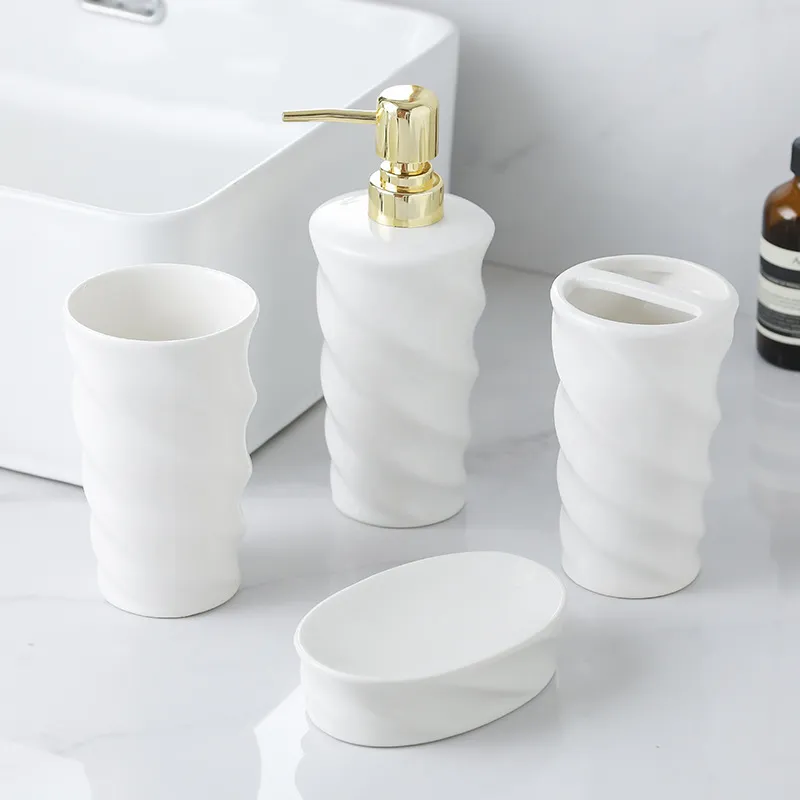
Ceramic vs. porcelain bathroom accessories is not simply a choice between a lower-cost and a premium material. Porcelain is a specialized ceramic body generally associated with higher density and lower water absorption, while ceramic provides broader flexibility in body formulations, glaze effects, colors, shapes, and price positioning. For B2B buyers, the right choice depends on product design, target market, durability requirements, cost, packaging, and OEM needs.
Yigejia Ceramics is a custom ceramic bathroom accessories factory manufacturer in Chaozhou, China, offering OEM/ODM development, multiple forming processes, automated kiln production, and customized ceramic bathroom collections for global buyers.
What Is the Difference Between Ceramic and Porcelain Bathroom Accessories?
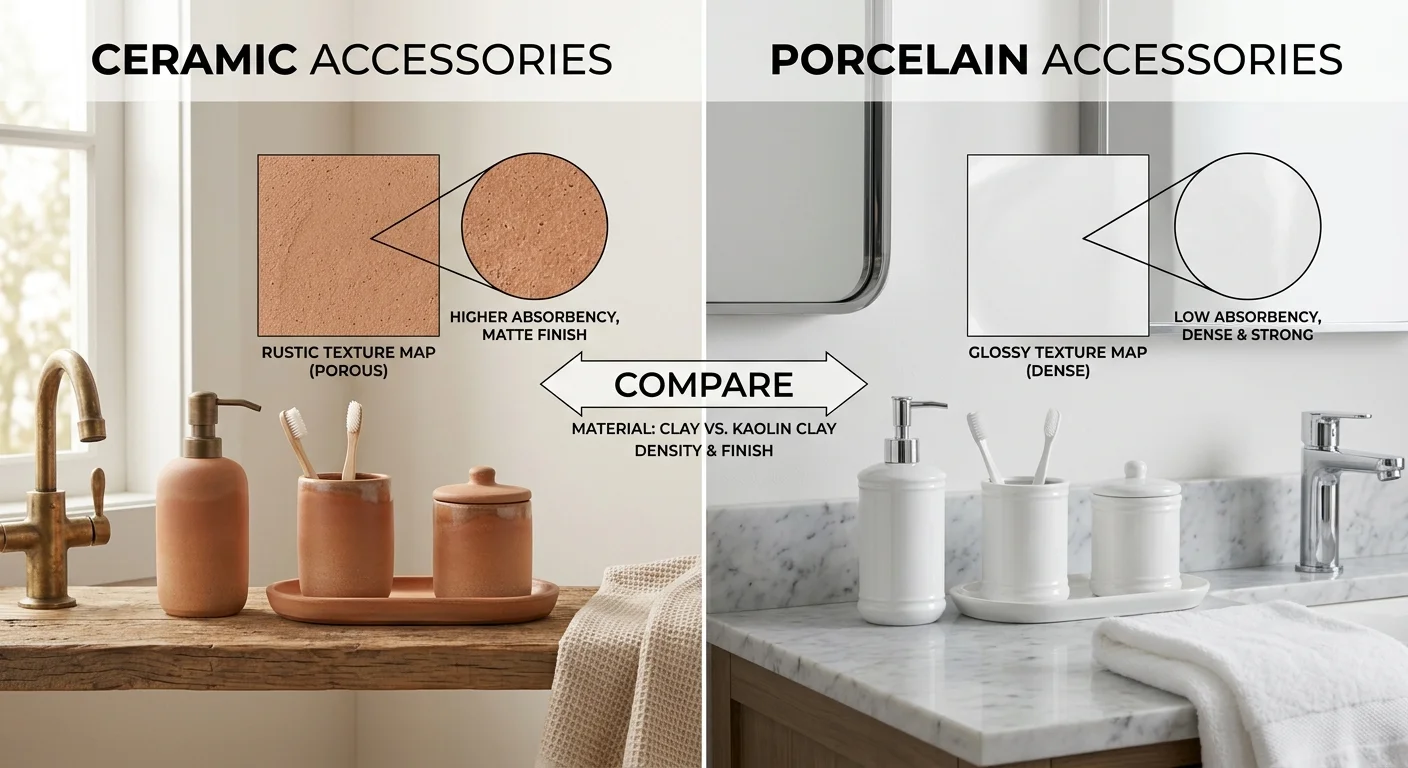
Ceramic and porcelain are related materials, but porcelain is a specialized type of ceramic with specific body and firing characteristics. For buyers comparing ceramic vs porcelain bathroom accessories, the most important distinction is that “ceramic” is a broad material category, while porcelain generally refers to a denser, more highly vitrified ceramic body.
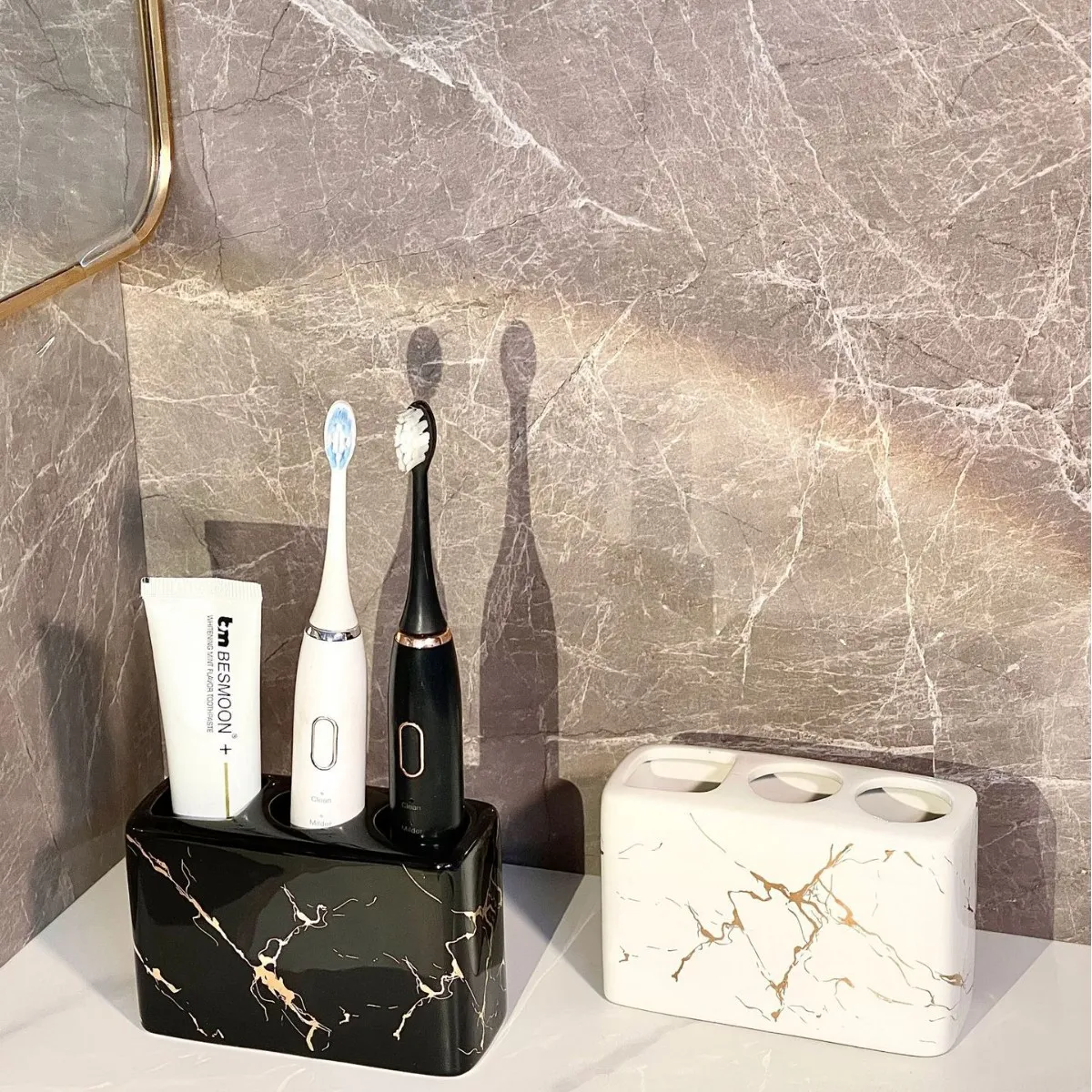
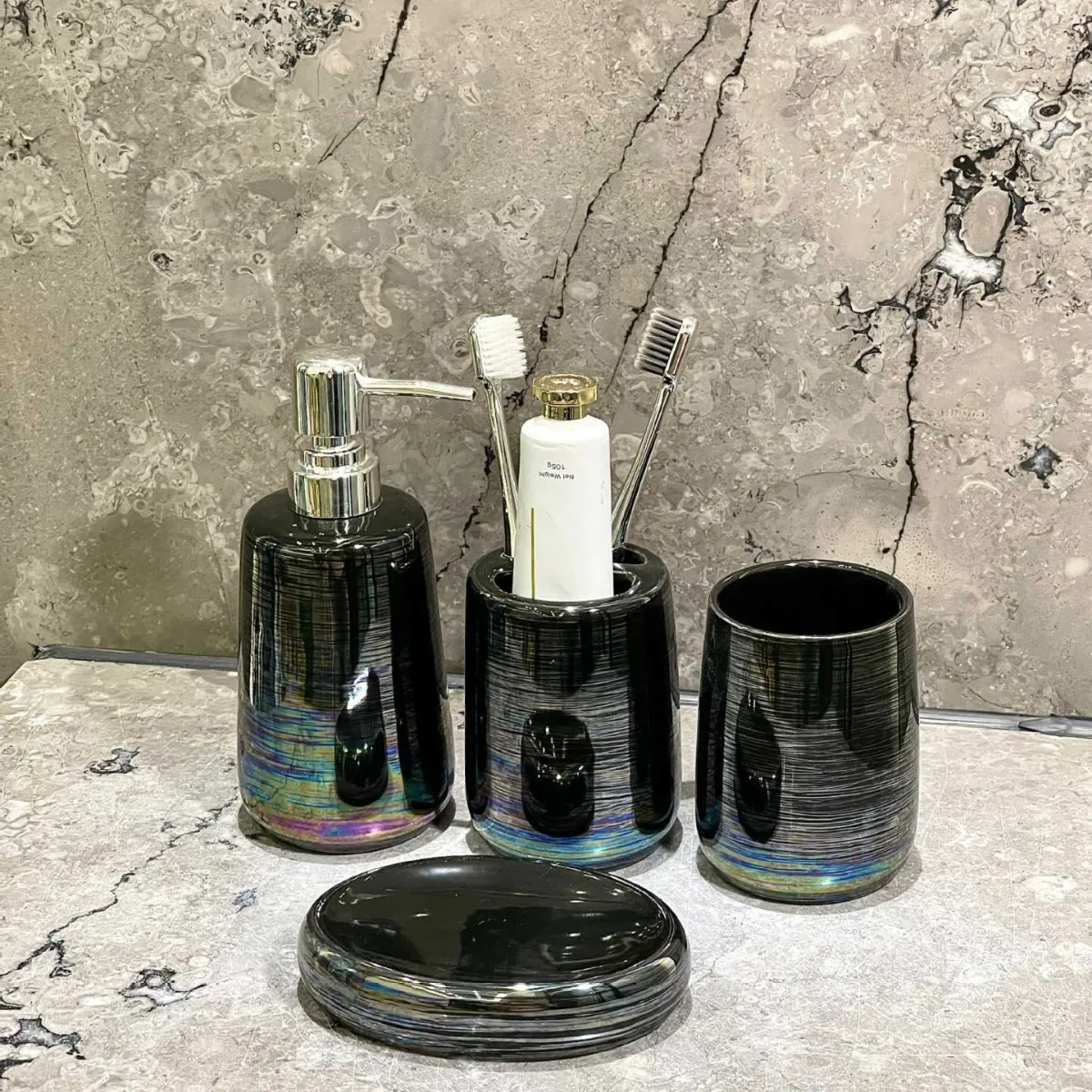
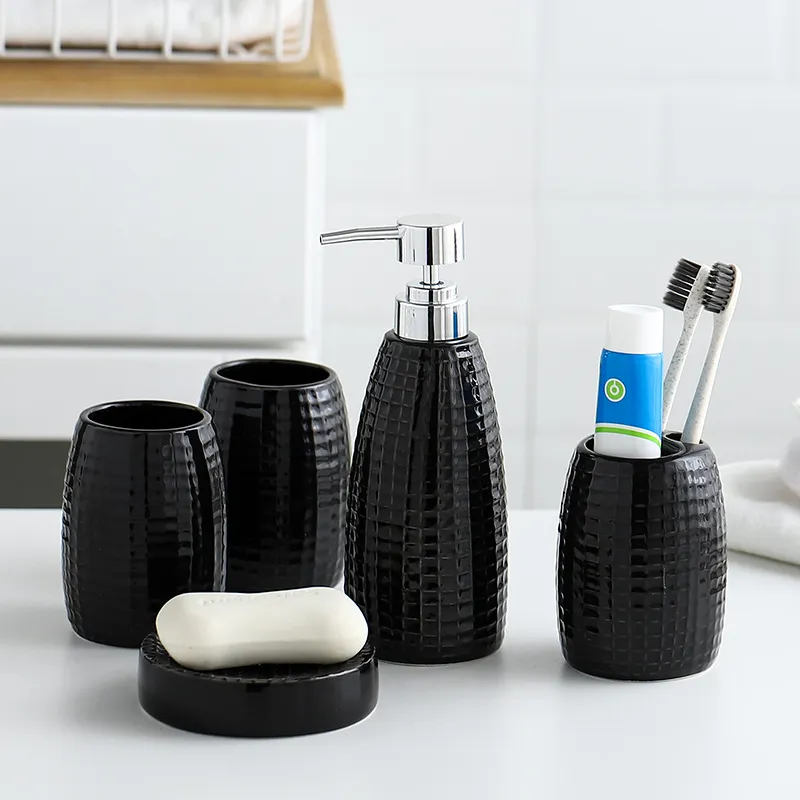
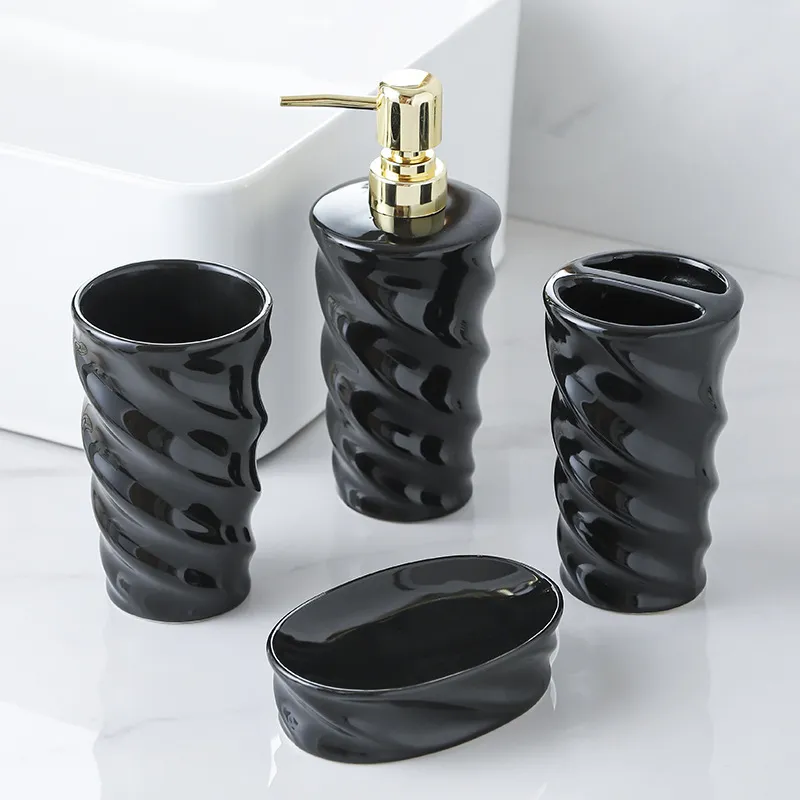
Both materials can be used for soap dispensers, toothbrush holders, tumblers, soap dishes, trays, cotton jars, and complete bathroom sets.
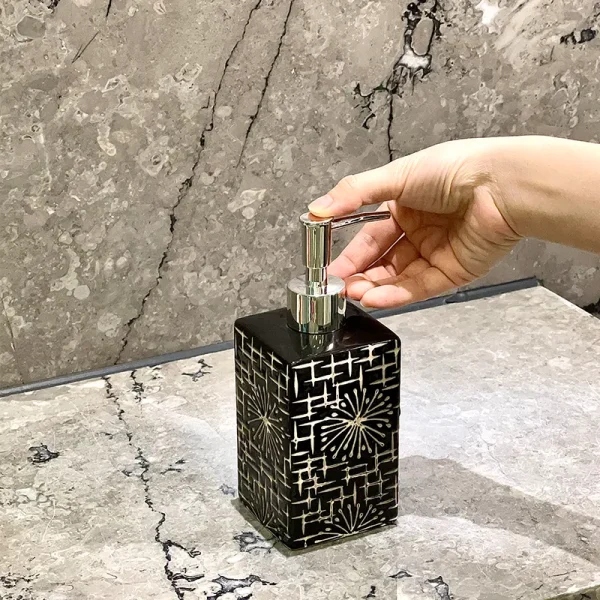
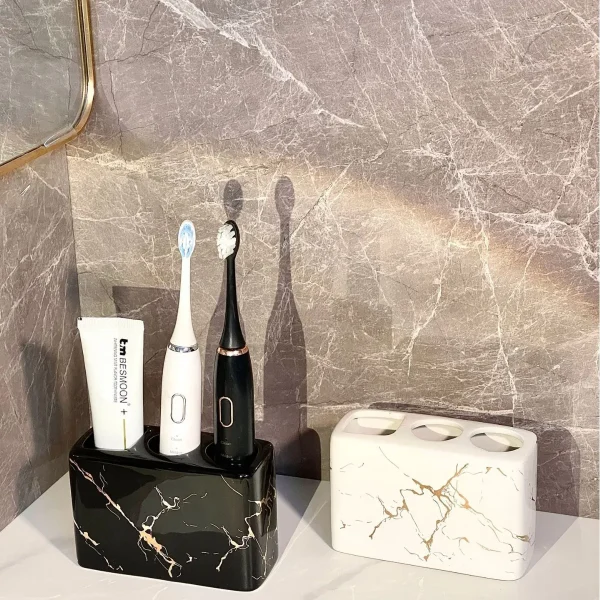
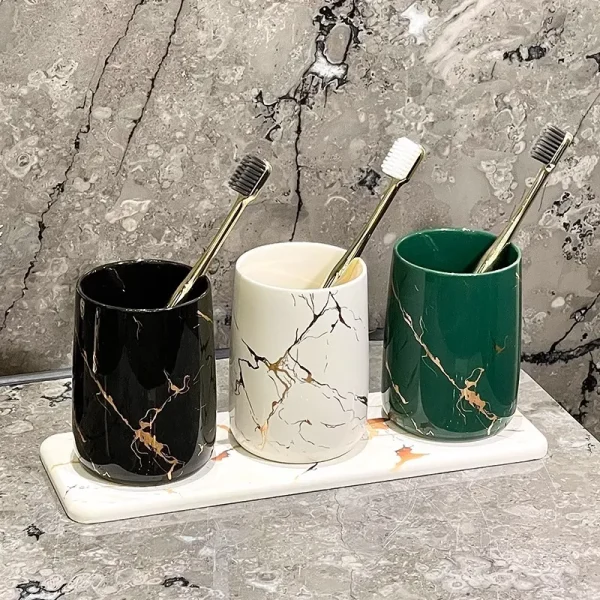
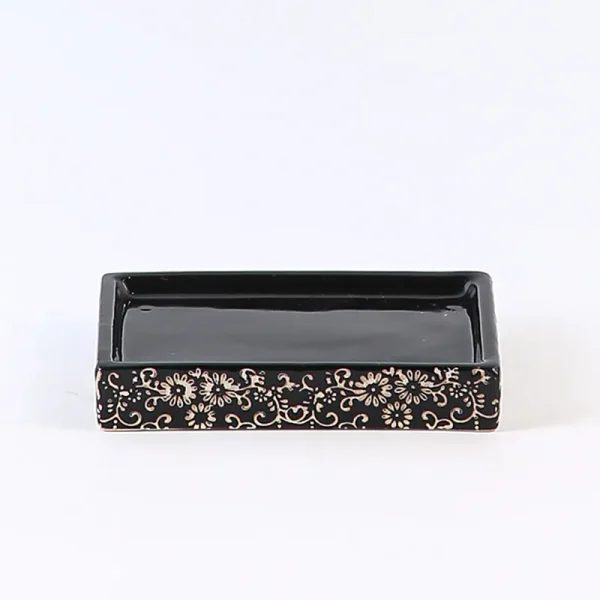
The difference becomes commercially important when buyers evaluate:
- Water absorption
- Density and body structure
- Product appearance
- Glaze and color options
- Manufacturing requirements
- Retail positioning
- Product weight
- OEM customization
- Target price
For international procurement, material terminology should always be supported by an actual product specification rather than appearance alone.
Why Does Water Absorption Matter in Ceramic vs Porcelain Bathroom Accessories?
Water absorption is an important technical indicator of ceramic-body density, but buyers should not apply tile standards directly to bathroom accessories.
ASTM C373 is a recognized test method for determining water absorption, bulk density, apparent porosity, and related properties of fired whiteware and ceramic tiles. For reference, ANSI A137.1:2022 defines porcelain tile as ceramic tile with water absorption of 0.5% or less, measured using the applicable test method.
That 0.5% figure is a porcelain-tile classification, not an automatic specification for every porcelain bathroom accessory. Buyers should therefore request the manufacturer‘s actual material specification and test requirements for the finished accessory.
For bathroom products, lower body porosity can be commercially useful because accessories are exposed to water, steam, soap, and humidity. Glaze quality also matters because a properly developed glazed surface contributes to cleanability and surface protection.
Is Porcelain Stronger Than Ceramic for Bathroom Accessories?
Porcelain generally provides a dense and highly vitrified body, but material category alone does not determine the durability of a bathroom accessory.
Product performance also depends on:
| Factor | Buyer Consideration |
|---|---|
| Body formulation | Influences density and firing behavior |
| Wall thickness | Affects impact resistance and weight |
| Product geometry | Sharp corners and thin sections require additional control |
| Firing process | Influences body maturation and dimensional stability |
| Glaze | Affects surface appearance and performance |
| Quality control | Determines consistency between production batches |
| Packaging | Reduces breakage during international transportation |
ASTM C373 specifically identifies density, porosity, and water absorption as useful measurements for evaluating the maturation and structural properties of fired ceramic bodies.
Therefore, when evaluating ceramic vs porcelain bathroom accessories, buyers should assess the complete product specification instead of assuming that porcelain automatically means better durability.
Which Material Offers More Design Flexibility?
Ceramic provides extensive design flexibility, while porcelain can deliver a refined and premium material appearance. Both materials can support modern, minimalist, classic, rustic, hotel-style, and luxury bathroom collections.
Ceramic bathroom accessories can be developed with:
- Matte finishes
- Gloss finishes
- Textured surfaces
- Colored glazes
- Reactive glaze effects
- Handmade-inspired finishes
- Custom shapes
- Custom decoration
Porcelain can also be glazed, colored, decorated, and formed into coordinated bathroom collections. The key consideration is that the glaze and body must be developed together because firing behavior and compatibility affect the final result.
For private-label buyers, this makes ceramic vs. porcelain bathroom accessories a design and positioning decision as much as a technical one.
How Do Ceramic and Porcelain Compare for Bathroom Sets?
Both materials can be used to produce complete bathroom sets, but the best choice depends on the intended retail position, design concept, and target cost.
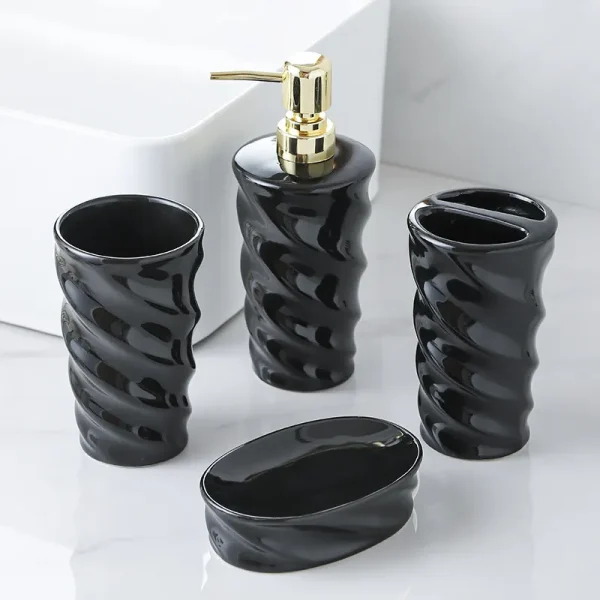
A typical four-piece bathroom set can include:
- Soap dispenser
- Toothbrush holder
- Tumbler
- Soap dish
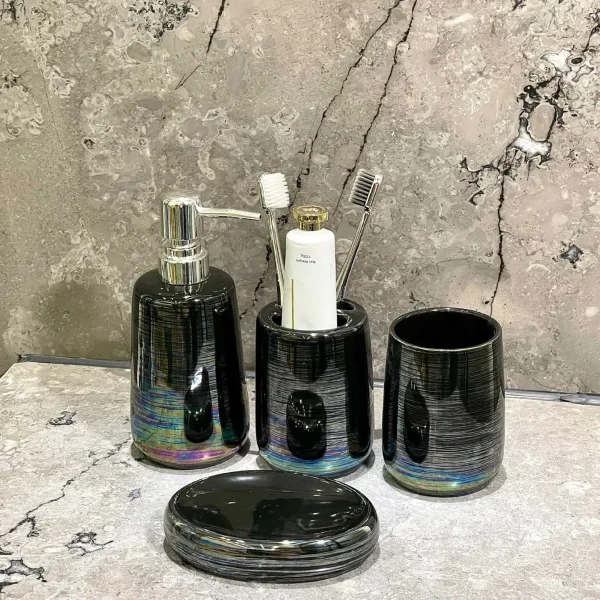
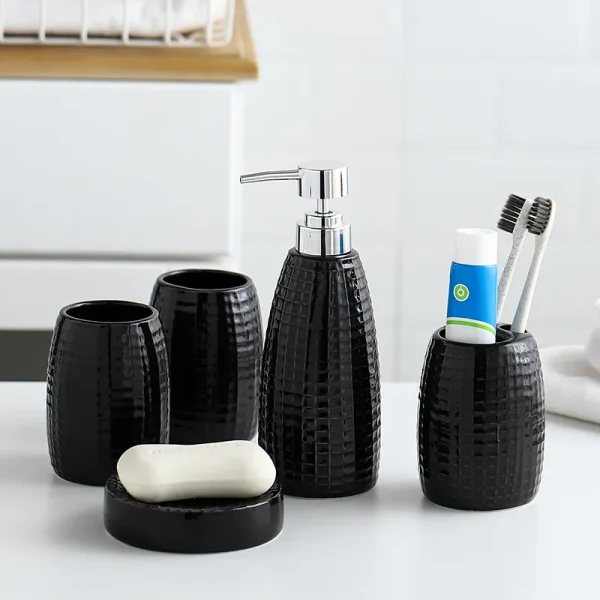
A six-piece set can add:
- Bathroom tray
- Cotton jar or storage container
For complete collections, consistency is critical. All pieces should match in:
- Color
- Glaze
- Shape
- Surface finish
- Dimensions
- Visual style
This is why an experienced OEM factory is important. The challenge is not simply producing individual pieces but maintaining consistent appearance across an entire collection.
Which Is Better for Mass-Market and Mid-Range Retail?
Ceramic is highly suitable for mass-market and mid-range bathroom accessories because it supports broad design customization and different cost positions.
Ceramic can be used for large-volume collections requiring:
- Multiple colors
- Competitive pricing
- Custom shapes
- Coordinated sets
- Private-label packaging
- Trend-driven finishes
This makes ceramic a practical option for importers, wholesalers, retailers, and online homeware brands.
Porcelain can also be used in mid-range collections when its material characteristics support the desired product positioning. The final purchasing decision should be based on the finished product cost and specification rather than the word “porcelain” alone.
Which Is Better for Premium Retail and Hospitality?
Porcelain can support premium positioning, while high-quality ceramic can create premium collections through sophisticated shapes, glazes, textures, and decoration.
For premium retail, buyers may prioritize:
- Refined appearance
- Consistent surface quality
- Premium packaging
- Distinctive design
- Material storytelling
For hotels and B&Bs, the purchasing priorities are broader:
| Requirement | What Buyers Should Evaluate |
|---|---|
| Appearance | Consistent design and finish |
| Durability | Body, thickness and firing |
| Maintenance | Surface and glaze |
| Cost | Unit cost and total project cost |
| Supply | Production capacity and replenishment |
| Packaging | Protection during international shipping |
| Customization | Logo, color and set configuration |
For large hospitality projects, ceramic vs porcelain bathroom accessories should therefore be evaluated against project requirements rather than treated as a simple “premium vs standard” decision.
Does Porcelain Cost More Than Ceramic?
Porcelain can involve higher material and process requirements, but material type alone does not determine the final wholesale price.
Actual B2B pricing is influenced by:
- Raw materials
- Product dimensions
- Mold development
- Forming process
- Glaze
- Decoration
- Firing
- Labor
- Packaging
- Order quantity
- Customization requirements
A simple porcelain accessory can be competitively priced, while a highly customized ceramic accessory with complex glazing and decoration can have a higher production cost.
For this reason, buyers comparing ceramic vs porcelain bathroom accessories should request a quotation based on the complete product specification rather than asking only for a material-based price.
How Should Buyers Evaluate Ceramic vs Porcelain Bathroom Accessories?
The most reliable sourcing method is to evaluate material, manufacturing capability, samples, quality control, packaging, and commercial requirements together.
Before placing a bulk order, buyers should follow these steps:
- Define the target market. Determine whether the collection is designed for mass retail, mid-market, premium retail, hotels, or private label.
- Specify the material. Request the exact body/material specification rather than relying on product photos.
- Request samples. Evaluate shape, weight, glaze, color, finish, and assembly.
- Confirm technical data. Ask for relevant water absorption or other test data where applicable.
- Check manufacturing capability. Confirm forming, glazing, firing, decoration, and assembly capabilities.
- Evaluate QC procedures. Check inspection standards for cracks, pinholes, glaze defects, dimensions, color consistency, and functional components.
- Confirm packaging. Review inner protection, carton construction, drop/transport considerations, and container loading.
- Approve a pre-production sample. Use the approved sample as the production reference for bulk manufacturing.
What Is the Best Choice: Ceramic or Porcelain?
There is no universal winner; the correct choice depends on the product specification, target market, required performance, and commercial positioning.
| Purchasing Factor | Ceramic | Porcelain |
|---|---|---|
| Material category | Broad ceramic family | Specialized ceramic type |
| Design flexibility | High | High |
| Color/glaze options | Extensive | Extensive |
| Density | Depends on body | Generally high |
| Water absorption | Depends on body | Generally low for true porcelain bodies |
| Premium positioning | Strong with the right design | Strong |
| Mass-market use | Highly suitable | Suitable for selected products |
| OEM customization | Excellent | Excellent |
| Cost range | Broad | Broad, often process-dependent |
| Best sourcing approach | Specify body + finish + performance | Specify body + performance + testing |
The key conclusion from ceramic vs porcelain bathroom accessories is straightforward: do not select the material based on the name alone. Select the body, finish, manufacturing process, quality standard, and commercial specification that match the product’s intended market.
FAQ
Q1. Is porcelain better than ceramic for bathroom accessories?
Not automatically. Porcelain is a specialized ceramic body generally associated with high density and low water absorption, while ceramic provides broad formulation and design flexibility. Product quality depends on the actual body, manufacturing process, glaze, geometry, and QC.
Q2. Are ceramic and porcelain the same material?
Porcelain is a type of ceramic, but not all ceramic is porcelain. The distinction is based on the specific material formulation and resulting properties.
Q3. Is 0.5% water absorption the standard for all porcelain bathroom accessories?
No. The 0.5% threshold is used in ANSI’s definition of porcelain tile. Buyers should not automatically apply the tile classification to other ceramic products.
Q4. Which material is better for private-label bathroom sets?
Both can work. Ceramic provides extensive options for colors, glazes, textures, and price positioning. Porcelain can support refined premium collections. The choice should follow the brand’s target market and product specification.
Q5. What should buyers request before placing a bulk order?
Buyers should request material specifications, product drawings or dimensions, samples, relevant test data, packaging details, QC requirements, and pre-production sample approval.
Q6. Is ceramic suitable for hotel bathroom accessories?
Yes. Ceramic can be used for hotel and hospitality collections when the selected body, glaze, design, packaging, and quality-control requirements match the project.
Conclusion: Ready to Develop Your Custom Bathroom Collection?
When comparing ceramic vs. porcelain bathroom accessories, there is no single “superior” material—only the right formulation for your specific brand positioning, budget, and commercial requirements. While porcelain offers high density and low water absorption ideal for luxury and high-moisture settings, ceramic provides unparalleled design versatility, vibrant glaze effects, and cost flexibility for broad market appeal.
Yigejia Ceramics combines more than 20 years of ceramic manufacturing experience with OEM/ODM development and large-scale production capabilities for international B2B buyers. Based in Chaozhou, Guangdong, Yigejia operates a factory covering more than 10,000 m² and maintains a showroom featuring thousands of designs. Its products are supplied to customers across Europe, the United States, the United Kingdom, Australia, South America, and Southeast Asia.
For importers, wholesalers, retailers, hotel suppliers, and private-label brands, Yigejia can develop:
- Custom ceramic bathroom sets
- Ceramic soap dispensers
- Toothbrush holders
- Tumblers
- Soap dishes
- Bathroom trays
- Cotton jars
- Colored glazed bathroom accessories
- White porcelain bathroom accessories
- Custom ceramic colors and finishes
- OEM/ODM bathroom collections
- Private-label packaging
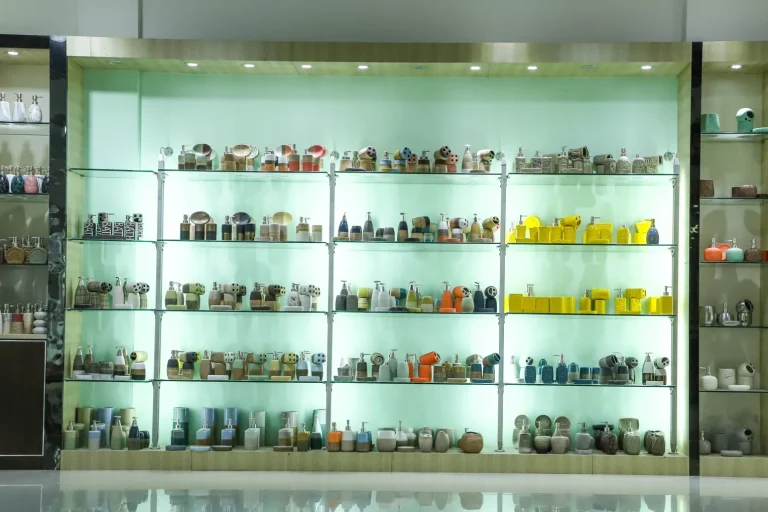
The combination of multiple forming processes, automated kiln production, strict quality control, and OEM/ODM capability gives buyers a single manufacturing partner for product development and bulk production.
Contact Yigejia Ceramics to discuss your custom bathroom set, material requirements, colors, finishes, packaging, and OEM/ODM project.
-

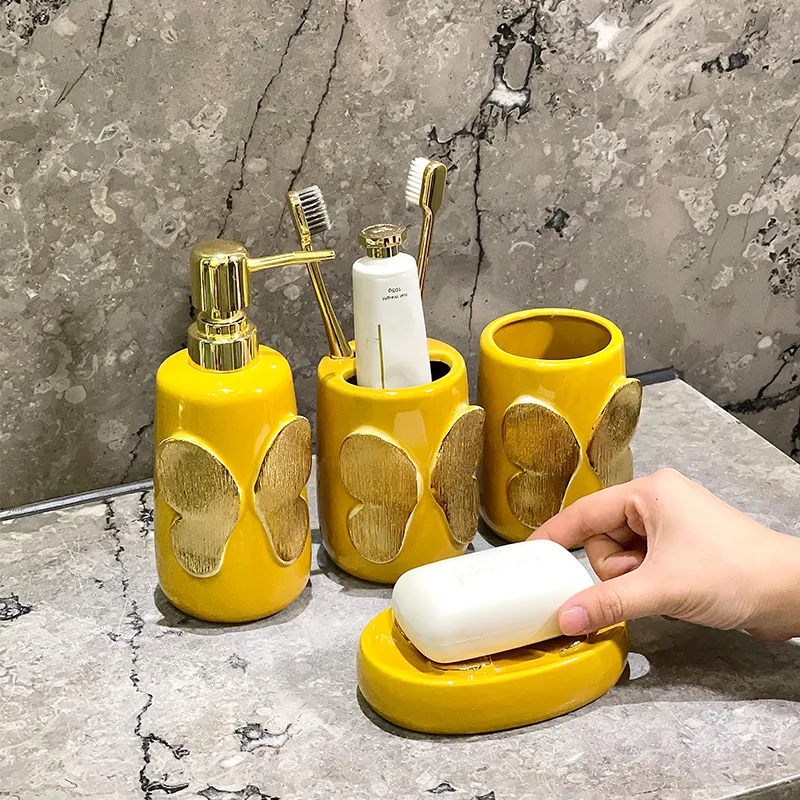
Yellow Butterfly Bathroom Set Supply, 4-Piece Ceramic Bath Accessory for Hotel Home Decor
-

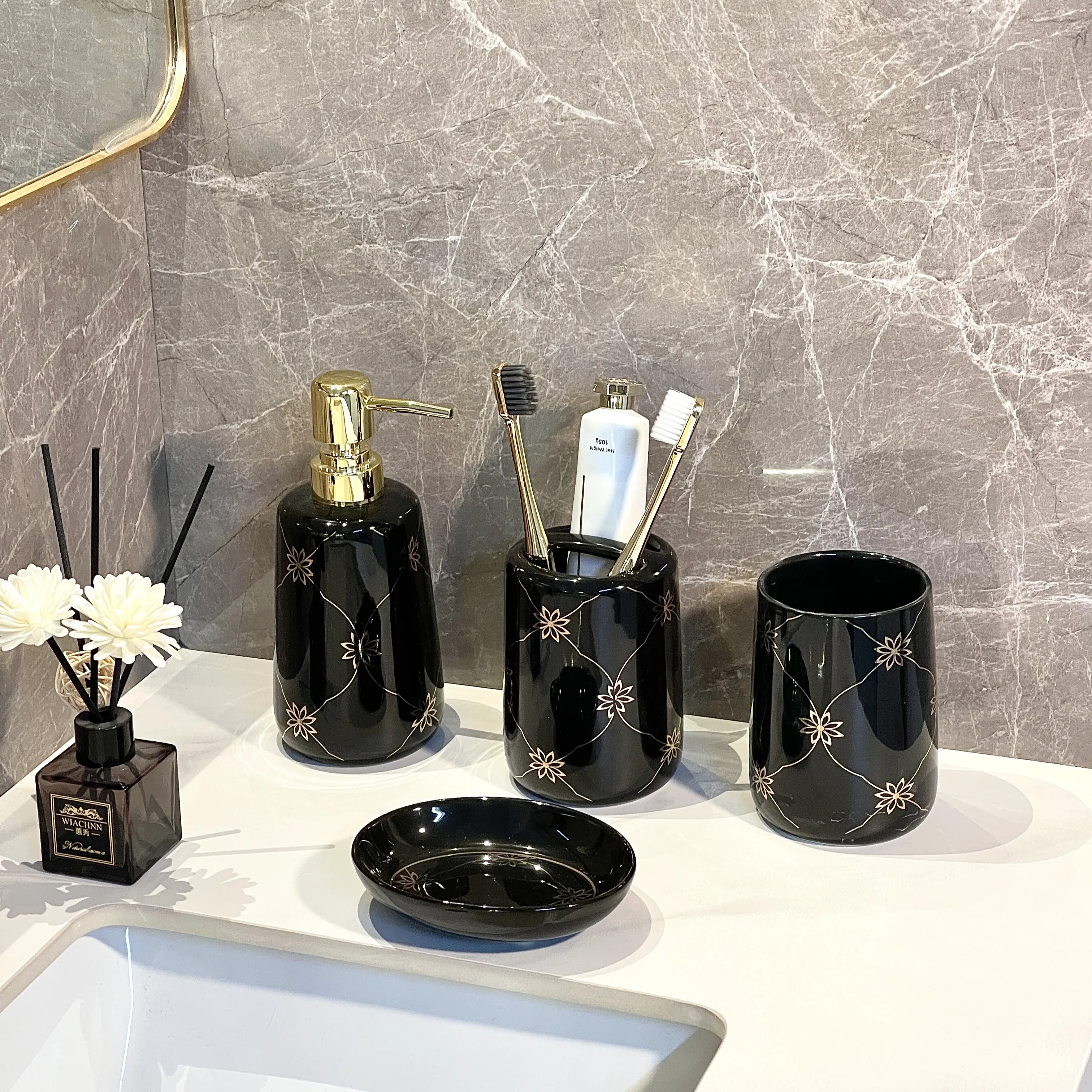
Wholesale Luxury Bathroom Set 4 Piece Black and Gold Glossy Ceramic Bathroom Accessories in Bulk
-
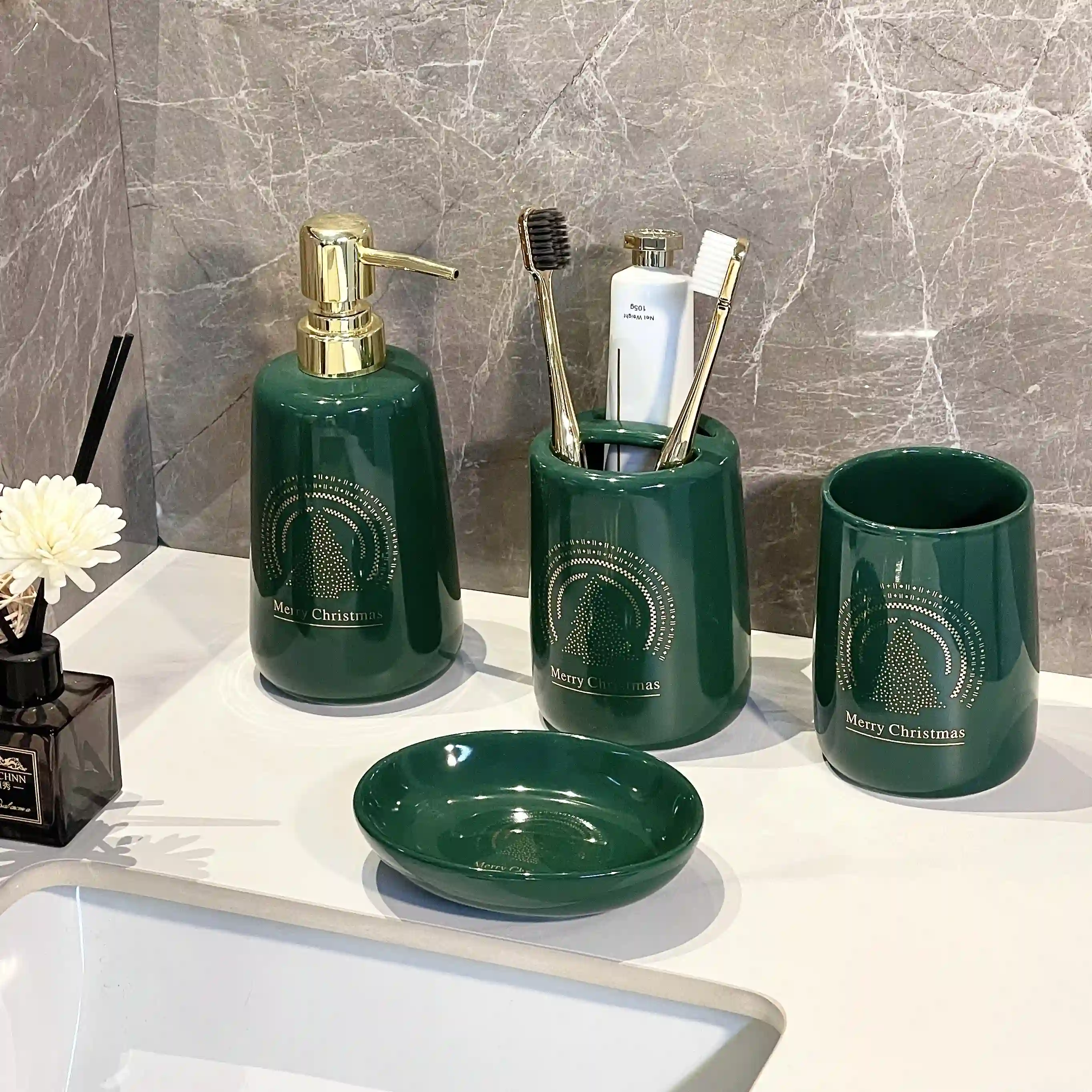
Wholesale Christmas Bathroom Sets, Ceramic 4-Piece Green Bathroom Accessories
-
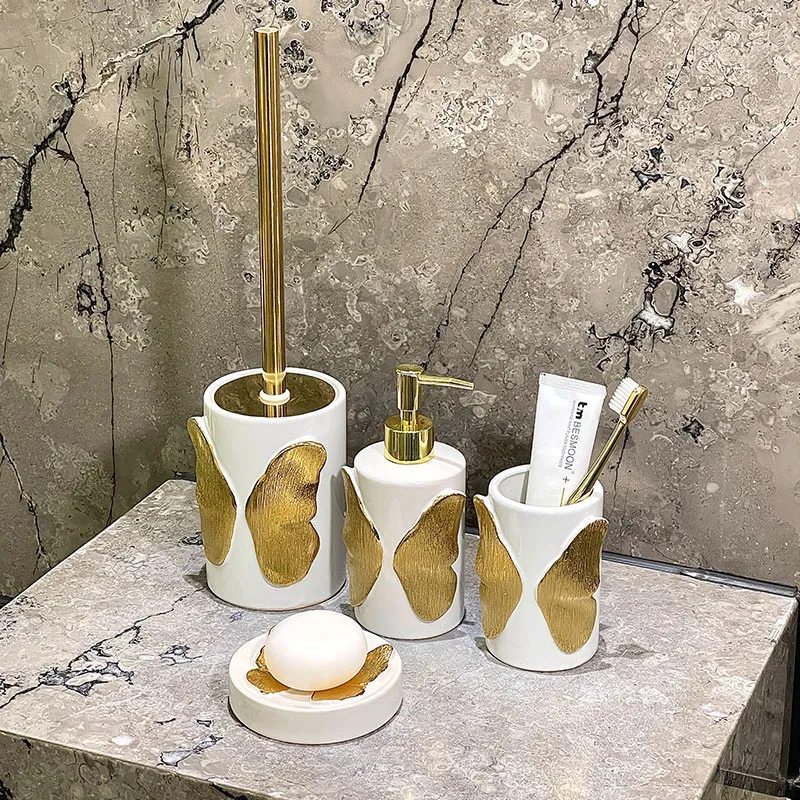
Wholesale Butterfly Bathroom Sets Accessories – White & Gold Ceramic Bath Decor Set