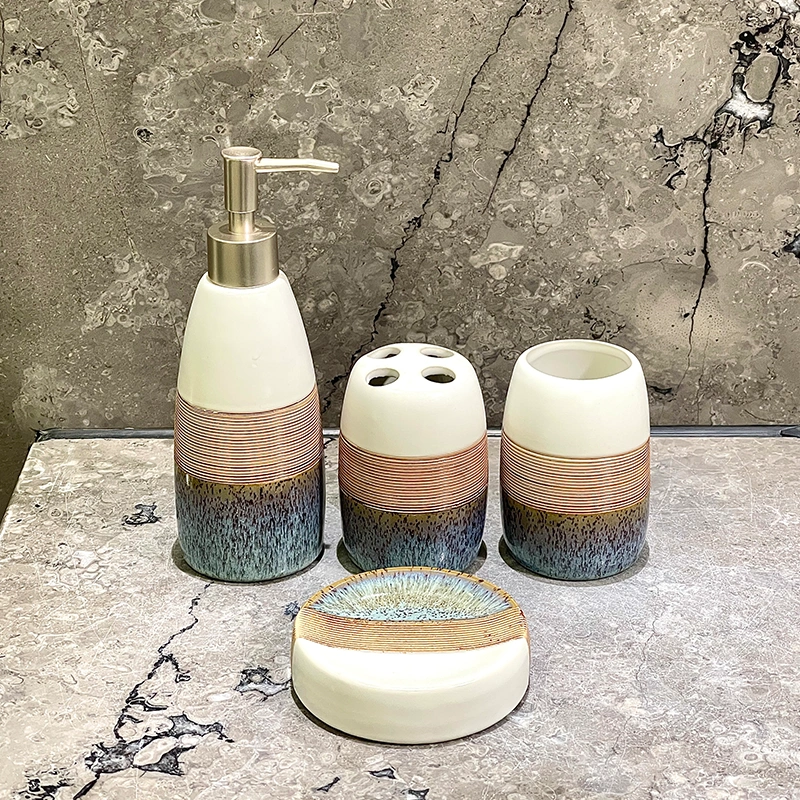
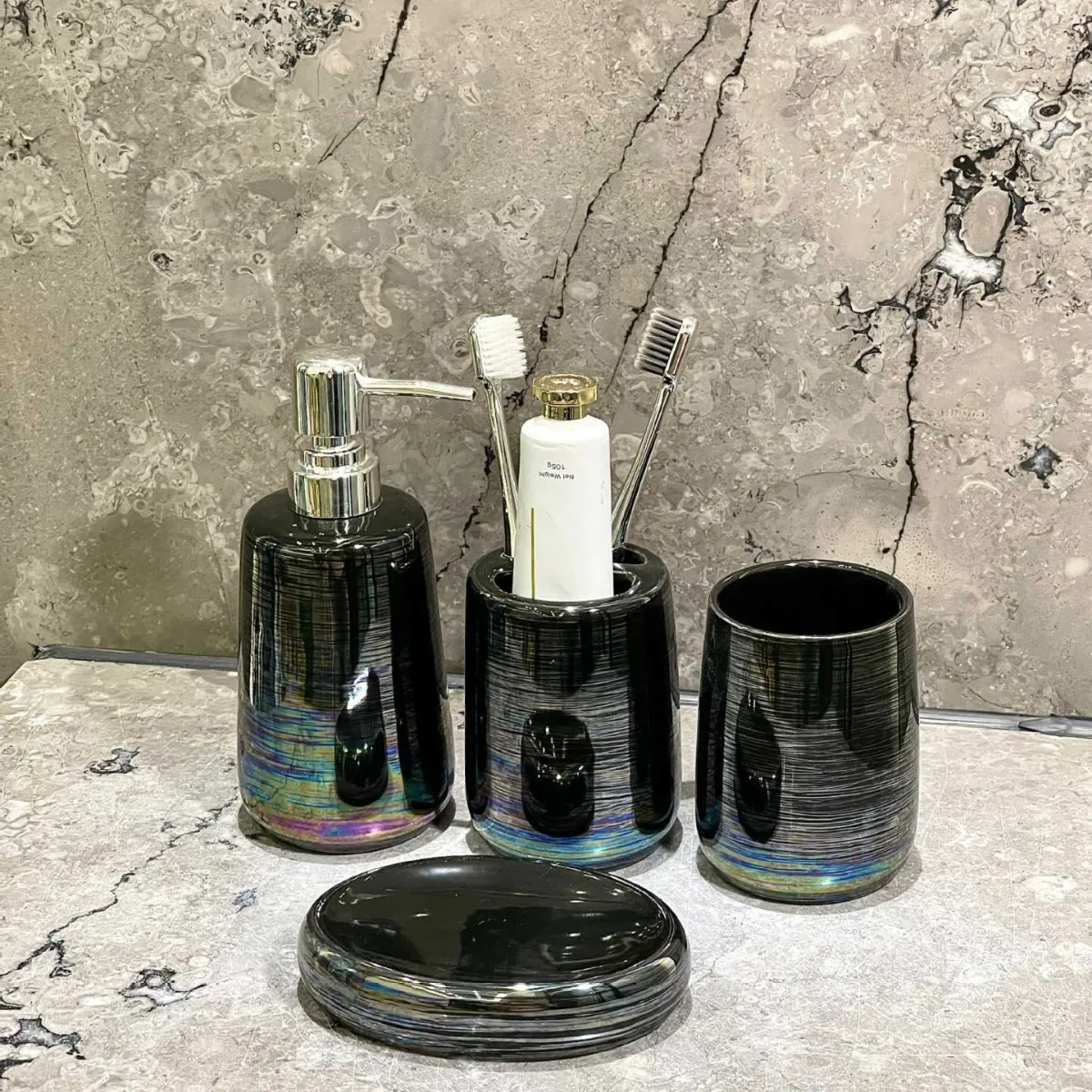
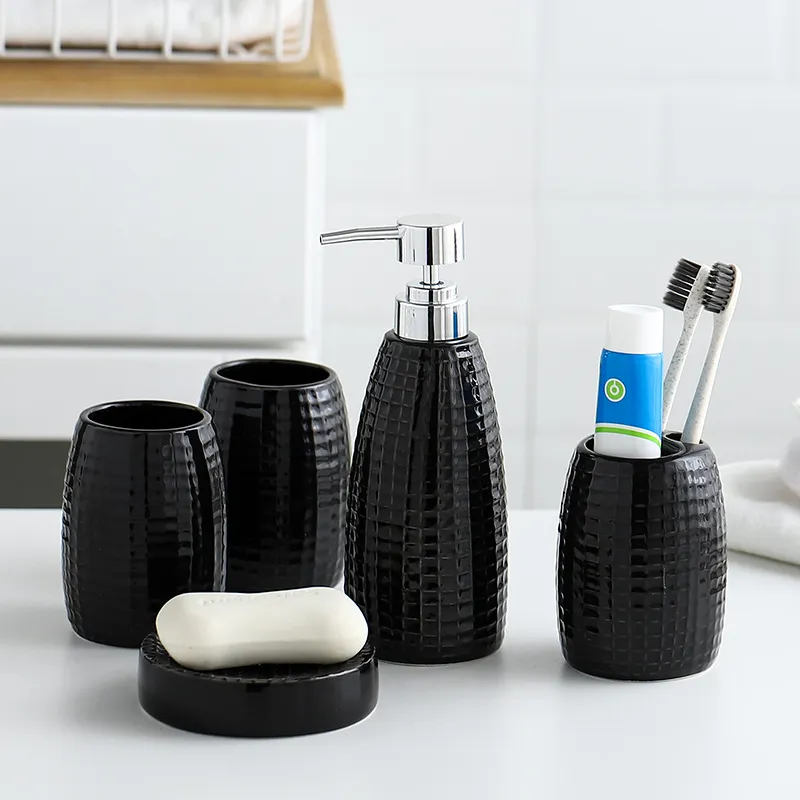
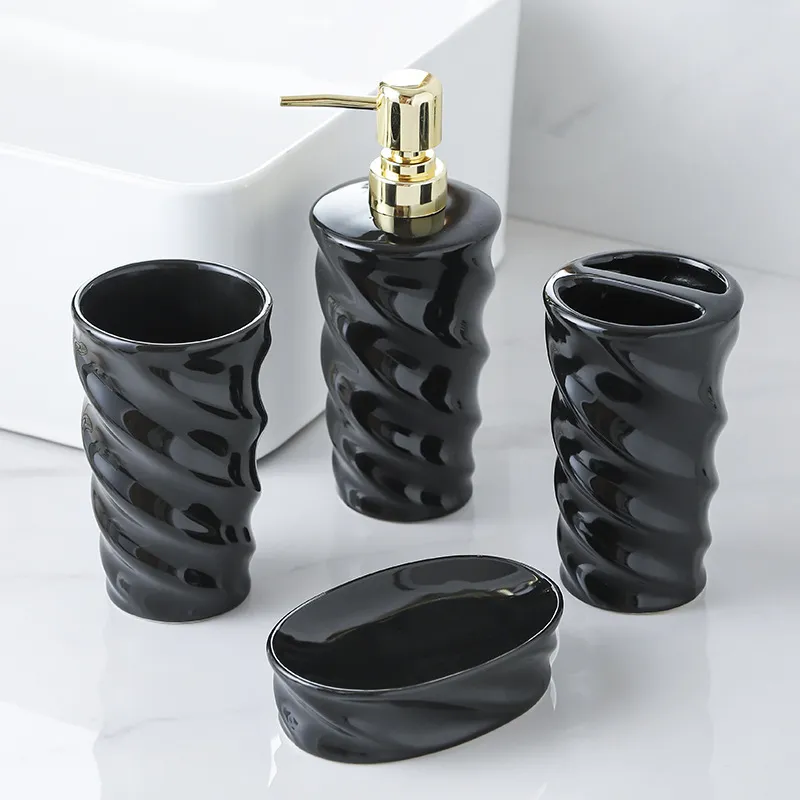
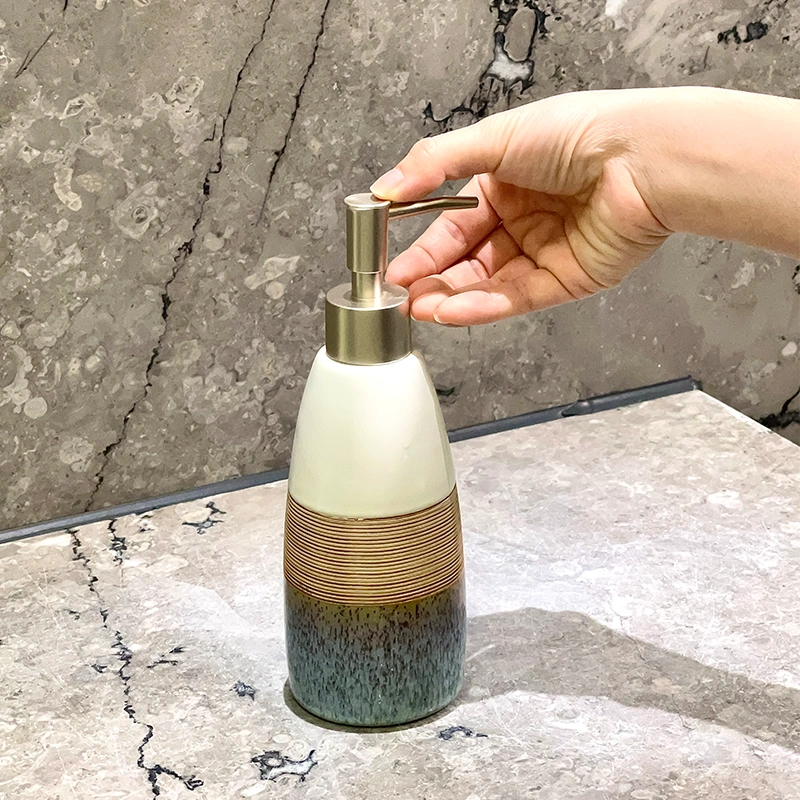
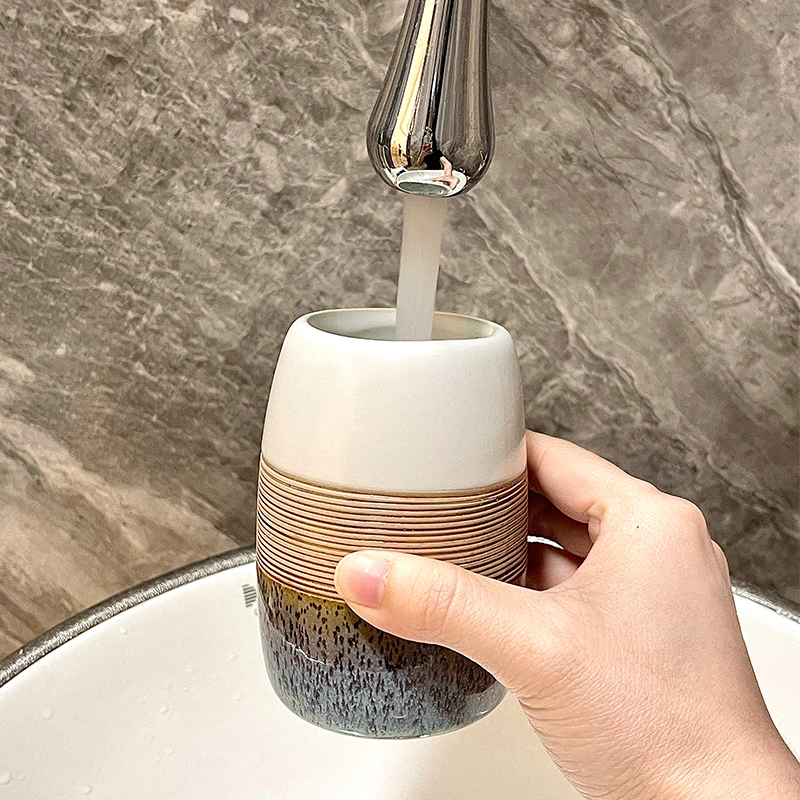
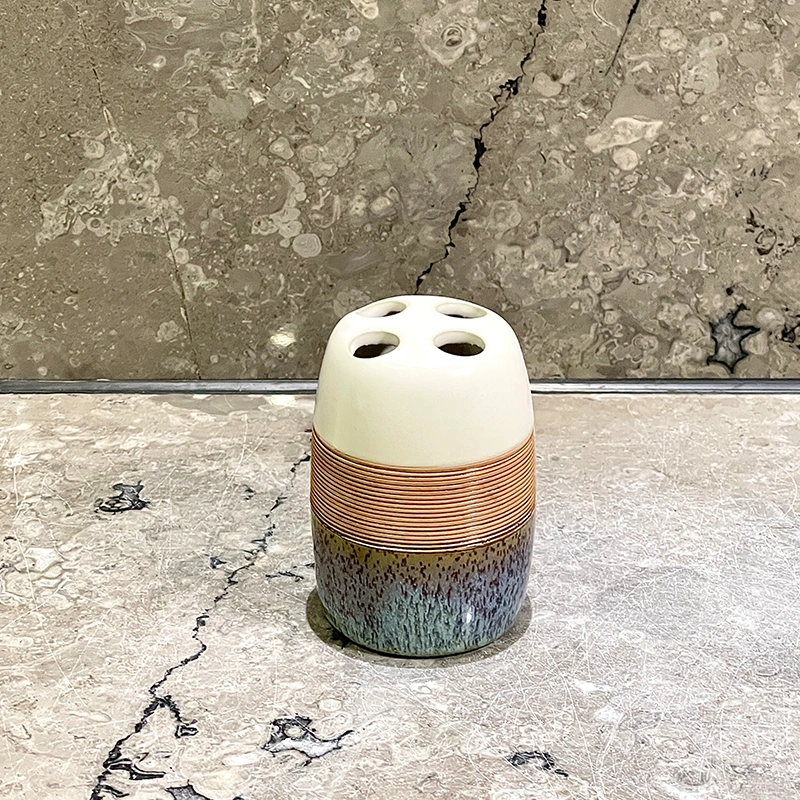
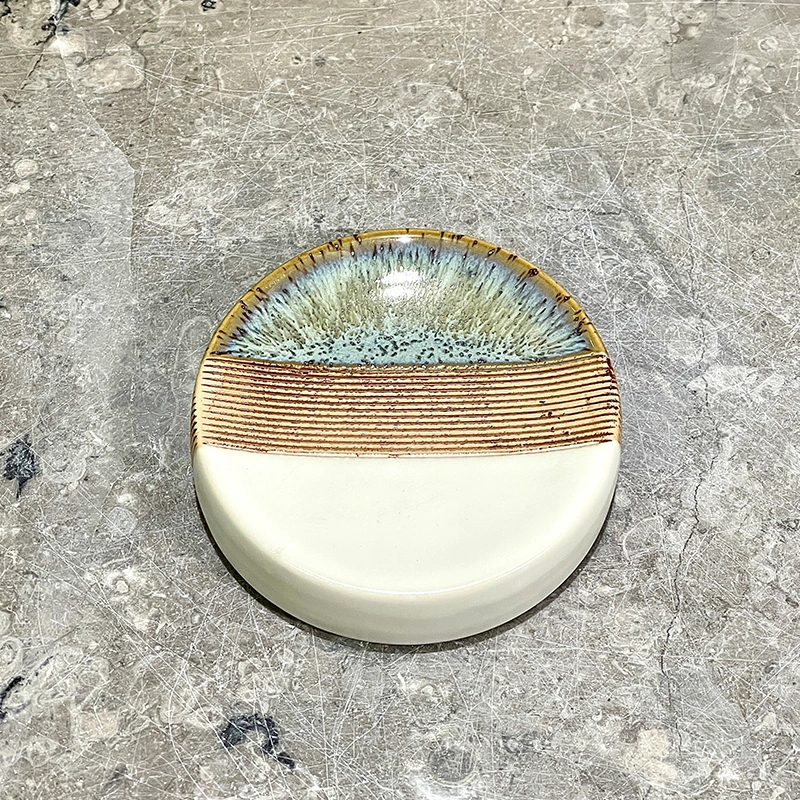
The ceramic firing process is critical to ceramic manufacturing—transforming shaped, glazed clay into a durable, finished product. For international buyers, understanding this stage explains key differences in strength, glaze adhesion, color consistency, and overall quality between suppliers.
Whether you source custom керамические аксессуары для ванной комнаты, hotel collections, or OEM private-label lines, kiln firing directly dictates product performance, crack resistance, and dimensional accuracy. At Керамика Yigejia, firing is an integrated quality-control system designed to deliver consistency at scale. Here is how the process works and what to evaluate when choosing an OEM manufacturer. What international buyers should know when evaluating a ceramic manufacturer.
Why the Ceramic Firing Process Matters More Than Most Buyers Realize
Many buyers compare suppliers based on price, production capacity, or product appearance. However, experienced sourcing professionals understand that one invisible factor often determines the long-term quality of ceramic products: The ceramic firing process.
A beautifully designed дозатор мыла или bathroom set may look identical in product photos, but differences in firing control can significantly affect its performance after delivery.

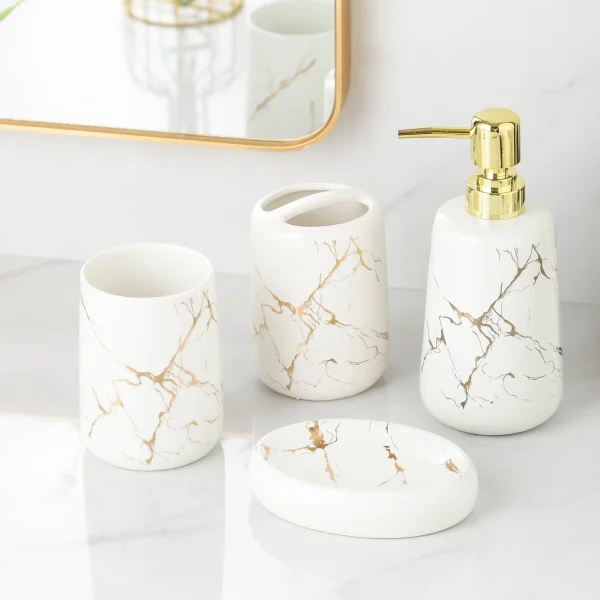
Professional kiln firing transforms fragile clay into dense, durable ceramic through carefully controlled heating and cooling cycles. During this process, the ceramic body undergoes irreversible physical and chemical changes, while the glaze melts into a protective glass-like surface that provides both decoration and durability.
A poorly controlled firing schedule may lead to:
- Color variation between batches
- Surface pinholes
- Warping
- Дефекты глазури
- Dimensional inconsistency
- Reduced product strength
- Increased rejection rates
For OEM customers, these problems can result in delayed shipments, inconsistent retail collections, and costly product replacements.
This is why professional ceramic manufacturers focus not only on reaching a specific firing temperature but also on controlling every stage of the firing cycle.
What Is the Ceramic Firing Process?
The ceramic firing process refers to the controlled heating and cooling of ceramic products inside specialized kilns.
Its primary purpose is to permanently transform shaped clay into a hard, stable ceramic body while developing the final glaze surface.
Contrary to what many buyers assume, firing is not simply “baking” ceramics.
Instead, it is a precisely engineered manufacturing process involving:
- Controlled temperature increase
- Moisture removal
- Organic material burnout
- Particle sintering
- Glaze melting
- Controlled cooling
- Final stabilization
Every stage influences the final appearance and mechanical performance of the finished product.
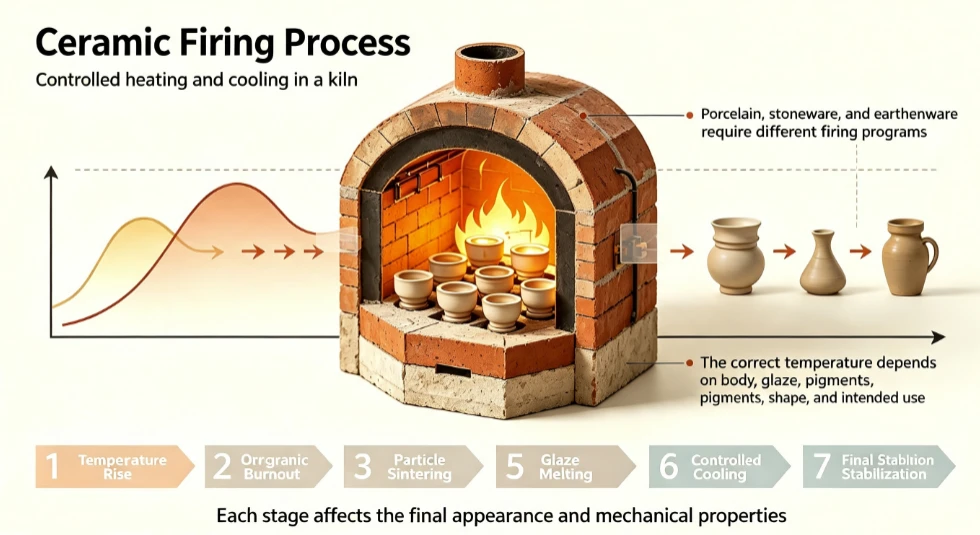
Different ceramic bodies—including porcelain, stoneware, and earthenware—require different firing schedules. Therefore, there is no universal “correct firing temperature” for every ceramic product. The appropriate firing profile depends on the complete material system, including the clay body, glaze formulation, pigments, product geometry, and intended application.
Preparing Ceramic Products Before Firing
Successful firing begins long before products enter the kiln.
Preparation directly affects firing stability and final product quality.
Forming the Ceramic Body
Depending on the product design, manufacturers may use:
- Литье в формы
- Pressure casting
- Вальцовая формовка
- Jiggering
- Molding
- Other industrial forming methods
Для керамические аксессуары для ванной комнаты, consistent wall thickness is especially important because uneven sections can create internal stress during firing.
Drying Before Kiln Loading
Drying removes moisture from the ceramic body before firing begins.
If residual water remains inside the product, rapid heating can generate internal steam pressure that increases the risk of cracking or deformation.
Large soap dispensers, trays, storage jars, and thick-walled products generally require longer drying times than smaller accessories.
Professional manufacturers therefore monitor both drying time and environmental conditions before loading products into the kiln.
Pre-Firing Inspection
Before firing, each production batch should be checked for:
- Visible cracks
- Uneven wall thickness
- Дефекты поверхности
- Mold marks
- Product deformation
- Excessive moisture
Detecting defects at this stage helps reduce waste, improve kiln utilization, and maintain production efficiency.
The 3 Core Firing Stages (Bisque, Glazing, Glaze Firing )
Stage 1: Bisque Firing
What Is Bisque Firing?
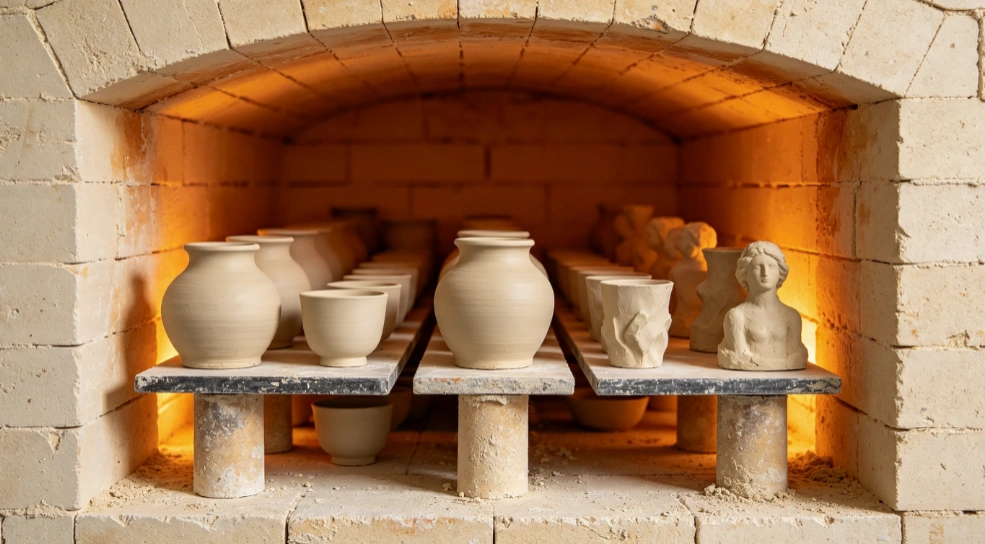
Bisque firing is the first major stage of the ceramic firing process. At this point, dried clay products are heated under carefully controlled conditions to produce a strong yet porous ceramic body.
Unlike finished ceramics, bisque-fired products are not fully vitrified. Instead, they are durable enough for handling while remaining porous enough to absorb glaze evenly during the next production stage.
For most ceramic manufacturers, bisque firing serves several important purposes:
- Removes remaining moisture
- Burns away organic materials
- Strengthens the ceramic body
- Stabilizes product dimensions
- Prepares the surface for glazing
Although many porcelain products use bisque firing temperatures between 900°C and 1060°C, the appropriate temperature always depends on the clay formulation and manufacturing process rather than a fixed industry standard.
What Happens During Bisque Firing?
As temperature gradually increases, several physical and chemical changes occur simultaneously.
1. Moisture Removal
Even products that appear completely dry may still contain residual moisture deep inside the ceramic body.
A gradual heating schedule allows this moisture to escape safely before temperatures become high enough to create internal steam pressure.
If heating begins too quickly, trapped moisture may cause:
- Растрескивание
- Internal stress
- Structural failure
- Product deformation
This is why professional manufacturers never rush the initial heating stage.
2. Organic Material Burnout
Natural clay bodies contain small amounts of organic material.
During bisque firing, these substances burn away under controlled conditions.
Proper ventilation and temperature control help ensure complete burnout while minimizing firing defects.
3. Initial Sintering
As temperatures continue rising, ceramic particles begin bonding together through a process known as sintering.
This greatly improves:
- Mechanical strength
- Structural stability
- Dimensional consistency
Although the ceramic becomes much stronger, it still retains enough porosity to support uniform glaze application.
Stage 2: Ceramic Glazing Process
Once bisque firing is complete, products enter another essential stage of the ceramic manufacturing process—glazing.
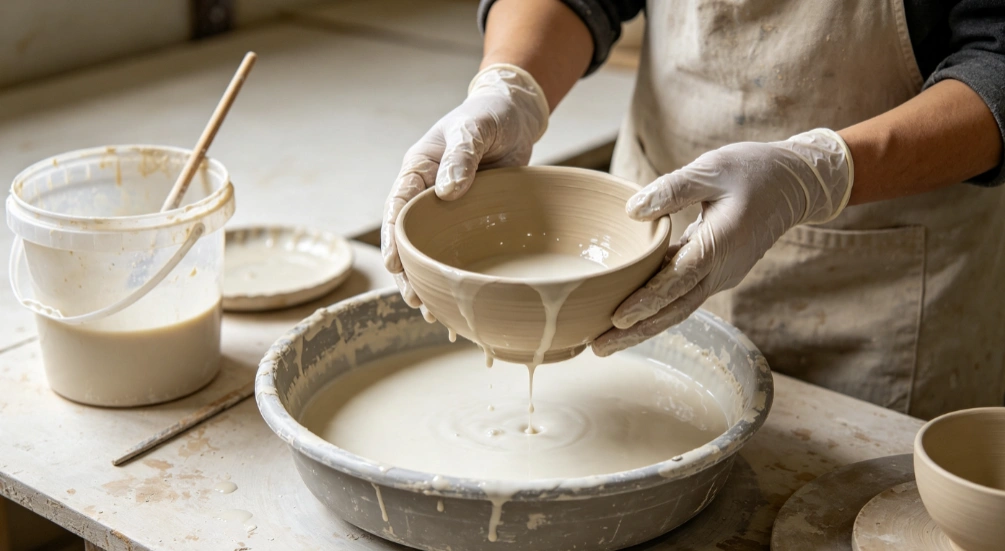
Glaze is far more than decorative color.
After firing, it becomes a thin, glass-like coating that provides:
- Surface protection
- Водонепроницаемость
- Improved hygiene
- Smooth touch
- Decorative appearance
- Более простая уборка
- Enhanced durability
Для керамические аксессуары для ванной комнаты, glaze quality directly influences both appearance and long-term performance in humid environments.
Common Glaze Application Methods
Depending on product design and production volume, manufacturers may apply glaze using:
- Dipping
- Spraying
- Pouring
- Brushing
- Automated glazing systems
Industrial production requires highly consistent glaze thickness.
Even small variations may result in:
- Uneven color
- Different gloss levels
- Микроотверстия
- Crawling
- Incomplete coverage
Профессиональные производители therefore monitor glaze viscosity, application pressure, and coating thickness throughout production.
Stage 3: Glaze Firing
What Is Glaze Firing?
After glazing, products return to the kiln for glaze firing, the stage where the ceramic surface reaches its final appearance.
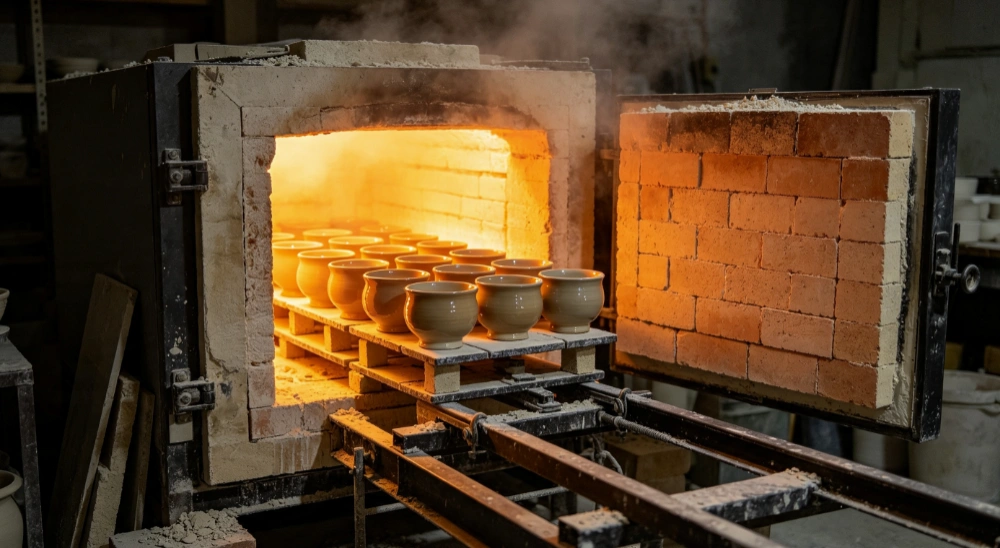
As temperature increases:
- The glaze softens.
- It gradually melts.
- It bonds permanently with the ceramic body.
- During cooling, it solidifies into a hard, vitreous surface.
The success of glaze firing determines many characteristics buyers immediately notice, including:
- Цвет
- Gloss
- Surface smoothness
- Текстура
- Устойчивость к царапинам
- Stain resistance
Для premium bathroom accessories, these visual details significantly influence perceived product quality.
Why Glaze Firing Requires Precision
Glaze and ceramic body expand and contract differently during heating and cooling.
If these materials are not properly matched, defects may occur, including:
- Crazing
- Shivering
- Peeling
- Crawling
- Blistering
- Uneven gloss
Профессиональные производители керамики therefore develop glaze formulations and firing schedules together rather than treating them as separate production steps.
Kiln Dynamics: Heatwork, Atmosphere & Cooling
What Happens Inside the Kiln During Firing?
Many buyers assume firing simply means heating products until they reach a target temperature.
In reality, professional kiln firing follows a carefully designed temperature profile consisting of several stages.
A typical firing cycle includes:
- Initial heating
- Moisture removal
- Controlled temperature increase
- High-temperature soaking
- Controlled cooling
Each stage serves a specific purpose.
Skipping or shortening any stage can negatively affect product quality.
Why Heatwork Matters More Than Peak Temperature
One common misconception among buyers is that higher firing temperatures always produce better ceramics.
In practice, the most important factor is heatwork.
Heatwork refers to the combined effect of:
- Temperature
- Heating rate
- Holding time
For example, two kilns may both reach 1220°C, yet produce noticeably different products because one kiln:
- heats more gradually,
- maintains peak temperature longer,
- cools more evenly.
As a result, products from the second kiln may exhibit:
- Better glaze maturity
- Improved color consistency
- Higher dimensional stability
- Reduced defect rates
This is why experienced ceramic manufacturers develop complete firing curves rather than relying solely on peak temperature.
Ceramic Firing Temperature
There is no universal firing temperature suitable for every ceramic product.
Different ceramic bodies require different firing conditions.
Typical materials include:
- Earthenware
- Stoneware
- Porcelain
- Specialty ceramic bodies
Each material matures at its own temperature range.
Consequently, asking a supplier
“What temperature do you fire your ceramics?”
provides only limited information.
A more meaningful discussion includes:
- Ceramic body formulation
- Glaze compatibility
- Heating curve
- Holding time
- Cooling schedule
- Final quality inspection
These factors together determine the quality of the finished product.
Oxidation vs. Reduction Firing
Kiln atmosphere also plays an important role in ceramic manufacturing.
Oxidation Firing
Oxidation firing occurs when sufficient oxygen is available throughout the firing process.
Most modern electric kilns operate under oxidation conditions.
This method generally provides stable color reproduction and predictable glaze performance, making it well suited for many OEM production projects.
Reduction Firing
Reduction firing limits the available oxygen inside the kiln.
This changes the chemical reactions occurring within certain metal oxides and glaze materials.
As a result, reduction firing may produce:
- Different glaze colors
- Richer visual textures
- Unique artistic finishes
However, reduction firing also requires more precise process control.
For customized ceramic colors, manufacturers often perform repeated firing tests before approving production samples.
Cooling: The Most Overlooked Stage of the Ceramic Firing Process
Many people believe the firing process ends once the kiln reaches its maximum temperature.
In reality, controlled cooling is an essential part of the ceramic firing process.
As ceramics cool, both the ceramic body and the glaze contract. If cooling occurs too quickly, differences in thermal contraction can generate internal stress that may not be visible immediately but can lead to defects later.
Профессиональные производители therefore treat cooling as a carefully controlled production stage rather than simply waiting for products to become cold.
Proper cooling helps achieve:
- Stable product dimensions
- Better glaze bonding
- Reduced internal stress
- Improved color consistency
- Lower crack rates
- Higher production stability
Decoration Types & Color Consistency
Decorative Firing
Not every ceramic product completes production after glaze firing.
Many premium ceramic collections require an additional decorative firing to permanently fix decorative elements onto the glazed surface.
Typical decorative applications include:
- Printed patterns
- Company logos
- Metallic decorations
- Gold or platinum accents
- Customized artwork
- Special decorative finishes
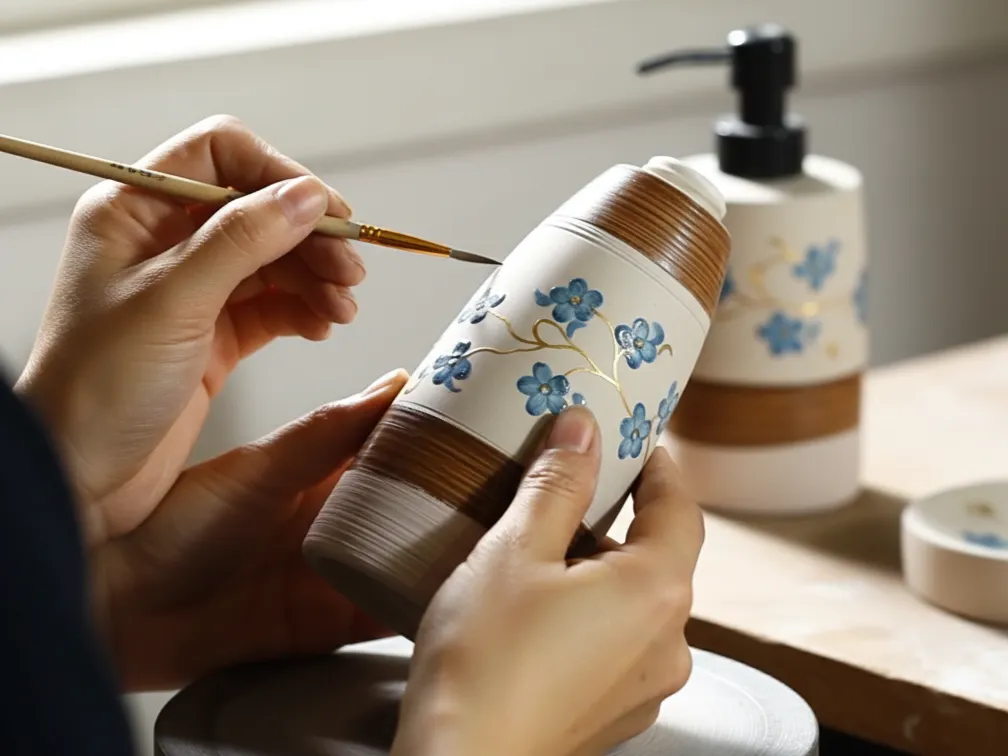
Decorative firing generally occurs at lower temperatures than the main glaze firing.
The exact firing schedule depends on the decoration materials rather than the ceramic body itself.
Why Decorative Firing Requires Additional Quality Control
Decorative firing may seem simple because it uses lower temperatures.
However, it presents its own manufacturing challenges.
The decoration must develop:
- Accurate colors
- Strong adhesion
- Smooth appearance
- Долговечность
without damaging the underlying glaze.
Even small variations in firing conditions can affect decorative quality.
For OEM projects involving customized logos or private-label branding, manufacturers often perform multiple trial firings before approving production samples.
Underglaze, Inglaze, and Overglaze Decoration
Different decoration methods create different visual effects and production requirements.
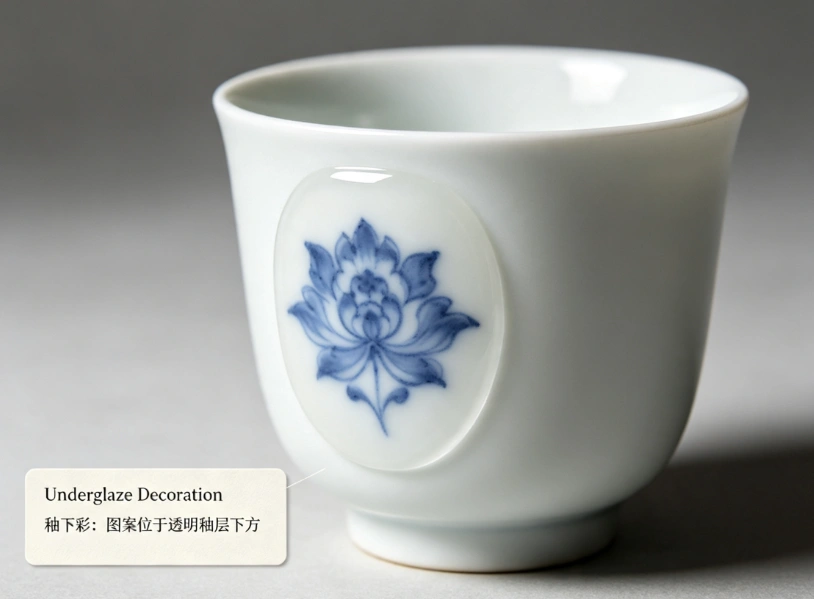
Underglaze Decoration
Underglaze decoration is applied directly to the ceramic body before glazing.
During glaze firing, the decoration becomes protected beneath the transparent glaze layer.
Advantages include:
- Excellent durability
- Гладкая поверхность
- Long-lasting decoration
- Good resistance to wear
Inglaze Decoration
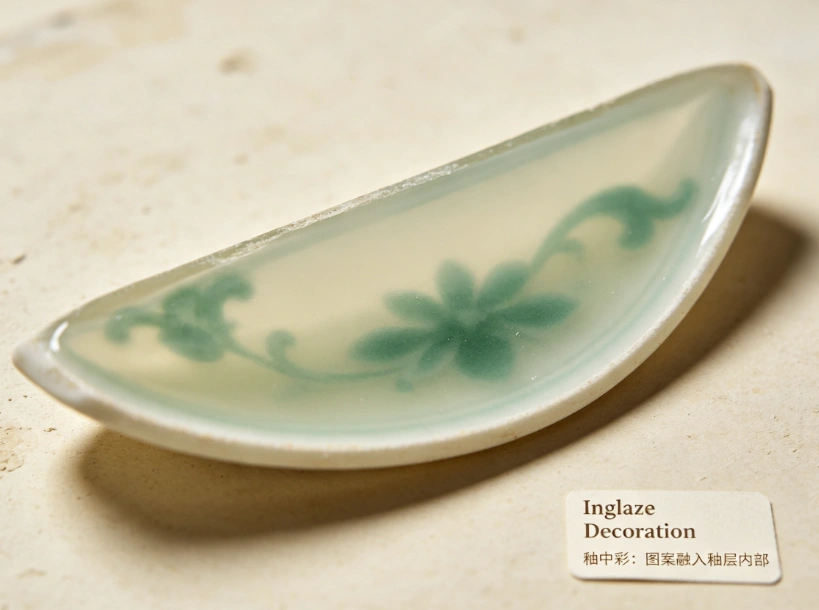
Inglaze decoration becomes integrated within the glaze layer during firing.
Because the decorative pigments partially fuse into the glaze, this method provides excellent durability while maintaining vibrant colors.
It is widely used for premium ceramic tableware and bathroom accessories that require both attractive appearance and long-term performance.
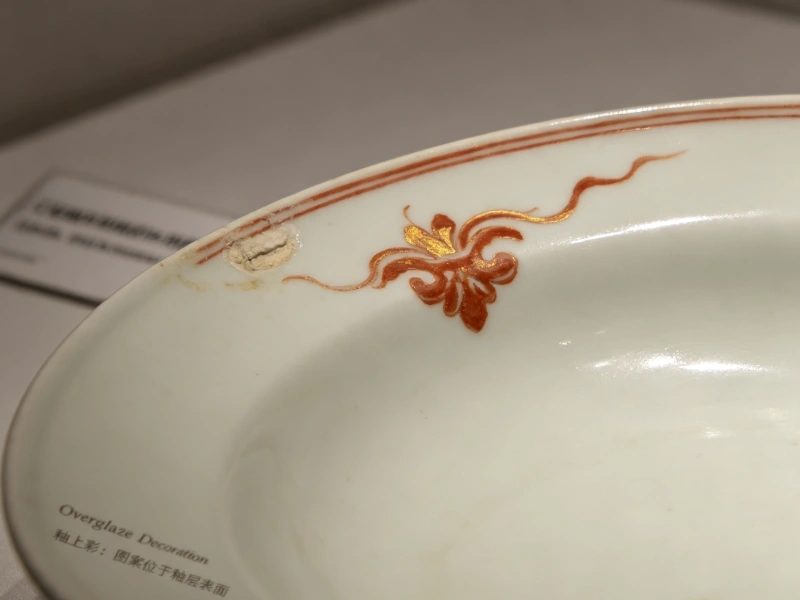
Overglaze Decoration
Overglaze decoration is applied after the primary glaze firing.
A second, lower-temperature firing permanently bonds the decoration to the glazed surface.
This technique allows manufacturers to achieve:
- Rich color details
- Metallic finishes
- Gold decoration
- Silver decoration
- Luxury design elements
Although visually impressive, overglaze decoration requires additional production steps and strict quality control to ensure adhesion and color consistency.
How the Ceramic Firing Process Affects Color Consistency
Color consistency is one of the most important quality requirements for OEM ceramic production.
Many buyers assume that color depends only on the glaze formula.
In reality, the ceramic firing process plays an equally important role.
During firing, ceramic pigments undergo complex chemical reactions.
Factors that influence final color include:
- Firing temperature
- Heating rate
- Holding time
- Cooling speed
- Kiln atmosphere
- Glaze thickness
- Raw material variation
As a result, two products using the same glaze may still develop slightly different colors if firing conditions change.
Common Ceramic Firing Defects
Even with advanced equipment, ceramic firing defects can occur if process control is inadequate.
Understanding these common problems helps buyers evaluate a manufacturer’s production capability.
Растрескивание
Cracks may develop because of:
- Incomplete drying
- Uneven wall thickness
- Rapid heating
- Rapid cooling
- Internal stress
- Material incompatibility
Professional manufacturers reduce cracking through controlled drying, optimized firing curves, and consistent raw materials.
Warping
Warping changes the shape of ceramic products during firing.
This issue commonly affects:
- Flat trays
- Long decorative pieces
- Thin ceramic products
- Large bathroom accessories
Proper mold design, wall thickness control, and kiln support systems help minimize deformation.
Glaze Crawling
Glaze crawling occurs when glaze pulls away from portions of the ceramic surface.
Possible causes include:
- Surface contamination
- Incorrect glaze viscosity
- Excessive glaze thickness
- Poor glaze-body compatibility
Careful surface preparation and process control significantly reduce this defect.
Pinholes and Blisters
Pinholes and blisters reduce both product appearance and quality.
They may result from:
- Gas release
- Organic residue
- Improper glaze formulation
- Inadequate firing schedules
Manufacturers often conduct glaze testing before mass production to minimize these issues.
Color Variation
Color variation is one of the most common reasons for customer complaints.
Possible causes include:
- Different glaze batches
- Uneven spraying
- Temperature variation
- Kiln atmosphere changes
- Different cooling rates
For premium OEM projects, manufacturers usually perform color inspections using approved master samples before shipment.
Quality Control Throughout the Ceramic Firing Process
Professional ceramic manufacturers understand that quality cannot be inspected into products after firing—it must be controlled throughout the entire production process.
Effective ceramic quality control includes monitoring every stage of firing rather than relying solely on final inspection.
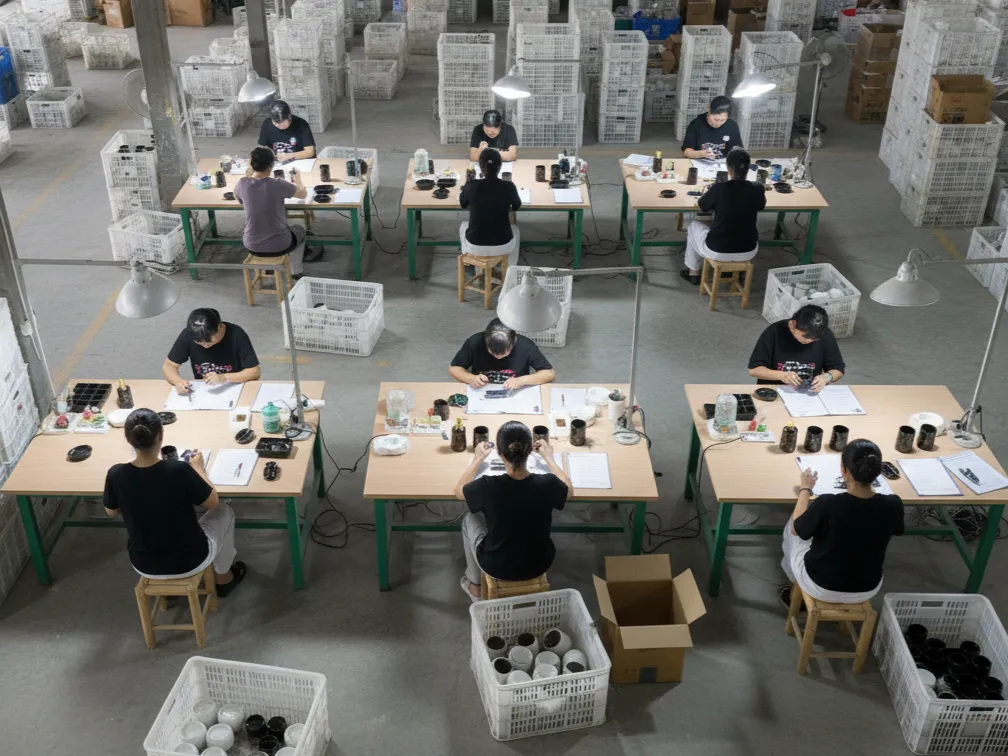
Typical quality-control measures include:
Temperature Monitoring
Modern kilns use programmable control systems and temperature sensors to maintain stable firing conditions throughout production.
Test Pieces
Manufacturers often place test pieces inside the kiln to evaluate:
- Glaze behavior
- Color development
- Shrinkage
- Качество поверхности
- Overall firing performance
These test samples help identify process variations before full-scale production is completed.
Multi-Zone Inspection
Temperature distribution inside large kilns is rarely identical.
Professional manufacturers therefore inspect products from different kiln locations—including upper, middle, and lower zones—to verify firing consistency across the entire load.
Final Product Inspection
After cooling, finished ceramic products are typically inspected for:
- Трещины
- Warping
- Дефекты поверхности
- Качество глазури
- Цветовая стабильность
- Dimensions
- Assembly compatibility
- Overall appearance
Only products meeting established quality standards proceed to packaging and shipment.
How Professional Manufacturers Maintain Consistency in the Ceramic Firing Process
Consistent firing is one of the biggest differences between an experienced ceramic manufacturer and a factory that simply produces ceramic products.
For international brands, consistency is often more important than producing a single excellent sample. Every repeat order should match previous shipments in color, dimensions, glaze finish, and overall appearance.
To ensure stability throughout the ceramic firing process, professional manufacturers establish standardized systems rather than relying on individual operator experience.
Standardized Firing Programs
Each product usually has its own firing program, which may include:
- Heating rates
- Temperature stages
- Holding times
- Peak firing temperatures
- Cooling curves
- Kiln loading methods
Once the optimum process has been verified through sample testing, the same program is used consistently for future production.
This reduces variation between batches and helps ensure stable product quality.
Equipment Maintenance
Even the best firing program cannot deliver consistent results if kiln equipment is poorly maintained.
Professional manufacturers regularly inspect:
- Heating elements
- Temperature sensors
- Controllers
- Kiln furniture
- Ventilation systems
- Insulation materials
Routine maintenance helps maintain uniform temperatures and improves long-term production stability.
Production Records
Reliable factories document every production batch.
Typical records include:
- Batch number
- Kiln number
- Product model
- Firing program
- Glaze batch
- Production date
- Inspection results
These records allow manufacturers to trace production history, investigate quality issues, and continuously improve manufacturing performance.
For OEM projects, documented production data also provides confidence that future repeat orders can be manufactured using the same process.
OEM Ceramic Products and Custom Firing Requirements
OEM projects typically require more process development than standard products.
When customers request customized colors, shapes, finishes, or decorative effects, manufacturers rarely move directly into mass production.
Instead, they follow a structured workflow to adapt the ceramic firing process to the unique parameters of the custom design.
Custom Color Development
Custom color projects generally include:
- Customer color confirmation
- Glaze formulation
- Sample production
- Trial firing
- Color evaluation
- Formula adjustment (if necessary)
- Final sample approval
- Mass production
Because pigments and mineral oxides transform under heat, physical samples fired through the actual ceramic firing process remain the only reliable standard for color verification.
Custom Shapes
A new product design may require adjustments to the firing process.
Factors such as wall thickness, product size, weight distribution, and geometry can all influence:
- Drying behavior
- Shrinkage
- Heat distribution
- Cooling performance
Professional manufacturers perform thermal simulation and trial runs to refine the ceramic firing process parameters before committing to large-scale production.
Why Physical Samples Still Matter
Digital renderings and product photos are useful during the design stage, but they cannot fully represent the characteristics of fired ceramics.
A physical sample allows buyers to evaluate:
- Actual color
- Surface texture
- Gloss level
- Product weight
- Точность размеров
- Overall craftsmanship
- Assembly compatibility
For OEM projects, approved samples become the reference standard for future production.
This helps both buyers and manufacturers maintain consistent expectations throughout the product lifecycle.
How Buyers Can Evaluate a Ceramic Manufacturer’s Firing Capability
When selecting a ceramic supplier, many buyers only negotiate price and lead times. However, asking targeted technical questions about the supplier’s ceramic firing process reveals far more about their true manufacturing capability and quality stability.
Consider discussing the following topics:
1. Manufacturing Process
- What forming method do you use?
- What type of kiln is used for production?
- How is kiln temperature monitored?
- Do you use standardized firing programs?
2. Quality Control
- How do you inspect glaze quality?
- How do you maintain color consistency?
- How do you control dimensional accuracy?
- How do you reduce firing defects?
3. OEM Experience
- Have you developed private-label projects before?
- Can you produce customized colors?
- Can you support customized shapes?
- Do you provide prototype samples before production?
Manufacturers that can clearly explain their production methods are generally better positioned to support long-term OEM cooperation.
Заключение
The ceramic firing process is much more than heating clay inside a kiln.
It is a carefully controlled manufacturing process that determines the final strength, appearance, durability, dimensional stability, and consistency of ceramic products.
From drying and bisque firing to glazing, decorative firing, cooling, and final inspection, every stage influences product performance.
For international buyers, understanding the ceramic firing process provides valuable insight into how professional manufacturers achieve reliable quality and why process control is essential for successful OEM production.
Rather than comparing suppliers only by price or firing temperature, buyers should evaluate the complete manufacturing system, including standardized production procedures, quality control, equipment maintenance, and sample verification.
Working with an experienced ceramic manufacturer helps reduce production risks while ensuring that every shipment meets the quality expectations of retailers, wholesalers, hotels, and private-label brands.
Часто задаваемые вопросы
1. What is the ceramic firing process?
The ceramic firing process is the controlled heating and cooling of ceramic products in a kiln. It transforms shaped clay into a durable ceramic body while developing the final glaze and decorative finish.
2. What is the difference between bisque firing and glaze firing in the ceramic firing process?
Bisque firing strengthens the ceramic body and prepares it for glazing. Glaze firing melts the glaze so it bonds permanently with the ceramic surface, creating the finished appearance and protective coating.
3. Does a higher temperature in the ceramic firing process guarantee better quality?
No. Product quality depends on the complete firing program, including heating rate, holding time, cooling schedule, glaze compatibility, and process consistency—not simply the peak temperature.
4. Why do ceramic colors sometimes vary between production batches?
Color variation may result from differences in glaze application, kiln atmosphere, firing curves, raw materials, or cooling conditions. Professional manufacturers control these variables to maintain batch-to-batch consistency.
5. Why are physical samples important for OEM projects?
Physical samples allow buyers to confirm color, gloss, texture, dimensions, and overall quality before mass production begins. They also serve as the reference standard for future repeat orders.
6. How can buyers evaluate a ceramic manufacturer’s production capability?
In addition to reviewing product samples, buyers should understand the supplier’s ceramic firing process controls, firing control methods, quality management system, inspection procedures, and experience with OEM projects.
Ready to Develop Your Next OEM Ceramic Collection?
Whether you’re sourcing ceramic bathroom accessories, home décor, or custom ceramic collections, choosing a manufacturer with a stable ceramic firing process is essential for consistent quality and long-term supply reliability.
На сайте Керамика Yigejia, we combine modern production equipment with standardized manufacturing procedures and strict quality control to support wholesalers, retailers, importers, hotel projects, and private-label brands worldwide.
Мы предлагаем:
- OEM & ODM ceramic manufacturing
- Custom colors, finishes, and decorations
- Sample development and approval
- Consistent batch-to-batch production
- Строгий контроль качества
- Export-ready packaging
- Professional support throughout your project
Planning your next ceramic collection? Contact Керамика Yigejia today to discuss your ideas, request samples, and discover how our manufacturing expertise can help bring your products to market with confidence.
-

Custom 4-Piece Bathroom Accessory Set, Reactive Glaze Luxury Hotel Bath Ceramic Accessories
-

Custom 4 Piece Bath Accessory Set Wholesale Electroplated Gradient Ceramic Bathroom Set
-
Black and White Bathroom Set Wholesale 5-piece Ceramic Bath Accessory Set with Pump
-
OEM Black Bathroom Accessories Set Supplier, 4-piece Spiral Relief Decor Bath Set with Gold Pump