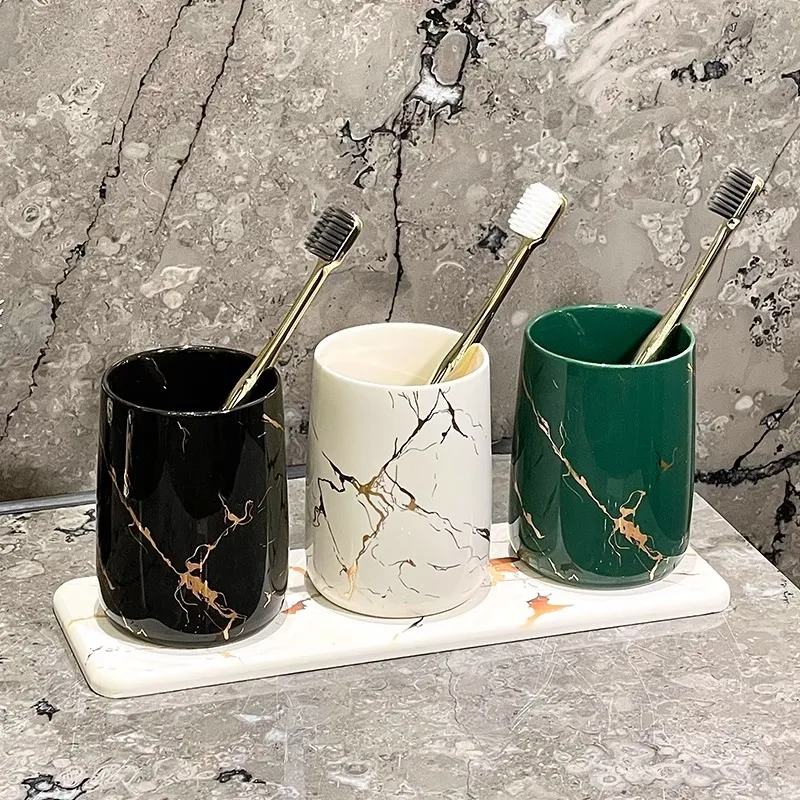
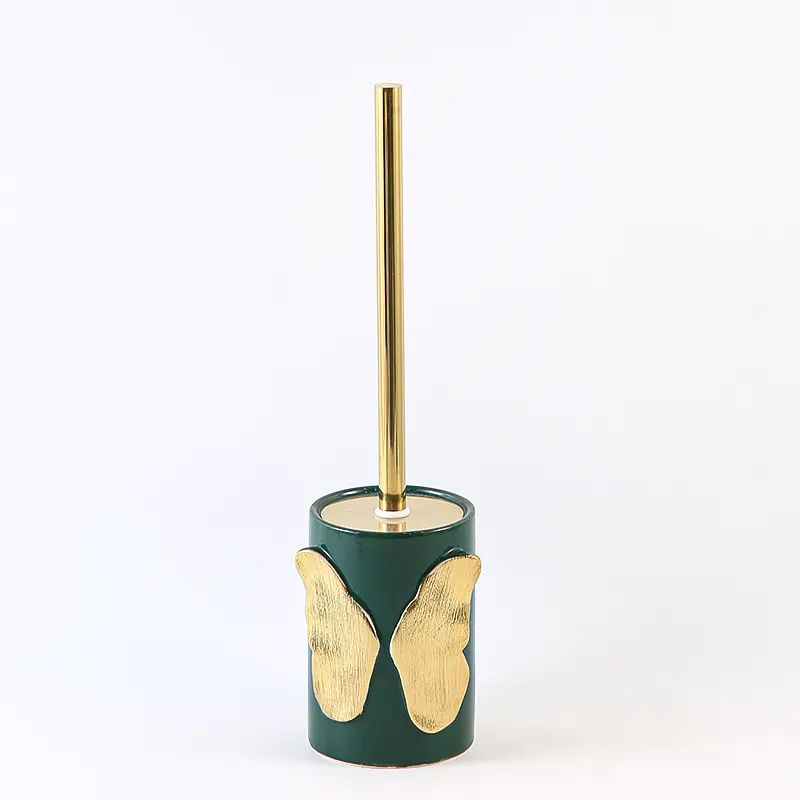
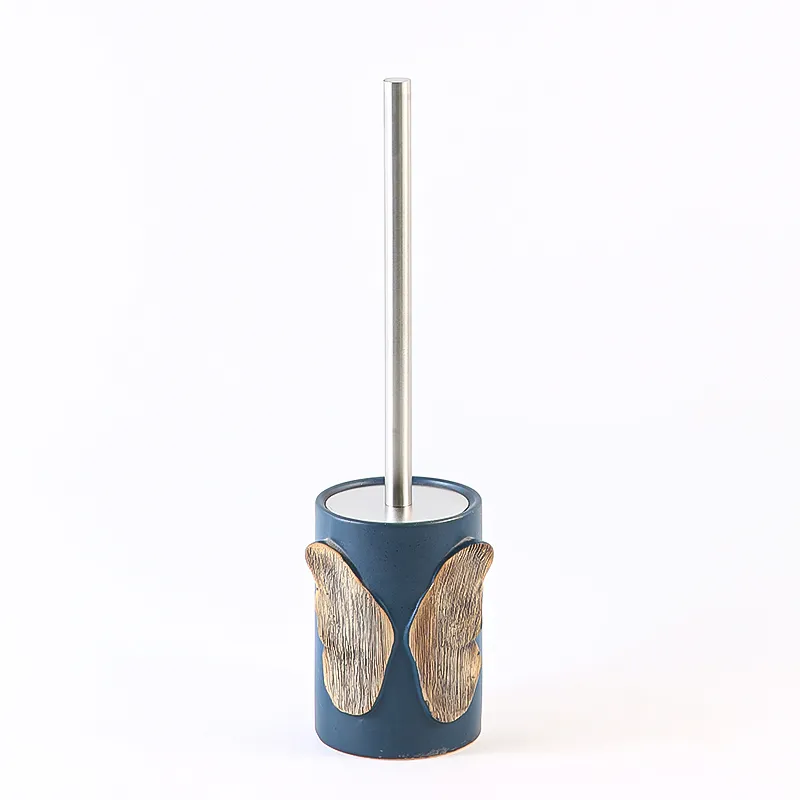
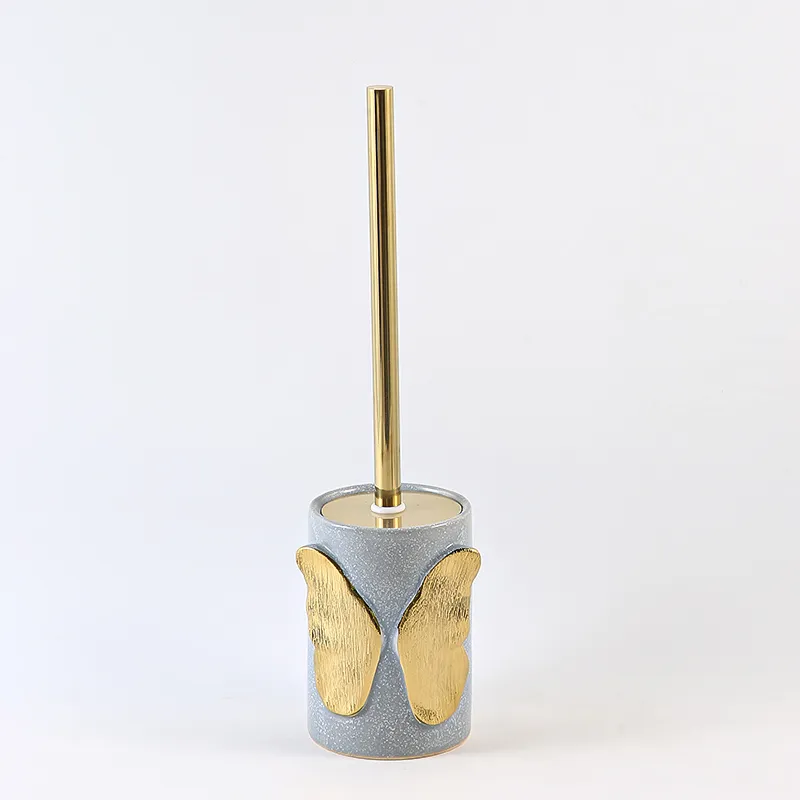
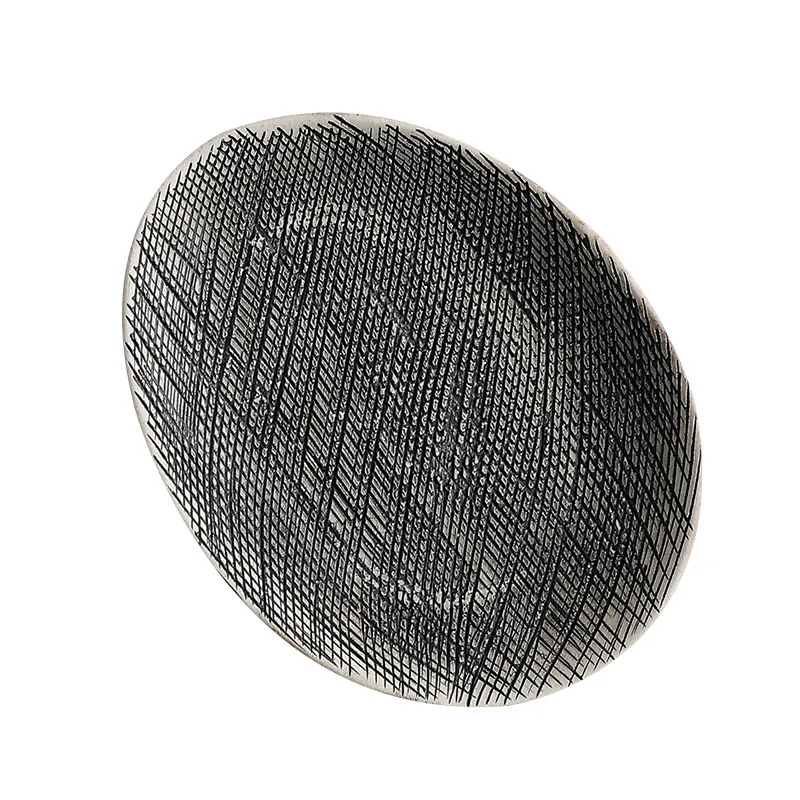
Dishwasher-safe bathroom accessories are worth considering when the ceramic body, glaze, decoration, and detachable components are all tested for repeated machine washing. For retailers, verified dishwasher resistance reduces returns and strengthens product claims.
For retailers and importers, however, “dishwasher safe” should not be treated as a simple ceramic-material label. A ceramic soap dispenser may have a dishwasher-resistant body while its pump, metallic trim, decal, or adhesive components require hand washing. The real purchasing question is therefore not simply whether ceramic can survive a dishwasher, but whether the complete product configuration has been tested for repeated thermal, chemical, and mechanical stresses.
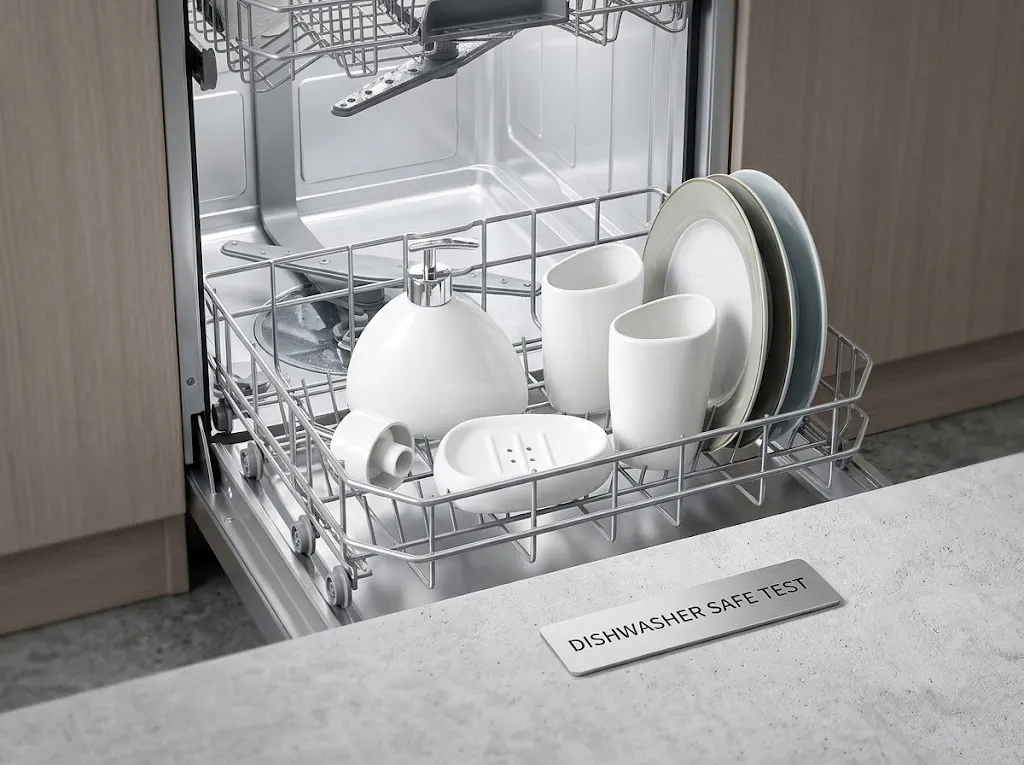
What Does “Dishwasher Safe” Actually Mean for Bathroom Accessories?
Dishwasher safe means a specific product configuration has demonstrated resistance to the heat, detergent, water pressure, and mechanical stresses of machine washing under a defined test method.
For B2B buyers, this distinction matters because dishwasher resistance is not determined by the ceramic body alone.
The European EN 12875-1 test method evaluates resistance under the combined chemical, thermal, and mechanical stresses of mechanical dishwashing. The 2024 edition covers articles made from ceramic, glass, glass ceramic, vitreous enamel, coatings, rubber, silicone, metal, and plastics.
That means a bathroom accessory containing several materials should be evaluated as a complete assembly.
| Product component | What needs to be evaluated |
|---|---|
| Ceramic body | Thermal shock, cracking, glaze stability |
| Glaze | Detergent and chemical resistance |
| Decal | Color retention and adhesion |
| Gold/silver decoration | Fading, abrasion and chemical resistance |
| Pump | Heat, detergent and repeated operation |
| Adhesive components | Bond strength after washing |
| Metal parts | مقاومة التآكل |
| Silicone/rubber parts | Heat and chemical stability |
For importers, the most important question to ask a supplier is therefore: “Which parts of this product are dishwasher safe?” rather than simply “Is this product dishwasher safe?”
Why Should Retailers Care About Dishwasher Resistance?
Dishwasher resistance gives retailers a measurable durability claim, reduces misuse-related complaints, and creates a stronger product proposition for customers who prioritize easy maintenance.
Bathroom accessories are exposed to soap, toothpaste, cosmetics, disinfectants, and water every day. Although most ceramic bathroom accessories are cleaned manually, some consumers and commercial users may prefer machine washing removable ceramic components.
For hospitality projects, the requirement can be even more relevant. Hotels and serviced apartments need bathroom products that tolerate frequent cleaning without rapid deterioration of their surface finish.
الـ FDA Food Code provides a useful benchmark for how durability is treated in another high-cleaning environment: food-contact equipment is required to have surfaces that are smooth and easily cleanable and resistant to pitting, chipping, crazing, scratching, scoring, distortion, and decomposition.
Although this requirement applies to food-contact equipment rather than bathroom accessories, the underlying purchasing principle is relevant: surface durability and cleanability should be evaluated separately from appearance.
Are All Ceramic Bathroom Accessories Dishwasher Safe?
No. Ceramic material alone does not make a bathroom accessory dishwasher safe; the glaze, decoration, hardware, and assembly must also withstand the washing conditions.
This is especially important for decorative ceramic bathroom sets.
Consider a four-piece set containing a soap dispenser, toothbrush holder, tumbler and soap dish:
| Feature | Ceramic Body | Complete Product |
|---|---|---|
| Ceramic thermal resistance | ✓ | Not sufficient alone |
| Glaze resistance | ✓ | Must be tested |
| Floral decal | Possible | Requires separate validation |
| Gold rim | Possible | Requires decoration testing |
| Pump mechanism | N/A | Requires component testing |
| Silicone/adhesive parts | N/A | Requires component testing |
| Complete dishwasher claim | No | Requires finished-product testing |
A ceramic body can tolerate high-temperature firing during manufacturing and still have a decorative finish that is unsuitable for repeated dishwasher exposure.
ولهذا السبب dishwasher resistance should be specified by SKU and configuration, not assumed across an entire product range.
What Ceramic Properties Matter Most for Dishwasher-Safe Accessories?
The most important ceramic properties are low water absorption, strong vitrification, glaze stability, thermal-shock resistance, and resistance to repeated detergent exposure.
1. Low Water Absorption
A dense ceramic body absorbs less moisture and provides greater dimensional stability.
For Yigejia’s middle- and high-temperature ceramic products, the target water absorption rate is ≤0.5% for applicable stoneware and white porcelain products.
This characteristic is valuable for bathroom accessories because the products are continuously exposed to water and humidity.
2. Vitrification
Higher-temperature firing promotes densification and vitrification of the ceramic body.
Yigejia’s ceramic production process uses firing temperatures of approximately 1220°C–1280°C for applicable products.
However, high firing temperature should not be presented as proof of dishwasher safety. The correct approach is to verify the finished product through an appropriate dishwasher-resistance test.
3. Glaze Stability
The glaze is the first surface exposed to water, detergents and mechanical contact.
A stable glaze should resist:
- Crazing
- Peeling
- Discoloration
- Surface dulling
- Scratching
- Chemical deterioration
4. Thermal-Shock Resistance
Dishwasher cycles combine hot water, detergent and cooling stages. Ceramic products therefore need sufficient resistance to temperature changes.
This is particularly important for products with:
- Thick ceramic walls
- الزوايا الحادة
- Uneven wall thickness
- Large flat surfaces
- Complex decorative structures
How Does Dishwasher Detergent Affect Ceramic Decorations?
Dishwasher detergent can gradually damage vulnerable decorative finishes, making decoration resistance a critical consideration for printed, metallic, and colored bathroom accessories.
ASTM International maintains ASTM C676-04(2025)e1, a test method for evaluating the detergent resistance of ceramic decorations on glass tableware under high-phosphate detergent exposure. The standard demonstrates that decorative layers require their own durability assessment rather than relying solely on the underlying ceramic body.
For bathroom accessory buyers, this creates an important distinction:
| Decoration | Dishwasher consideration |
|---|---|
| Integral glaze | Generally more durable |
| High-temperature ceramic decoration | Requires validation |
| Decal decoration | Requires detergent-resistance testing |
| Gold rim | Requires specific durability testing |
| Metallic coating | Requires separate validation |
| Hand-painted surface | Do not assume dishwasher safe |
This is one of the most frequently overlooked issues in ceramic product sourcing.
A supplier may correctly describe the ceramic body as durable while the decorative layer has a completely different resistance profile.
Should Retailers Choose Dishwasher-Safe Bathroom Accessories?
Retailers should prioritize dishwasher-tested accessories when their customers value easy maintenance, but the claim should only be used when the complete SKU has documented test evidence.
Dishwasher resistance creates particular value for:
- Home & lifestyle retailers
- Premium bathroom accessory brands
- Hotel supply companies
- Hospitality procurement companies
- Private-label brands
- Online retailers
For purely decorative bathroom accessories, dishwasher resistance may have limited commercial value.
For functional products such as ceramic tumblers, soap dishes and removable ceramic components, it can become a meaningful selling point.
The decision should therefore be based on customer use case rather than simply adding “dishwasher safe” to a product specification sheet.
What Should Importers Ask a Ceramic Bathroom Accessories Manufacturer?
Importers should request product-specific test information covering the ceramic body, glaze, decoration and non-ceramic components before printing dishwasher-safe claims on packaging or product pages.
Use this procurement checklist:
- Ask whether the entire SKU is dishwasher safe.
Do not accept a generic statement covering an entire product catalog. - Request the applicable test method.
EN 12875-1 provides a reference method for evaluating resistance to mechanical dishwashing. - Ask how many dishwasher cycles were tested.
The 2024 EN 12875-1 reference method specifies the test methodology, while the minimum number of cycles is defined separately in EN 12875-2. - Check decorative components separately.
Ask whether decals, metallic borders, gold finishes and colored decorations were included in the testing. - Check removable hardware.
A ceramic soap dispenser body may be dishwasher resistant while its pump assembly is not. - Request representative samples.
Test the exact commercial configuration rather than a visually similar sample. - Confirm packaging and shipping specifications.
Dishwasher resistance does not replace impact and transportation testing.
Is Dishwasher Safety More Important Than Ceramic Density?
No. Dishwasher safety and ceramic density measure different performance characteristics, so retailers should evaluate both rather than substitute one for the other.
This is another useful distinction for B2B procurement.
A dense, low-absorption ceramic body provides a strong foundation, but it does not automatically prove resistance to repeated dishwasher cycles.
Conversely, a product may survive dishwasher testing but still have weaknesses in impact resistance or transportation durability.
ASTM C368-88(2024) provides a separate impact-resistance test method for ceramic tableware, including center impact and rim chipping tests.
Therefore, a more complete supplier evaluation looks like this:
Material quality → Forming consistency → Firing → Glaze → Decoration → Dishwasher testing → Impact testing → Packaging
This is particularly useful for importers because product failure can occur at any stage.
What Is the Difference Between Dishwasher-Safe and Easy-to-Clean Ceramic?
Dishwasher-safe means the product has demonstrated resistance to machine washing, while easy-to-clean describes the surface’s practical ability to be cleaned without excessive effort.
These are not interchangeable claims.
| Claim | What it tells buyers |
|---|---|
| سهل التنظيف | Surface can be cleaned conveniently |
| Stain resistant | Surface resists specific staining conditions |
| Chemical resistant | Surface tolerates specified chemicals |
| Dishwasher safe | Product tolerates defined machine-washing conditions |
| Scratch resistant | Surface resists specified mechanical damage |
For bathroom accessories, easy-to-clean may actually be more commercially relevant than dishwasher safe for many product categories.
A smooth, dense, well-glazed ceramic surface can provide excellent everyday cleaning performance even when the complete assembled product is not designed for dishwasher use.
How Does Yigejia Approach Ceramic Bathroom Accessory Durability?
Yigejia approaches durability as a combination of ceramic material quality, controlled firing, surface craftsmanship, component selection and product-specific quality inspection.
Founded in 1998 in Chaozhou, China’s ceramic manufacturing center, Yigejia operates a manufacturing facility of more than 10,000 m² and specializes in middle- and high-temperature ceramics, white porcelain decals, colored glazes and handmade brushed finishes.
Our production experience covers OEM and ODM bathroom accessories for overseas wholesalers, retailers, hospitality projects and distributors.
For a new dishwasher-resistance requirement, the practical workflow should be:
- Confirm the exact product structure.
- Identify every material exposed to the dishwasher environment.
- Select the appropriate ceramic body and glaze.
- Review decoration and metallic finishing requirements.
- Produce a representative sample.
- Conduct the required dishwasher-resistance evaluation.
- Inspect the ceramic body, glaze, decoration and hardware after testing.
- Approve the final SKU specification before mass production.
A Unique B2B Insight: Test the “Weakest Component,” Not Just the Ceramic
For retailers and importers, one of the most useful lessons from ceramic accessory development is that the ceramic body is rarely the only potential failure point.
For example, a floral ceramic soap dispenser may have a highly durable ceramic body, but its pump, metal collar, decal or adhesive interface can determine whether the complete product deserves a dishwasher-safe claim.
This means the correct procurement unit is not simply:
Ceramic material
but:
Finished SKU + decoration + hardware + assembly + test conditions
This approach gives importers a much more reliable basis for product claims, packaging specifications and after-sales policies.
What Compliance Issues Should Importers Consider for Ceramic Products?
Compliance requirements depend on the product’s intended use and destination market, so importers should verify the applicable regulations rather than applying food-contact standards automatically to bathroom accessories.
For example, EU rules specifically regulate ceramic articles intended to come into contact with food and establish migration limits for lead and cadmium. The European Commission also identifies ceramic and other materials used in food-contact applications as regulated food-contact materials.
The European Chemicals Agency currently lists the relevant ceramic lead and cadmium migration limits, including 0.8 mg/dm² for lead and 0.07 mg/dm² for cadmium for certain Category 1 ceramic articles, with different limits applying to other categories.
For bathroom accessories that are not intended for food contact, these food-contact limits should not simply be presented as the product’s general “dishwasher certification.” Instead, buyers should identify:
- Intended product use
- Destination market
- Applicable material requirements
- Dishwasher-resistance requirements
- Chemical-resistance requirements
- Decoration safety requirements
- Required test reports
This prevents suppliers and retailers from making technically inaccurate compliance claims.
FAQ: Dishwasher-Safe Bathroom Accessories
Are ceramic bathroom accessories naturally dishwasher safe?
No. Ceramic can withstand high firing temperatures during manufacturing, but dishwasher resistance depends on the finished product, including its glaze, decoration, hardware and assembly.
Can a ceramic soap dispenser go in the dishwasher?
The ceramic dispenser body may be dishwasher resistant, but the pump assembly may require separate testing or hand washing. Retailers should verify the complete SKU before making a dishwasher-safe claim.
Does dishwasher-safe ceramic mean scratch-proof?
No. Dishwasher resistance and scratch resistance are different performance characteristics and should be evaluated separately.
Are gold-rimmed ceramic bathroom accessories dishwasher safe?
Do not assume so. Metallic decorations require specific durability validation because repeated detergent exposure and mechanical washing can affect decorative finishes.
What test standard can importers use for dishwasher resistance?
EN 12875-1 provides a reference test method for the resistance of domestic articles to the combined chemical, thermal and mechanical stresses of mechanical dishwashing.
Should retailers put “dishwasher safe” on product packaging?
Only when the exact finished product has been tested or otherwise substantiated for that claim under appropriate conditions. A durable ceramic body alone is not sufficient evidence.
الخلاصة
Dishwasher-safe bathroom accessories can be a valuable product feature for retailers and importers, but the claim should never be based on ceramic material alone. The ceramic body, glaze, decorative finish, pump, metal components, and assembly all need to be considered when evaluating dishwasher resistance.
For B2B buyers, the most reliable approach is to select a Ceramic Bathroom Accessories Manufacturer that can provide product-specific testing, consistent material quality, controlled firing, and stable OEM/ODM production. Yigejia combines more than 20 years of ceramic manufacturing experience with over 10,000 m² of production facilities to support customized bathroom accessory collections for retailers, wholesalers, distributors, and hospitality projects.
If you’re developing a new ceramic bathroom accessories collection, request a sample and confirm the required durability and dishwasher-resistance specifications before mass production. This helps reduce product returns, protect your brand reputation, and build a more reliable long-term supply chain.