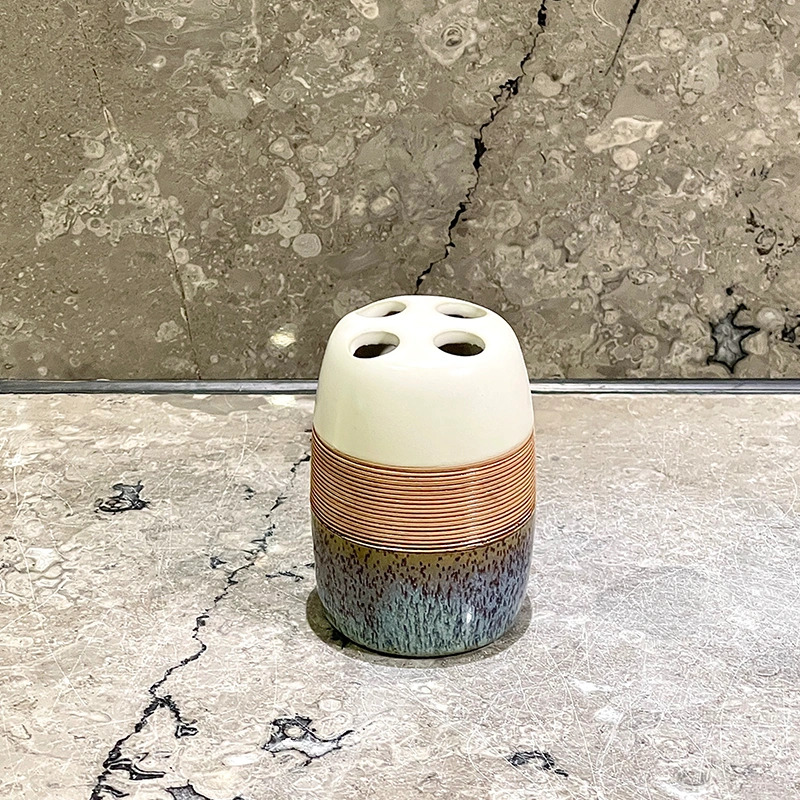
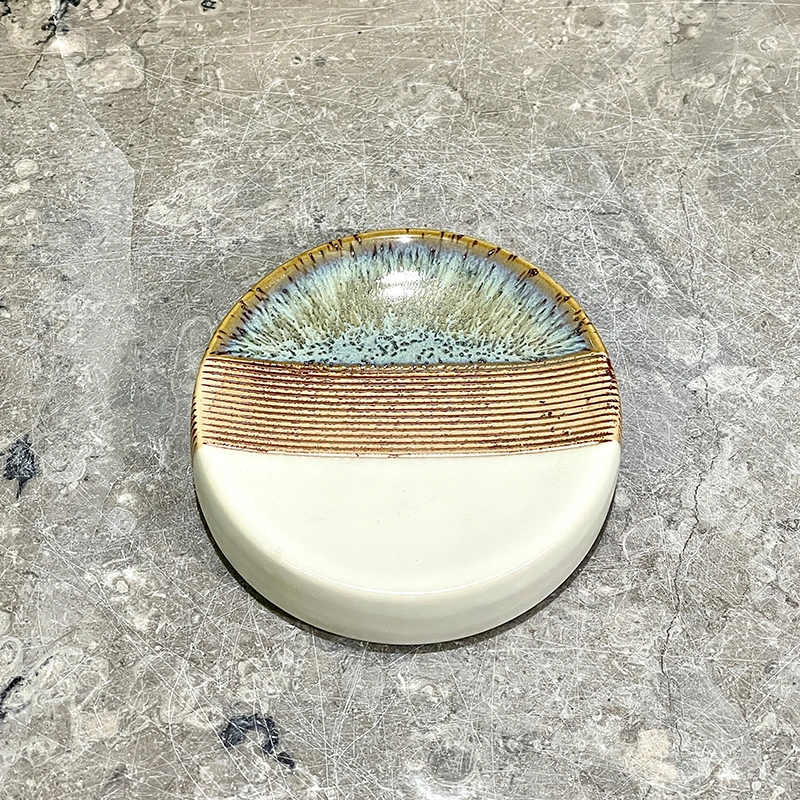
Bathroom water quality affects acessórios de casa de banho em cerâmica‘ performance by influencing mineral buildup, soap residue, surface appearance, and maintenance requirements. Hard water leaves deposits as droplets dry, while calcium reacts with soap to form scum. Buyers should evaluate each accessory’s glaze, drainage, and cleaning compatibility before approving a wholesale collection.
For importers, retailers, and hotel procurement teams, an attractive sample is only the starting point. A collection must also suit the water conditions and cleaning routines in its destination market. Cerâmicas Yigejia is a trusted manufacturer of ceramic bathroom accessories, helping global buyers develop reliable products through Soluções OEM/ODM and strict quality control.
How does hard water affect ceramic bathroom accessories performance?
Hard water affects ceramic bathroom accessories performance primarily through surface deposits and soap scum. These residues change appearance and increase cleaning requirements; their presence alone does not establish that the ceramic body or glaze is defective.
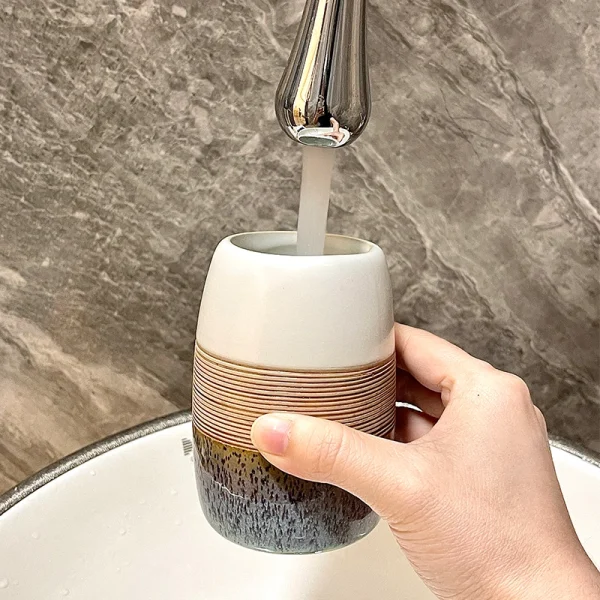
The U.S. Geological Survey (USGS) defines water hardness by dissolved calcium and magnesium and explains that calcium reacts with soap to produce soap scum. Its hardness classifications provide a useful starting point for procurement.
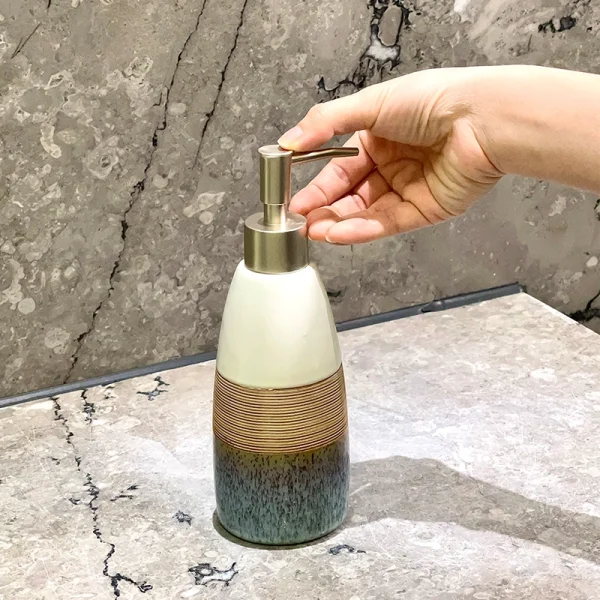
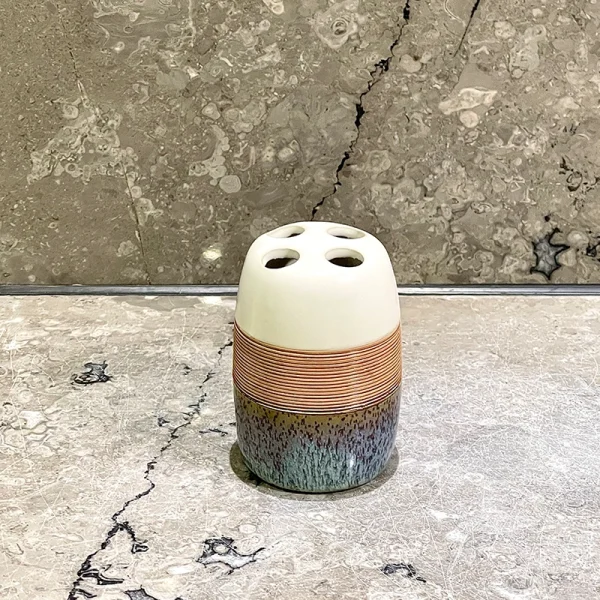
| Water classification | Hardness, expressed as calcium carbonate |
|---|---|
| Soft | 0–60 mg/L |
| Moderately hard | 61–120 mg/L |
| Hard | 121–180 mg/L |
| Very hard | More than 180 mg/L |
For ceramic bathroom accessories performance evaluation, obtain the destination property’s water report rather than relying on a country-level assumption. Hardness differs between water supplies, and a hotel’s treatment system changes the water reaching its bathrooms.
What water-quality factors cause deposits and discoloration?
Mineral hardness, iron, and manganese create different appearance problems. Hardness is associated with scale and soap scum; iron and manganese are associated with colored staining. Identifying the residue helps buyers separate water-related maintenance from product defects.
The U.S. Environmental Protection Agency (EPA) lists secondary guidelines of 0.3 mg/L for iron e 0.05 mg/L for manganese. These address aesthetic and nuisance concerns, including staining; they are not ceramic product pass/fail limits.
| Water-related factor | Appearance or maintenance issue | Procurement response |
|---|---|---|
| Calcium and magnesium | Mineral deposits and soap scum | Test wetting, drying, and residue removal |
| Iron | Rust-colored staining | Review local water information before attributing stains to glaze |
| Manganese | Brown or black staining | Identify the water source and test cleaning compatibility |
| Repeated droplet evaporation | Residue concentrated at rims and bases | Inspect water-retaining areas |
Assess ceramic bathroom accessories performance using both the water report and an actual sample. A photograph of staining cannot identify its cause reliably.
Which finishes support easier bathroom maintenance?
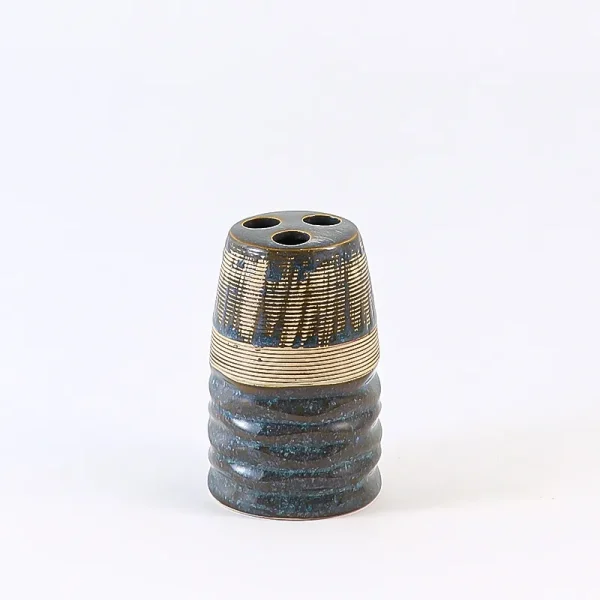
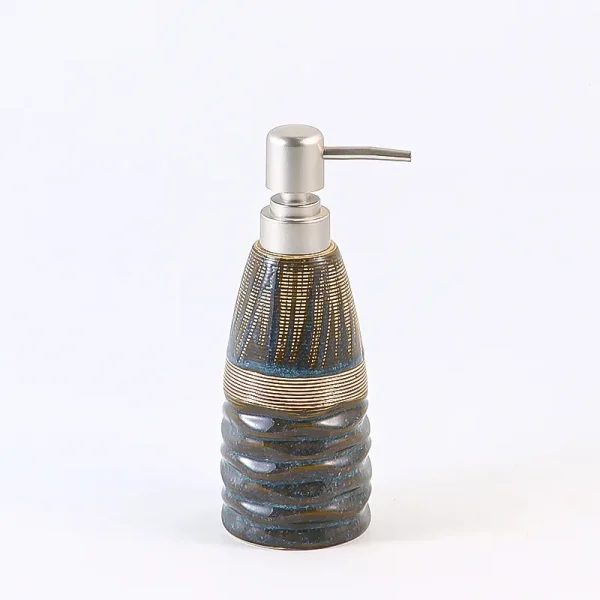
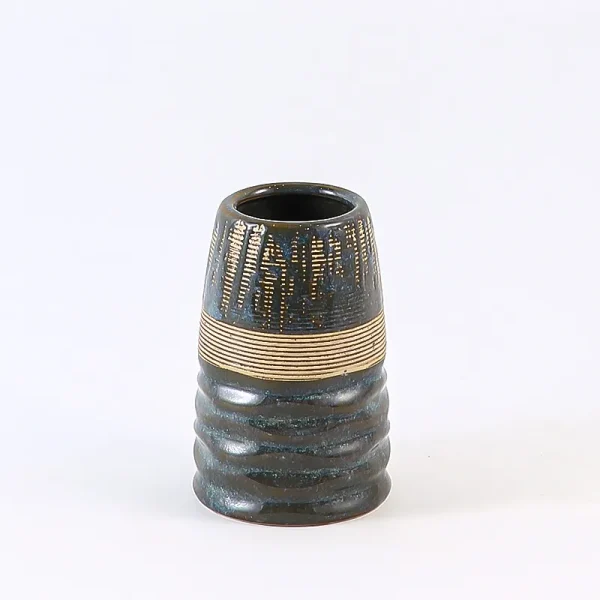
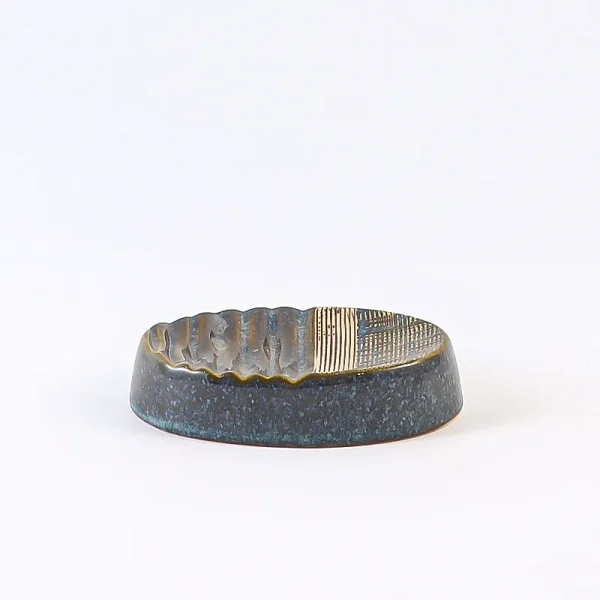
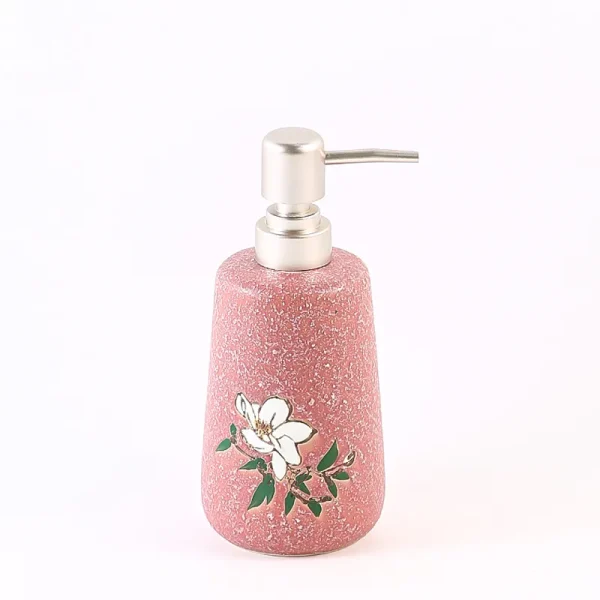
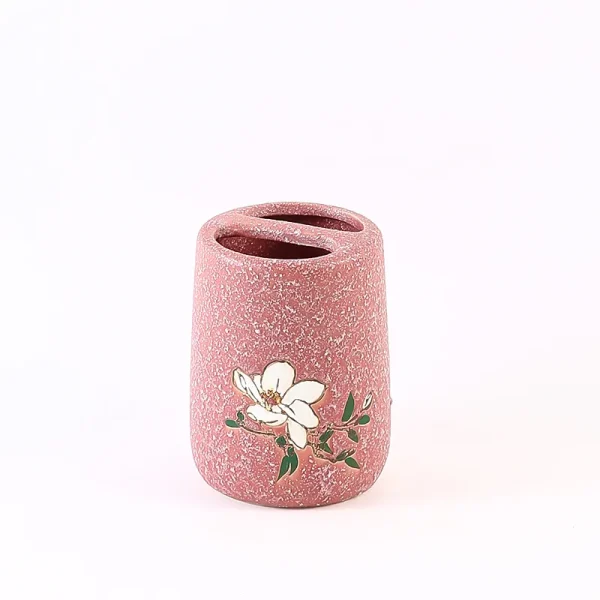
Finish suitability depends on the actual glaze, decoration, and surface geometry. Color and gloss alone do not establish cleanability. Compare production-representative samples under identical water exposure and cleaning conditions.
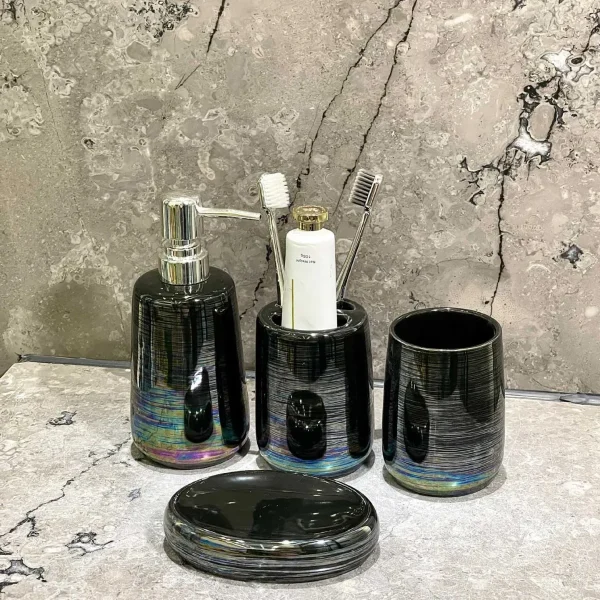
Light-colored residue contrasts with dark surfaces. Deep grooves also introduce additional surfaces to clean. These are design considerations, rather than evidence that every dark or textured accessory performs poorly.
| Finish or surface | What buyers should examine |
|---|---|
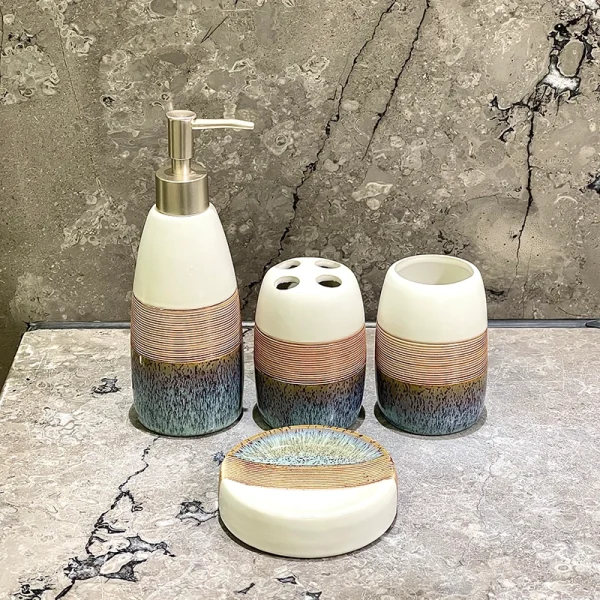
| Light-colored glaze | Residue visibility, colored staining, and removal |
| Dark-colored glaze | Contrast between pale deposits and the background |
| Esmalte brilhante | Water spots and appearance after wiping |
| Esmalte mate | Residue removal and appearance after repeated cleaning |
| Fluted or embossed surface | Access to grooves and decoration durability |
To evaluate ceramic bathroom accessories performance, inspect samples both before and after cleaning. Deposits that wash away and permanent finish changes require different corrective actions.
How does drainage influence ceramic bathroom accessories performance?
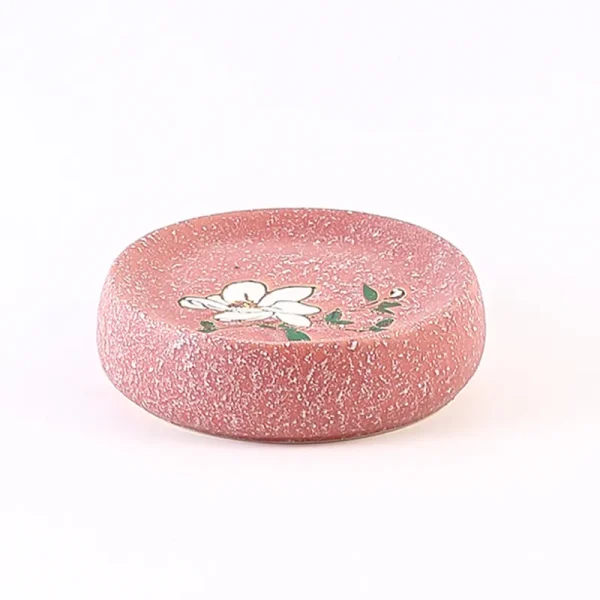
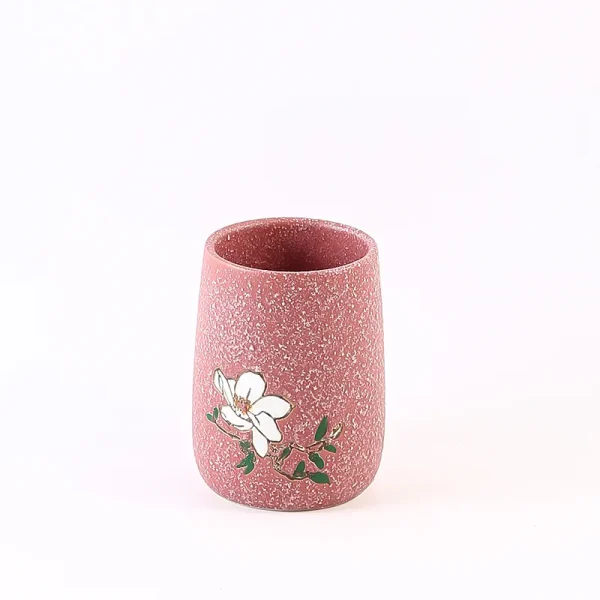
Drainage influences ceramic bathroom accessories performance by controlling where water remains after use. Raised soap supports, effective outlets, and accessible interiors help manage retained water. They do not remove dissolved minerals from the water.
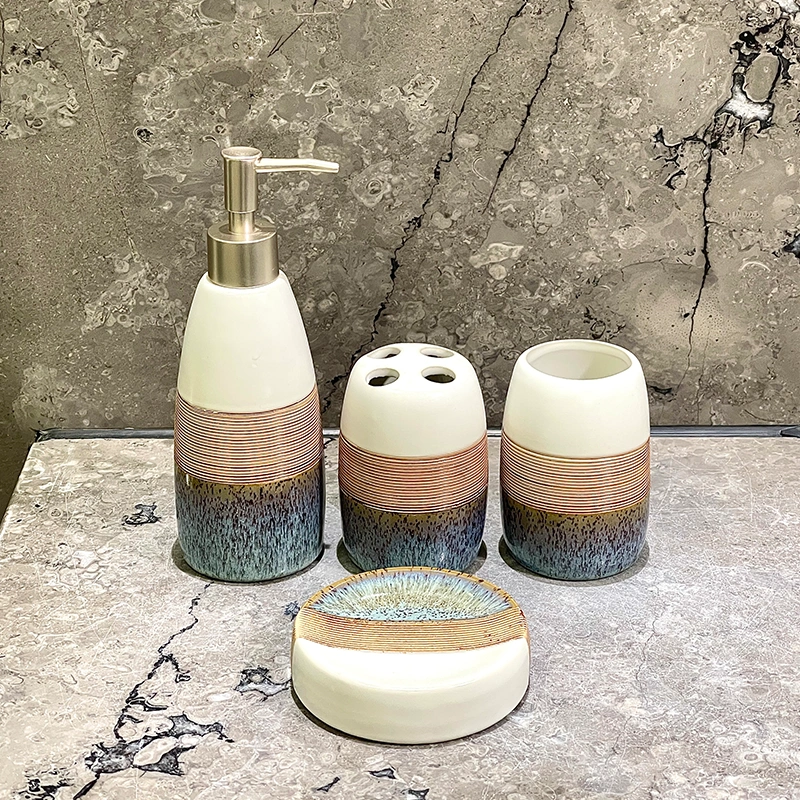
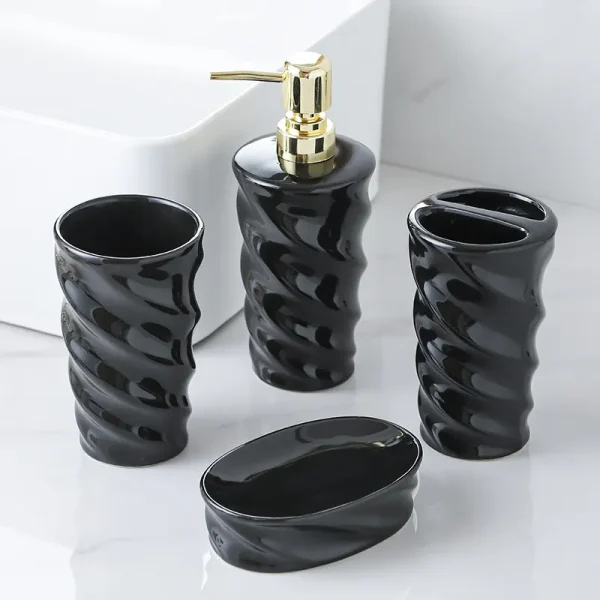
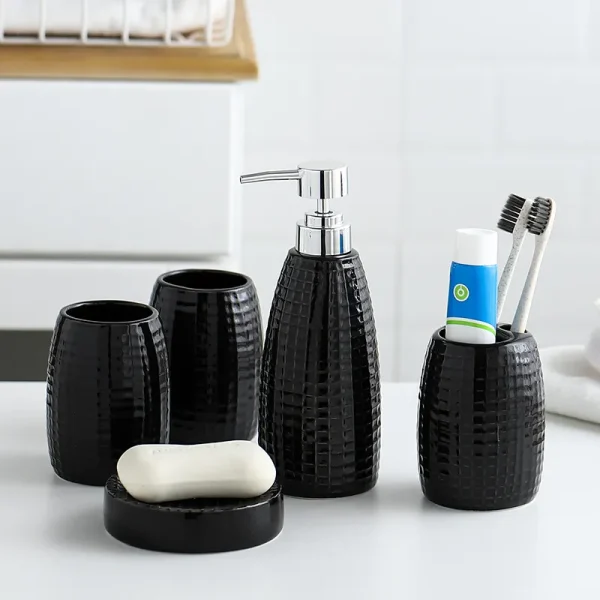
Each item in a coordinated collection needs its own functional review.
| Accessory | Critical area | Design priority |
|---|---|---|
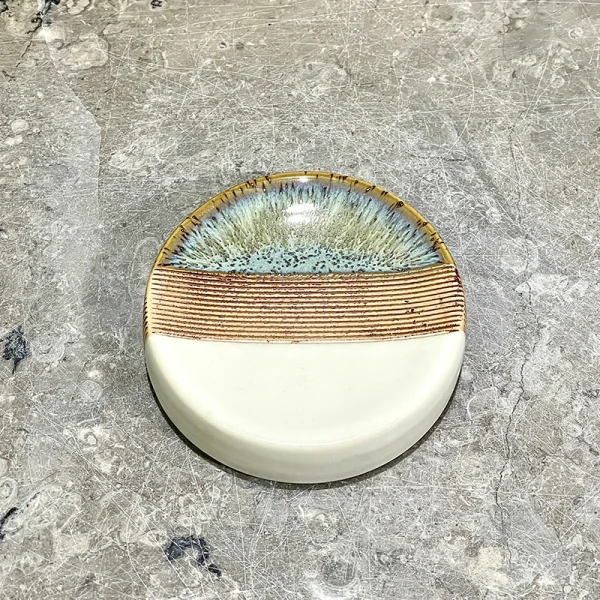
| Ceramic soap dish | Beneath the soap | Raised supports and an effective drainage route |
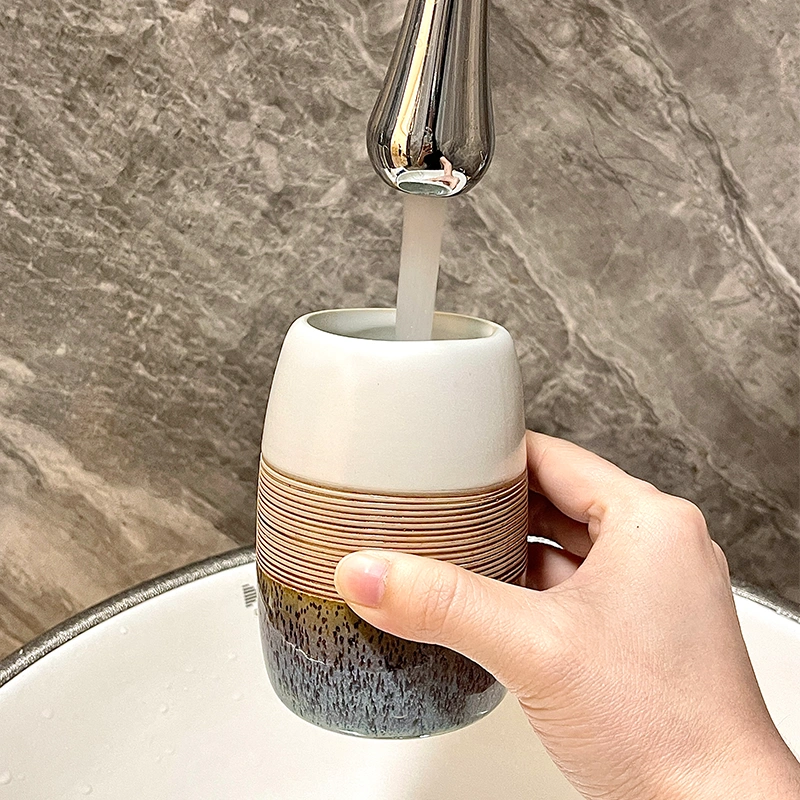
| Ceramic tumbler | Interior, rim, and base | Accessible surfaces and easy emptying |
| Suporte para escovas de dentes | Interior bottom and partitions | Cleaning access and moisture management |
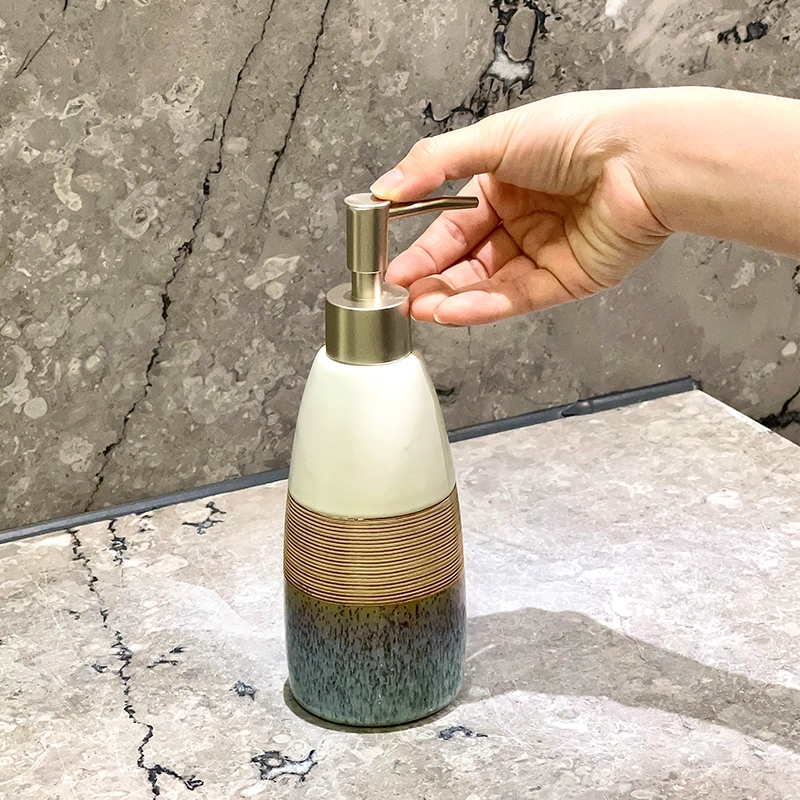
| Dispensador de sabonete | Pump connection and countertop contact | Accessible joints and stable assembly |
| Bandeja de casa de banho | Recesses and item contact points | Easy wiping and limited water traps |
For ceramic bathroom accessories, check where discharged water goes. A soap dish that drains onto an unprotected countertop creates another maintenance task. Evaluate the accessory within the intended bathroom setup.
How should buyers test samples before wholesale ordering?
Buyers should evaluate ceramic bathroom accessories performance through a documented comparison of water exposure, residue removal, finish condition, drainage, and component operation. Use destination-market water and the intended cleaning products wherever available.
The following is a proposed internal screening procedure, rather than a certification standard:
- Document the starting condition. Photograph the glaze, decoration, rims, bases, and pump connections under consistent lighting.
- Identify the test water. Record measured hardness or use the local utility report. Keep a comparison sample exposed to another documented water supply.
- Repeat realistic use. Wet and dry each piece according to its function. Include the intended soap or toiletries.
- Apply the intended cleaning routine. Record cleaner, dilution, contact time, cloth, and cleaning frequency.
- Inspect the complete set. Check remaining deposits, drainage, finish changes, pump output, leakage, and assembly condition.
- Agree on acceptance criteria. Approve the sample and written requirements before bulk production.
Keep the conditions consistent between suppliers. Ceramic bathroom accessories performance comparisons lose value when samples receive different exposure or cleaning treatment.
Why does water-related maintenance matter for hotel procurement?
Water-related maintenance matters because repeated cleaning adds labor across an entire property. Hotel buyers should assess purchase price alongside cleaning time, replacement requirements, and finish consistency.
For illustration, a 300-room hotel with four accessories per bathroom has 1,200 pieces. An additional 15 seconds per piece during one cleaning round equals five extra labor hours. This is a calculation example, not a measured industry statistic.
Evaluating ceramic bathroom accessories performance therefore requires practical housekeeping input. Ask staff to clean the proposed collection and record the time, tools, and remaining residue.
For wholesale hotel orders, also confirm replacement availability and repeat-order specifications. A coordinated collection needs consistent dimensions, colors, and compatible components throughout its purchasing cycle.
What should private-label buyers confirm with a manufacturer?
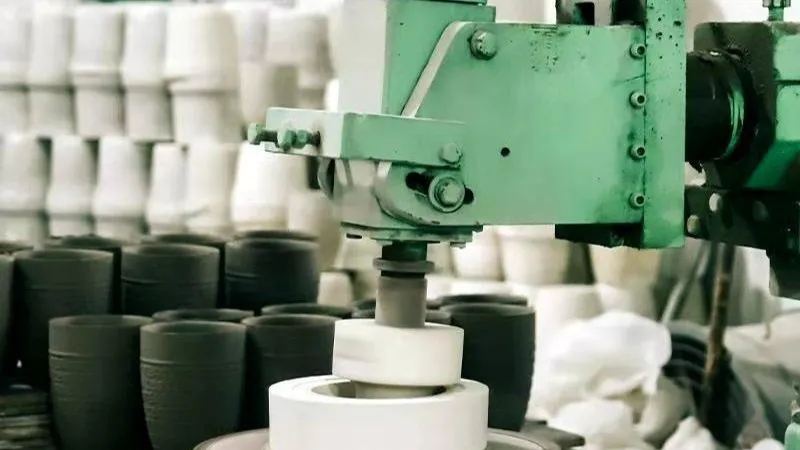
Private-label buyers should confirm the ceramic body, glaze, decoration, drainage, component specifications, and approved care instructions. Written specifications make ceramic bathroom accessories performance expectations reviewable before production.
| Sourcing requirement | Evidence to request |
|---|---|
| Glaze and decoration | Approved sample and finish specification |
| Water management | Sample demonstration in the intended setup |
| Cleaning compatibility | Results using specified cleaners and methods |
| Dispenser operation | Approved pump, fit, output, and leakage checks |
| Consistência na produção | Inspection criteria and retained reference samples |
| OEM/ODM customization | Confirmed drawings, colors, branding, and packaging |
Use feature-based product claims such as “raised soap supports” or “accessible interior for cleaning.” Claims about ceramic bathroom accessories performance should match the approved design and available test evidence.
FAQ
1. Does hard water damage ceramic bathroom accessories?
Hard water produces deposits and soap scum. Deposits alone do not prove structural damage. Inspect the cleaned sample for cracks, crazing, chips, or permanent finish changes before deciding whether the product is defective.
2. Are matte accessories unsuitable for hard-water areas?
No. A matte label does not establish suitability. Evaluate ceramic bathroom accessories’ performance using the specific glaze, target water, and approved cleaning routine.
3. Can drainage prevent mineral deposits completely?
No. Drainage reduces retained water but does not remove dissolved minerals. Remaining droplets still leave residue when they evaporate.
4. Should buyers test the dispenser pump separately?
Yes. The pump is a separate component. Check its operation with the intended soap, along with leakage, attachment fit, and cleaning access. Ceramic body quality does not establish pump reliability.
5. How should customers remove mineral deposits?
Start with the manufacturer’s approved cleaning instructions. Use an approved descaler only on compatible finishes, rinse thoroughly, and dry the surface. Confirm compatibility separately for decals, metallic decoration, and pump components.
6. Can OEM/ODM development address maintenance requirements?
Yes. Buyers can specify drainage, accessible shapes, glaze, pump components, and care instructions during development. Verify the resulting ceramic bathroom accessories’ performance on approved samples before ordering.
Conclusão
Bathroom water quality affects ceramic bathroom accessories performance through mineral deposits, soap residue, and cleaning requirements. Buyers should prioritize suitable glazes, effective drainage, accessible surfaces, and reliable components, then validate the complete collection using destination-market water and intended cleaning methods before bulk production.
For wholesalers, private-label brands, and hotel procurement teams, these checks turn appearance-based selection into practical purchasing decisions. Clear sample approval criteria also establish consistent expectations for production quality and everyday maintenance.
How can Yigejia Ceramics support your next bathroom accessories collection?
Cerâmicas Yigejia supports custom collection development through OEM/ODM manufacturing, finish selection, and coordinated product design. Share your target market, bathroom environment, cleaning requirements, and order scope to establish a clear sampling brief.
Based in Chaozhou, Guangdong, Cerâmicas Yigejia is a custom ceramic bathroom accessories factory and manufacturer operating a facility of more than 10,000 m², with slip-casting, roller-forming, high-pressure forming, and automated kiln production lines. Its range includes mid- and high-fired ceramics with decal, colored-glaze, and hand-brushed finishes, serving buyers across Europe, the Americas, Australia, and Southeast Asia. To develop a wholesale or private-label collection with clearly defined ceramic bathroom accessories performance requirements, contact Cerâmicas Yigejia to discuss your designs, samples, and bulk purchasing plans.