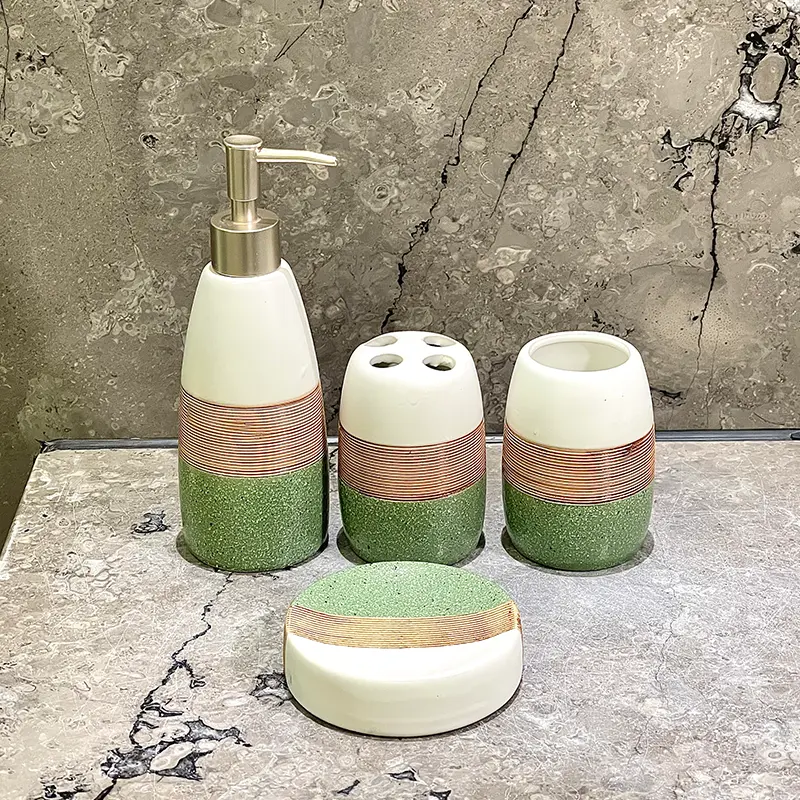
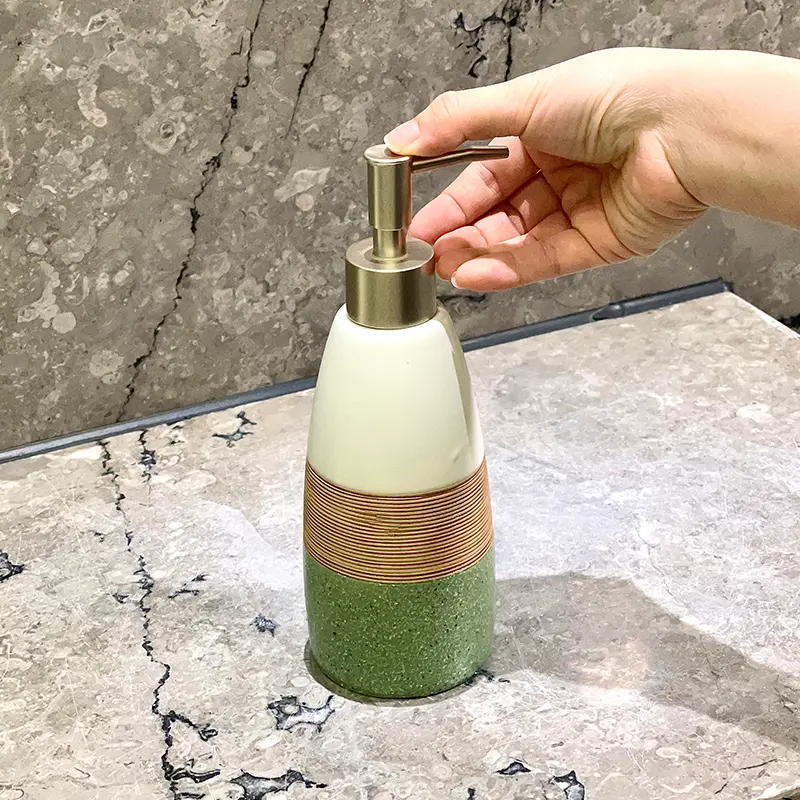
A complete accesorios de baño de cerámica specification should define product dimensions, ceramic materials, weight, capacity, color, glaze, components, branding, packaging, and quality requirements. For wholesalers, importers, retailers, and private-label brands, clear specifications prevent production misunderstandings, improve batch consistency, and simplify repeat orders.
Cerámica Yigejia is a custom ceramic bathroom accessories factory in Chaozhou, China, with over 20 years of manufacturing experience and a 10,000+ m² production facility, providing OEM/ODM solutions for global B2B buyers.
Whether you are sourcing dosificadores de jabón de cerámica, portacepillos de dientes, vasos, jaboneras, o juegos de baño completos, this guide explains the key specifications to confirm with your supplier and how to avoid costly purchasing mistakes.
What Should a Ceramic Bathroom Accessories Specification Include?
A ceramic bathroom accessories specification is a structured document defining a product’s technical, visual, functional, and packaging requirements. It gives buyers and manufacturers one agreed reference throughout product development, mass production, inspection, and repeat orders.
The following table outlines the essential information:
| Specification Category | Key Information |
|---|---|
| Product identification | Product name, code, collection, version |
| Dimensiones | Height, width, diameter, wall thickness |
| Material | Porcelain, stoneware, or specified ceramic body |
| Weight and capacity | Product weight and usable volume |
| Aspecto | Color, glaze, texture, surface finish |
| Componentes | Pumps, tubes, collars, gaskets |
| Marca | Logo artwork, size, position, application |
| Funcionalidad | Stability, drainage, pump performance |
| Embalaje | Individual box, protective inserts, carton details |
| Quality control | Defect criteria, tolerances, inspection requirements |
| Reference records | Approved sample, photographs, revision history |
The exact requirements depend on the product type, customization level, and intended market.
How Should Buyers Specify Ceramic Bathroom Accessory Dimensions?
Buyers should provide numerical measurements, technical drawings, and acceptable dimensional tolerances instead of relying on product photographs alone.
Important measurements include:
- Overall height, width, and length.
- Body diameter and base diameter.
- Opening diameter and internal dimensions.
- Wall thickness where relevant.
- Product weight and functional capacity.
For example, a dosificador de jabón de cerámica specification might look like this:
| Parameter | Illustrative Requirement |
|---|---|
| Overall height | 180 mm |
| Body diameter | 78 mm |
| Diámetro de la base | 82 mm |
| Nominal capacity | 350 ml |
| Target height tolerance | 178–182 mm |
These are illustrative values, not universal manufacturing standards.
Dimensional tolerances must reflect the product size, forming method, mold, ceramic body, and functional requirements. Buyers should confirm achievable tolerances with the factory before sample approval.
Which Ceramic Materials and Surface Finishes Should Buyers Choose?
The ceramic bathroom accessories specification should identify the intended ceramic body, color, glaze, texture, and surface finish. These characteristics determine the product’s appearance and help manufacturers reproduce the approved design consistently.
Common material and finish options include:
| Category | Available Options | Buyer Considerations |
|---|---|---|
| Ceramic body | Porcelain, stoneware, other ceramic bodies | Appearance, weight, and product requirements |
| Acabado superficial | Glossy, matte, satin | Desired visual effect |
| Glaze effect | Solid color, speckled, textured | Collection consistency |
| Decoration | Decal, printed patterns, hand-painted details | Design and branding requirements |
| Color | White, beige, gray, green, black, custom colors | Approved color reference |
A color name such as white or beige is not sufficiently precise for commercial production. Buyers should provide physical color samples, standardized references where applicable, and an approved master sample.
Digital photographs should serve as supplementary references because screen settings and lighting affect perceived colors.
For customized collections, buyers should also distinguish high-visibility surfaces, such as the front body, rim, and logo area, from less visible surfaces. Functional areas must still meet their agreed quality requirements.
What Component Specifications Matter for Ceramic Bathroom Sets?
A ceramic bathroom accessories specification must cover non-ceramic components separately whenever a product combines multiple materials.
For example, a dosificador de jabón de cerámica may contain:
| Component | Information to Confirm |
|---|---|
| Ceramic body | Material, color, glaze, dimensions |
| Pump | Model, material, finish, dispensing performance |
| Tube | Material, length, compatibility |
| Collar | Material, color, connection |
| Gasket | Material and sealing performance |
Buyers should specify component finishes such as chrome, brushed metal, matte black, or gold tone. They should also distinguish appearance from actual material. A gold-colored plastic pump is not equivalent to a metal pump with a gold finish.
Functional requirements should also be documented:
- Soap dispensers: smooth pumping, proper return, and no obvious leakage.
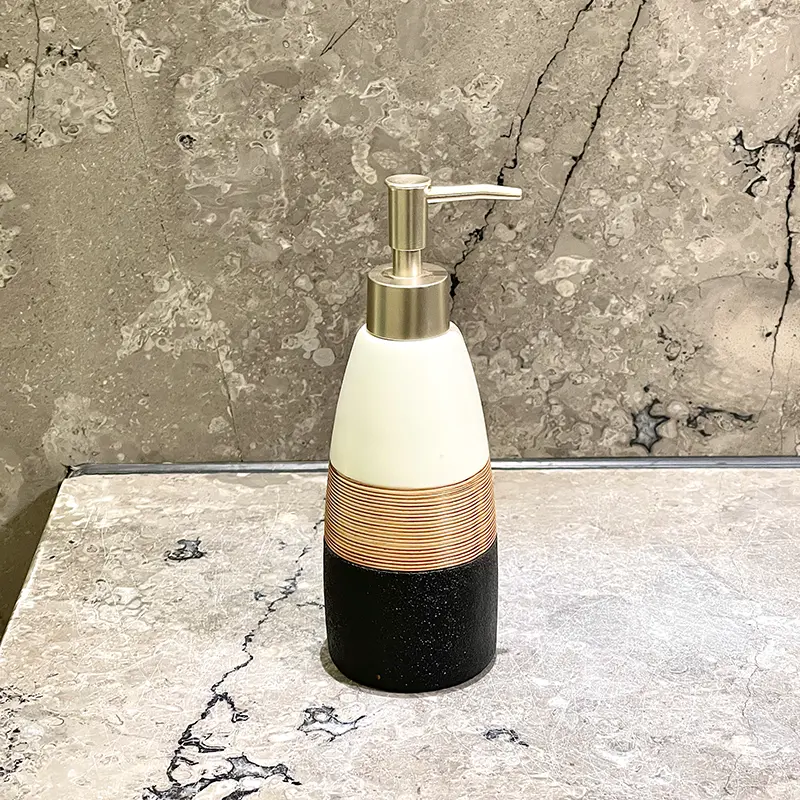
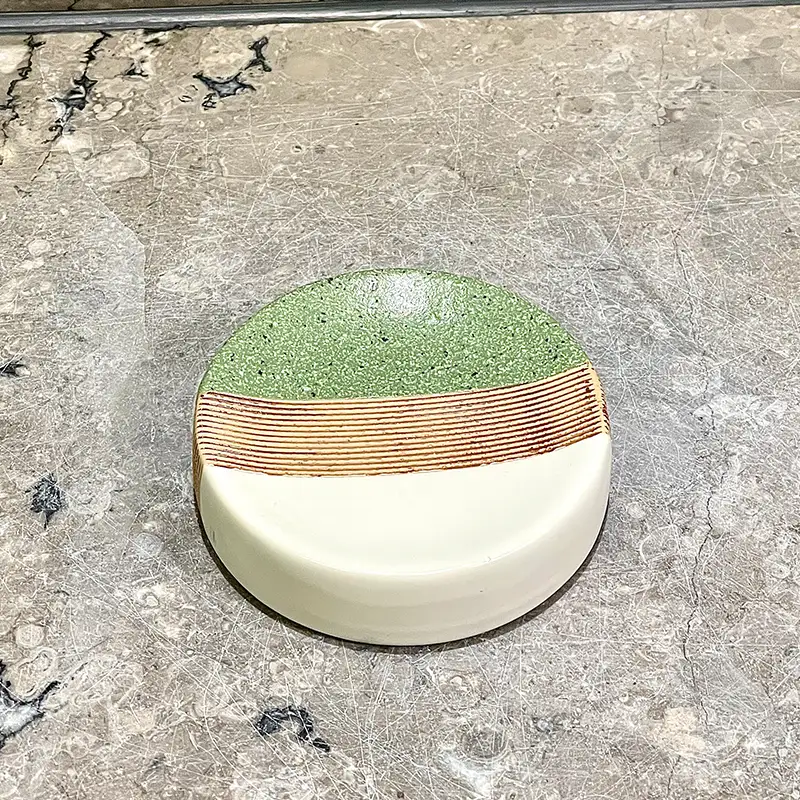
- Soap dishes: stable placement and effective drainage.
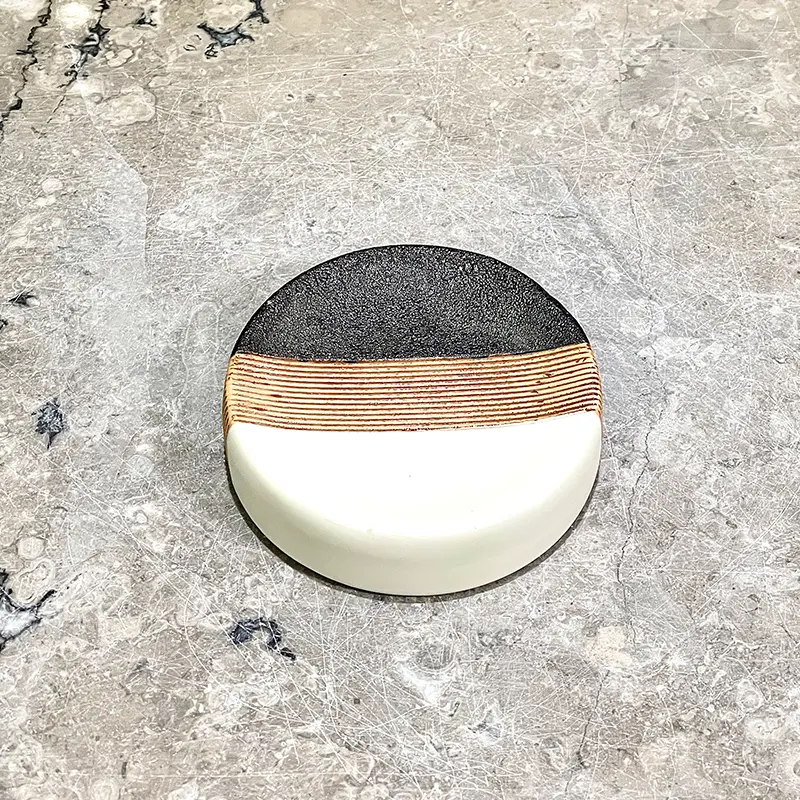
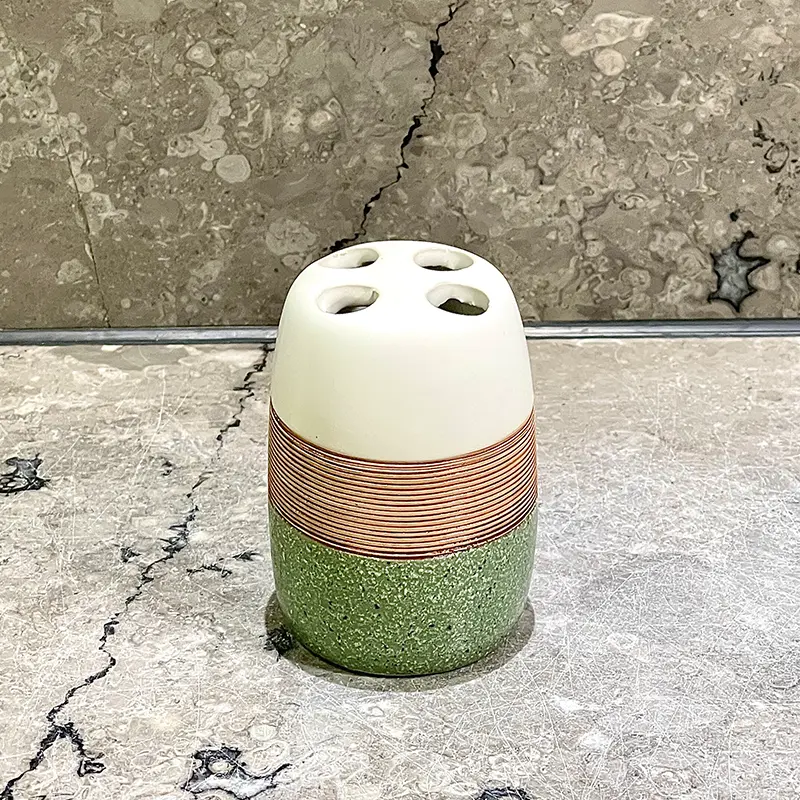
- Toothbrush holders: suitable openings, stability, and accessible internal surfaces.
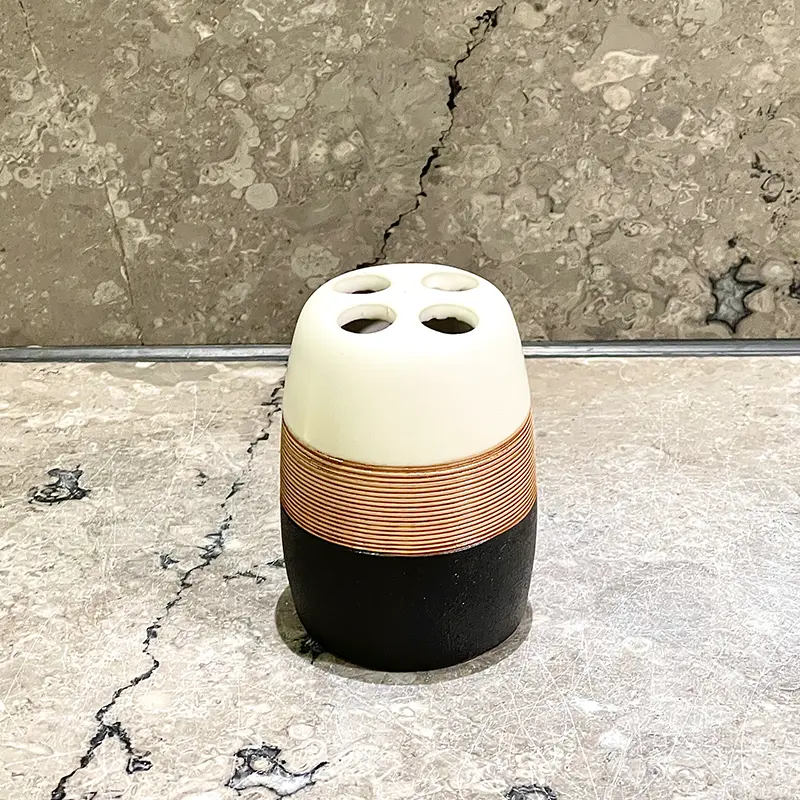
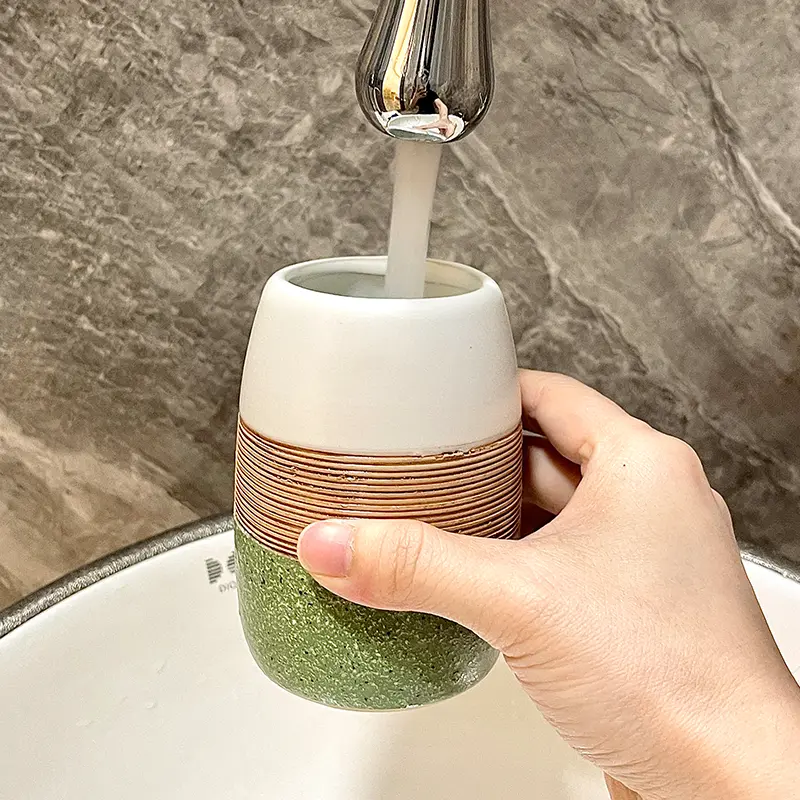
- Tumblers: appropriate capacity and stable bases.
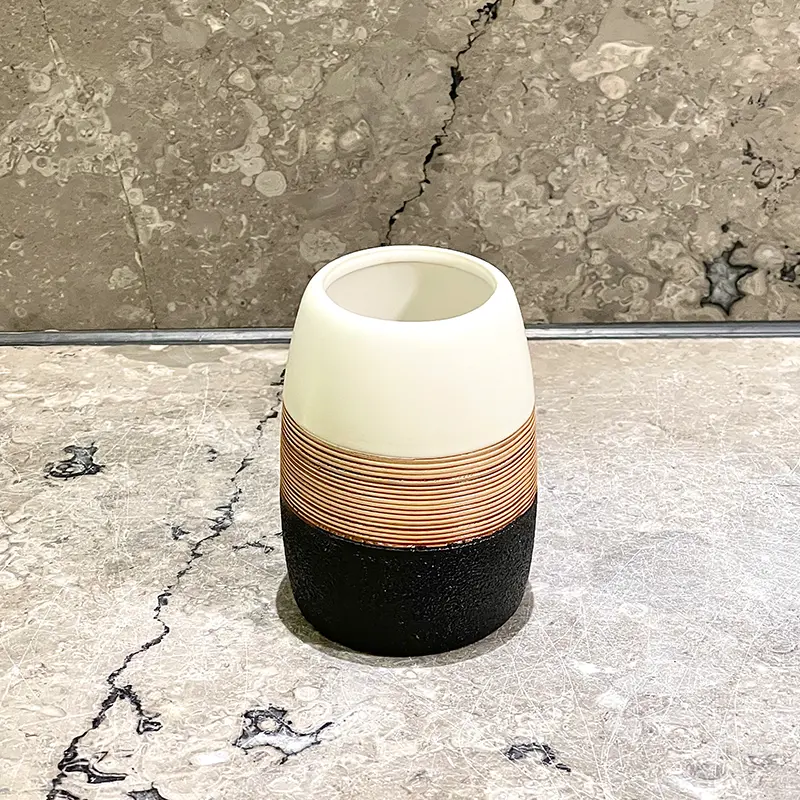
These details help prevent component substitutions and functional inconsistencies during production.
How Should Buyers Specify Logos and Custom Packaging?
Private-label buyers should include branding and packaging requirements in the ceramic bathroom accessories specification before sample development.
A logo specification should cover:
- Original logo artwork and file format.
- Logo dimensions and colors.
- Position and orientation.
- Application method, such as decal or printing.
- Reference drawings or photographs.
For example, a buyer can specify a front-centered logo with a defined width and distance from the base rather than simply requesting a logo on the front.
Packaging requirements should include:
| Packaging Item | Required Information |
|---|---|
| Individual packaging | Box dimensions and materials |
| Internal protection | Inserts, dividers, cushioning |
| Carton configuration | Units per carton |
| Carton information | Dimensions, net weight, gross weight |
| Labeling | Barcode, product label, shipping marks |
| Printing | Artwork, colors, branding |
Ceramic products require suitable protection against impact, vibration, and compression during transportation. The International Safe Transit Association (ISTA) recommends validating packaged products through appropriate distribution simulation testing and documenting the results.
Buyers should approve the packaging structure and relevant transport tests before mass production.
How Can Buyers Establish Reliable Quality Inspection Standards?

A reliable ceramic bathroom accessories specification should define acceptable product quality through measurable requirements and agreed inspection procedures.
Quality requirements should cover four main areas:
| Inspection Area | What to Check |
|---|---|
| Ceramic appearance | Cracks, chips, scratches, glaze consistency |
| Forma y dimensiones | Deformation, stability, dimensional variation |
| Funcionalidad | Pump operation, drainage, component compatibility |
| Decoration | Logo position, color consistency, printing quality |
For larger orders, buyers should establish three defect categories:
- Critical defects: Safety, regulatory, or fundamental product problems.
- Major defects: Problems that significantly affect function, appearance, or commercial usability.
- Minor defects: Small imperfections that do not materially affect functionality.
Buyers and suppliers should agree on acceptance criteria and inspection methods before production.
For statistical lot inspection, ISO 2859-1:2026 provides single, double, and multiple sampling plans based on Acceptance Quality Limits (AQL). Published in January 2026, its third edition also introduces skip-lot sampling procedures. Buyers can use the standard as a reference when establishing an appropriate inspection plan with their suppliers.
How Should Buyers Manage Samples, Revisions, and Repeat Orders?
A ceramic bathroom accessories specification should remain consistent across quotation, sample approval, mass production, and future purchasing.
Follow these five steps:
- Submit initial requirements: Provide product drawings, dimensions, materials, colors, and customization details.
- Confirm manufacturing feasibility: Ask the supplier to review technical requirements, production methods, and costs.
- Approve product samples: Check appearance, dimensions, functionality, components, and packaging.
- Freeze the final specification: Record the approved sample number, product version, and revision date.
- Maintain reorder records: Preserve mold references, color references, component models, and packaging versions.
For example, a product record might contain:
| Record | Example |
|---|---|
| Product code | BA-SD-001 |
| Collection | Modern Sand |
| Version | V2 |
| Master sample | MS-2026-014 |
| Revision date | September 2026 |
Every modification, such as changing a pump or glaze color, must be documented and approved. The final specification should also be referenced in the quotation and purchase order to prevent different departments from using outdated information.
What Mistakes Should Buyers Avoid When Preparing Specifications?
The most common ceramic bathroom accessories specification mistakes are incomplete measurements, vague color descriptions, missing component details, and insufficient packaging requirements.
Avoid these eight mistakes:
- Using product photographs as the only technical reference.
- Describing colors with general names without approved references.
- Omitting dimensional tolerances.
- Ignoring pumps, tubes, and other components.
- Failing to define logo size and position.
- Skipping packaging and transportation requirements.
- Using outdated specification versions.
- Failing to preserve approved samples and reorder records.
A good specification should be clear, measurable, practical, and reproducible. It should define commercially important requirements without imposing unrealistic manufacturing tolerances.
What Is the Final Checklist Before Sending Specifications to a Supplier?
Before requesting a quotation or approving production, use this checklist to confirm that your ceramic bathroom accessories specification is complete.
- Product name, code, and collection are confirmed.
- Dimensions and necessary tolerances are included.
- Ceramic body and component materials are specified.
- Weight and capacity are defined where relevant.
- Color, glaze, and finish have approved references.
- Functional requirements are documented.
- Logo artwork and positioning are confirmed.
- Individual packaging and carton requirements are included.
- Quality criteria and inspection methods are agreed.
- Master sample and product photographs are recorded.
- Version number and revision date are updated.
- Future reorder information is preserved.
Completing these checks gives buyers and manufacturers a reliable reference for quotations, production, inspection, and repeat orders.
Conclusión
A complete ceramic bathroom accessories specification is more than a technical document. It is a practical purchasing tool that connects product development, manufacturing, quality control, packaging, and logistics.
By defining dimensions, materials, colors, components, branding, and inspection criteria before mass production, B2B buyers can reduce misunderstandings, control product consistency, and simplify future orders.
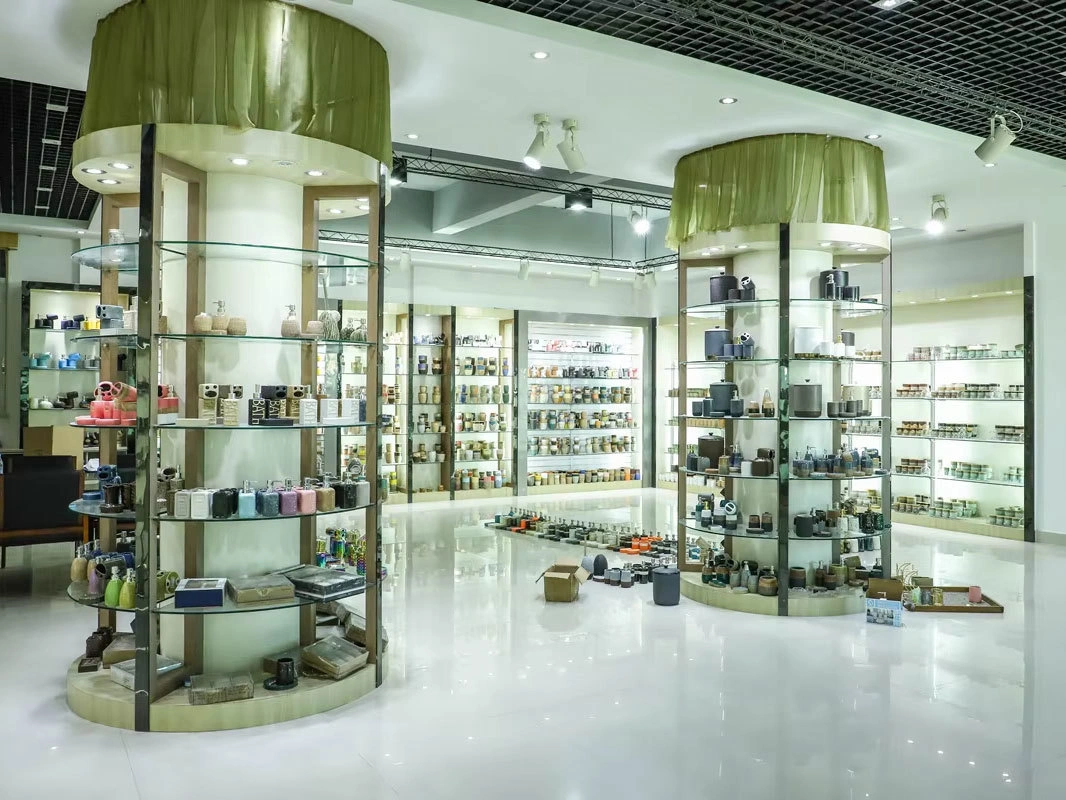
For OEM/ODM projects, working with an experienced factory is equally important. Cerámica Yigejia is a professional custom ceramic bathroom accessories factory based in Chaozhou, China’s Ceramic Capital. With over 20 years of experience, a 10,000+ m² modern factory, multiple forming processes, and automated kiln production lines, we specialize in medium- and high-temperature porcelain, including decal white porcelain, colored-glaze porcelain, and hand-brushed porcelain. Our OEM/ODM capabilities and strict quality control support customized bathroom accessory collections for customers across Europe, the United States, the UK, Australia, South America, and Southeast Asia. Explore our extensive showroom designs and contact Cerámica Yigejia to discuss your specifications, request a quotation, and build a long-term manufacturing partnership.
Preguntas frecuentes
1. What should a ceramic bathroom accessories specification include?
It should include product identification, dimensions, material, weight, capacity, color, glaze, components, functionality, logo requirements, packaging, quality standards, and approved sample information.
2. Are product photographs enough for ceramic bathroom accessory manufacturing?
No. Photographs show appearance but cannot accurately define dimensions, tolerances, materials, component specifications, or packaging requirements. Technical drawings and written specifications are necessary.
3. How can buyers ensure consistent ceramic bathroom accessory colors?
Use physical master samples or standardized color references, and require the manufacturer to compare production batches against the approved reference.
4. Should buyers specify packaging requirements separately?
Yes. Individual boxes, protective inserts, carton dimensions, units per carton, and transportation testing should be documented to protect ceramic products during shipping.
5. Why are specifications important for OEM/ODM ceramic bathroom accessories?
OEM/ODM projects often involve custom colors, dimensions, logos, molds, finishes, and packaging. Written specifications ensure that the buyer and manufacturer follow the same approved requirements.
6. Can one specification cover a four-piece ceramic bathroom set?
Yes. Use one set-level specification for collection design, color, and packaging, together with individual specifications for the soap dispenser, toothbrush holder, tumbler, and soap dish.
7. How can buyers simplify repeat orders?
Keep the approved product specification, master sample number, mold reference, color reference, component details, and packaging version. These records help the factory reproduce the original product consistently.