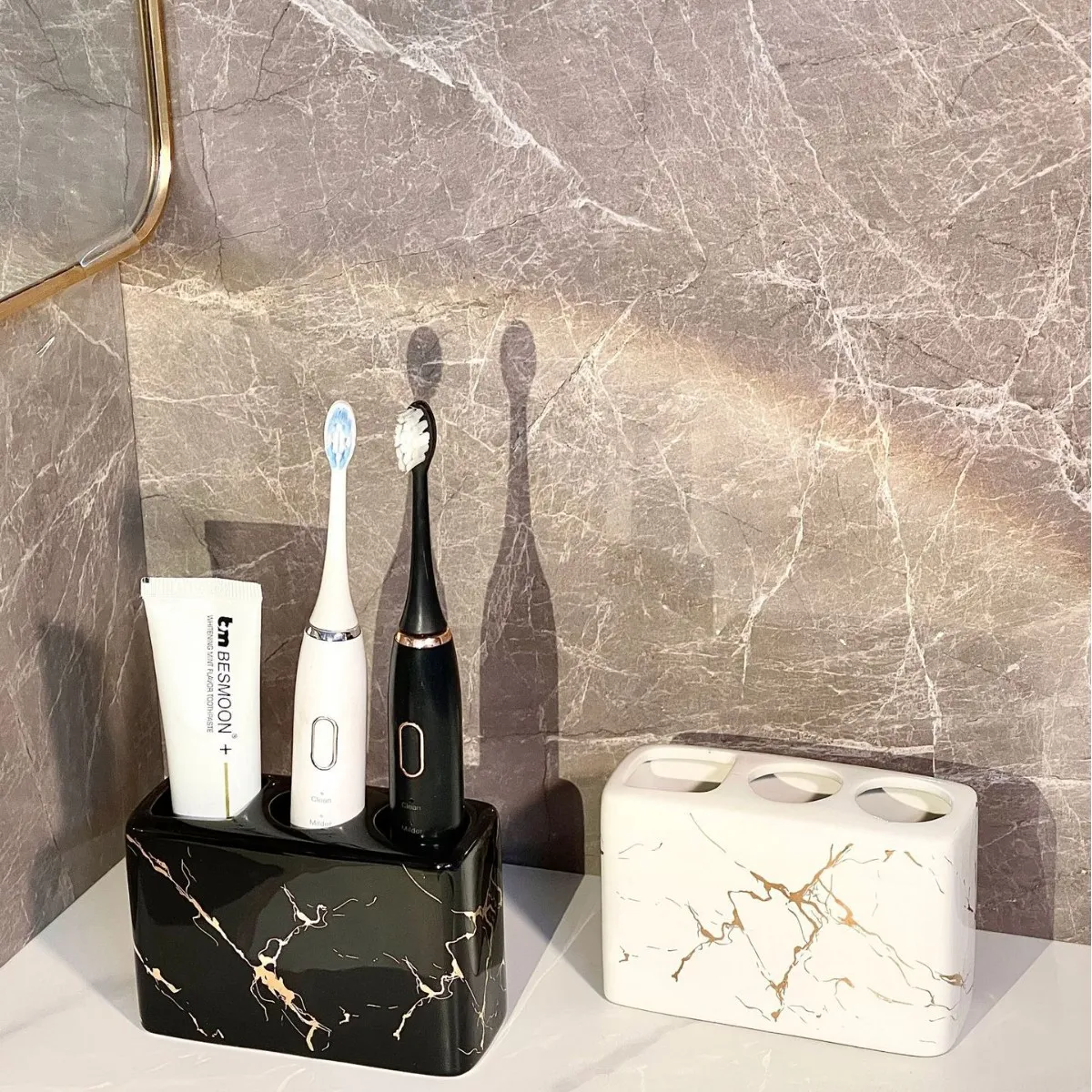
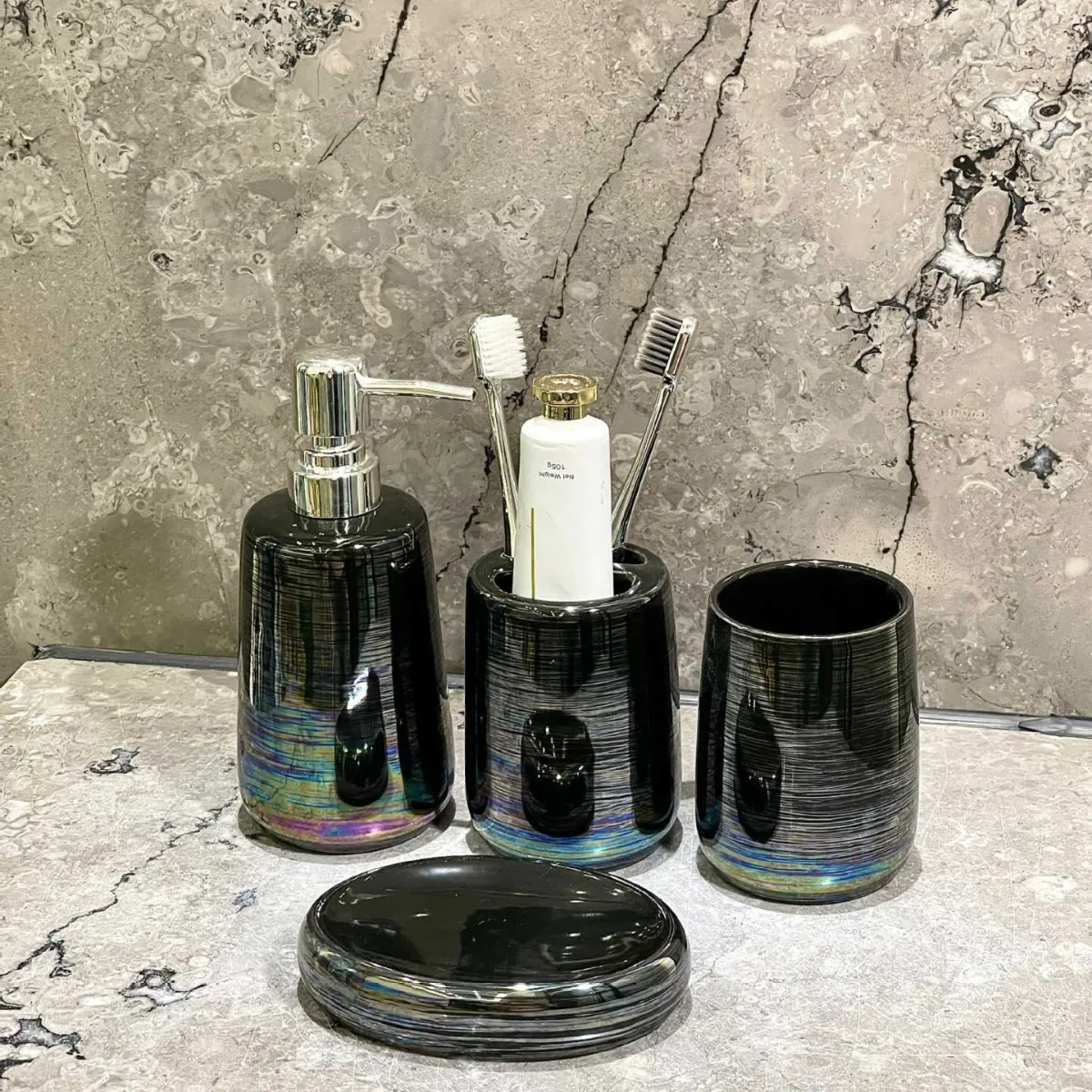
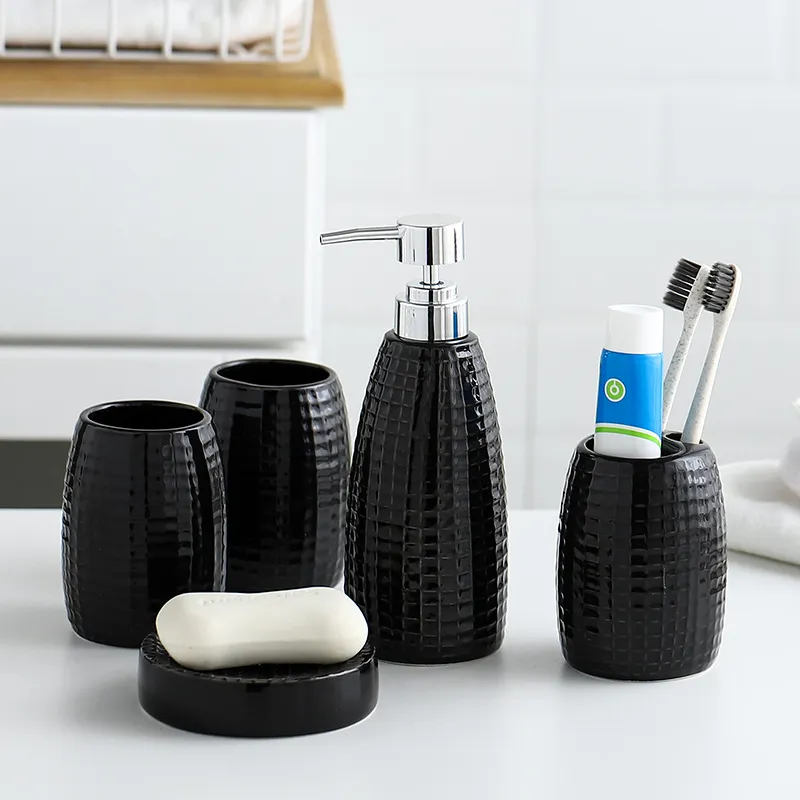
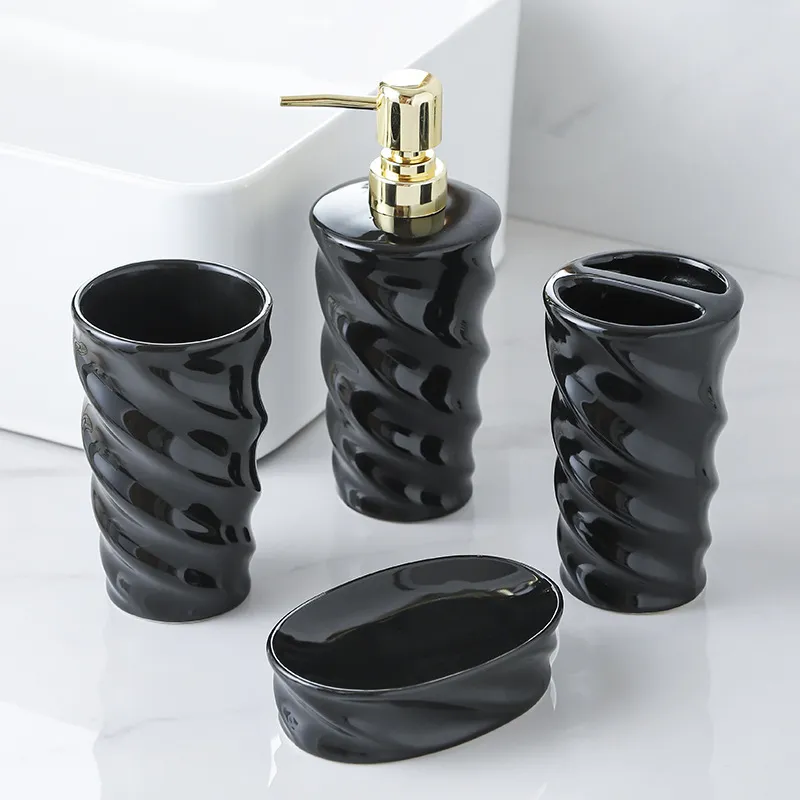
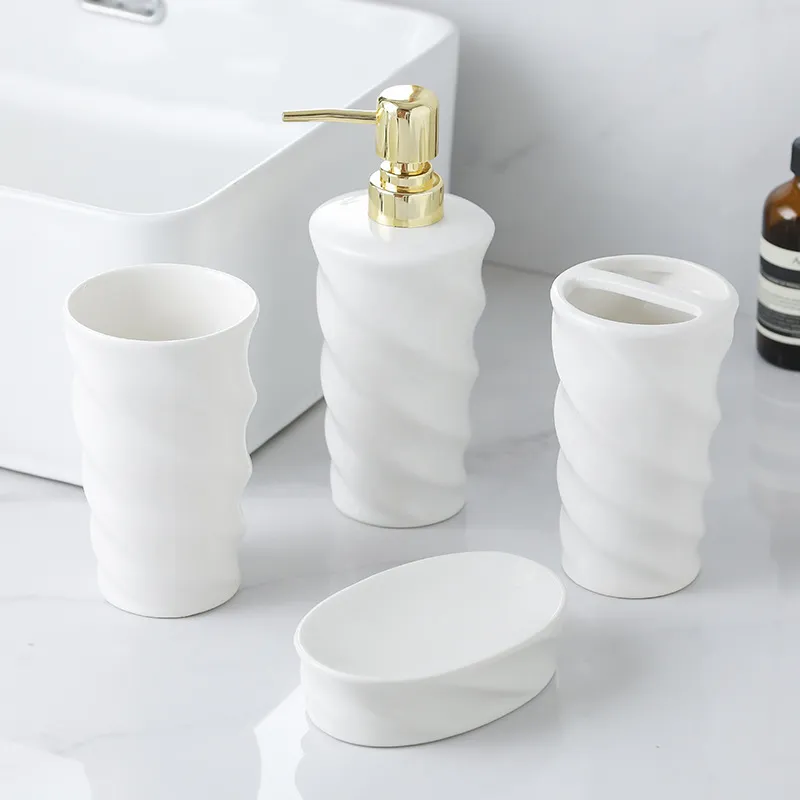
A bathroom tumbler is commonly used for rinsing after brushing, holding toothbrushes and toothpaste, or organizing small personal-care items beside the sink. To understand its basic definition, materials, and design features, see our guide: What Is a Bathroom Tumbler?
The most common uses include:
- تخزين فرش الأسنان ومعجون الأسنان
- Serving as a mouth-rinsing cup
- Organizing makeup brushes or razors
- Storing small personal-care accessories
- Completing a matching bathroom accessory set
- Displaying a hotel logo or private-label brand identity
Although it looks like a simple cup, a bathroom tumbler can provide both practical and decorative value. Its material, shape, finish, capacity, and color can influence how well it fits a residential, hospitality, or retail bathroom collection.
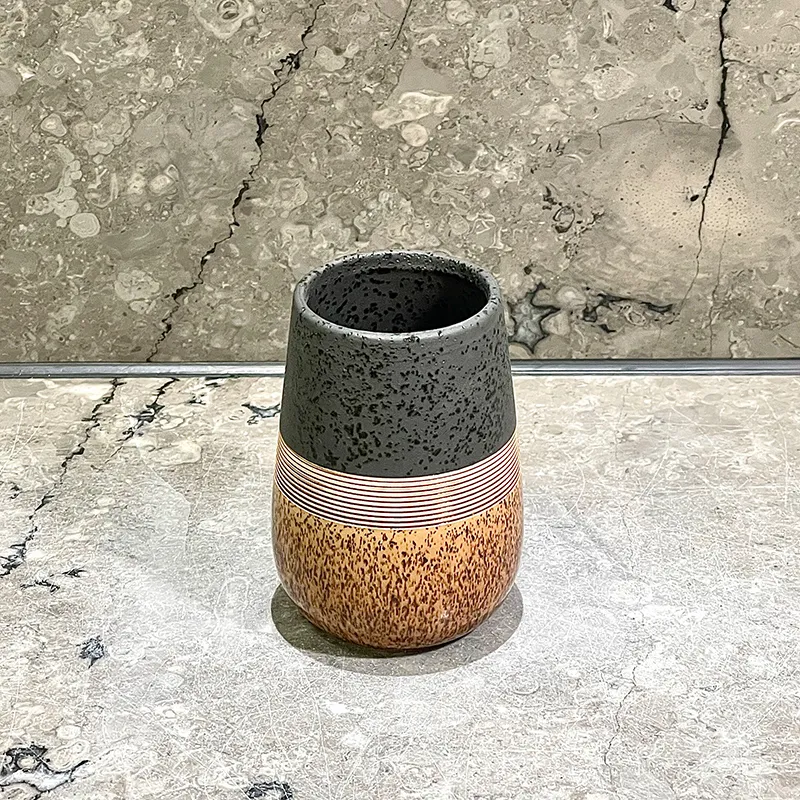
Bathroom Tumbler vs. Ordinary Drinking Cup
A bathroom tumbler and an ordinary drinking cup may have similar shapes, but they are designed for different environments.
| ميزة | كوب الحمام | Ordinary Drinking Cup |
|---|---|---|
| Primary purpose | Rinsing, holding and organizing | Drinking beverages |
| Typical location | Bathroom vanity or sink | Kitchen or dining area |
| Design focus | Décor coordination and stability | Comfortable drinking |
| Common materials | Ceramic, glass, resin, plastic | Glass, ceramic, plastic, metal |
| Set coordination | Often matches bathroom accessories | Usually matches tableware |
| Branding potential | Hotel, retail and private-label branding | Consumer or food-service branding |
A bathroom tumbler should not automatically be marketed as drinkware. If a product is intended for mouth rinsing or other liquid-contact use, buyers should confirm the suitability of its glaze and decoration with the supplier.
الـ U.S. Food and Drug Administration regulates concerns involving lead in foodware and requires warning labels on certain ornamental ceramicware containing lead. Therefore, importers should clearly communicate the product’s intended use and required testing standards to their bathroom tumbler manufacturer.
Six Common Bathroom Tumbler Uses
1. Holding Toothbrushes and Toothpaste
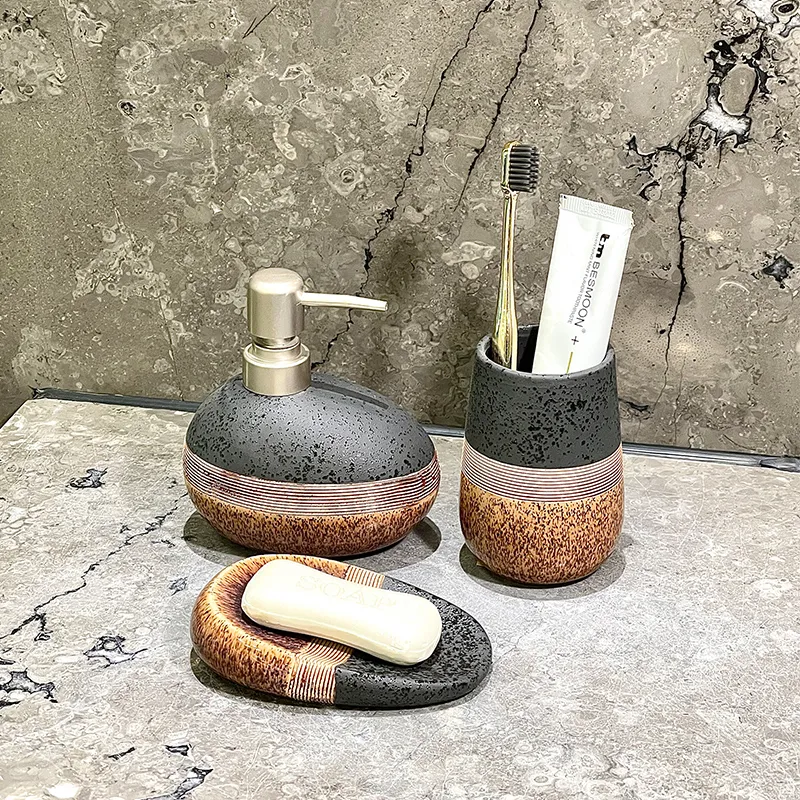
One of the most familiar uses of a bathroom tumbler is storing toothbrushes beside the sink. Its open shape makes toothbrushes easy to reach and allows users to keep dental-care products together.
For this application, buyers should consider:
- A stable and sufficiently weighted base
- A smooth interior that is easy to clean
- Enough capacity for several toothbrushes
- A rim without sharp or rough edges
- A shape that does not trap excessive moisture
For family bathrooms and hotel rooms, wider tumbler designs may accommodate several dental-care items. Narrower designs are more suitable for individual use or compact vanities.
2. Serving as a Rinsing Cup
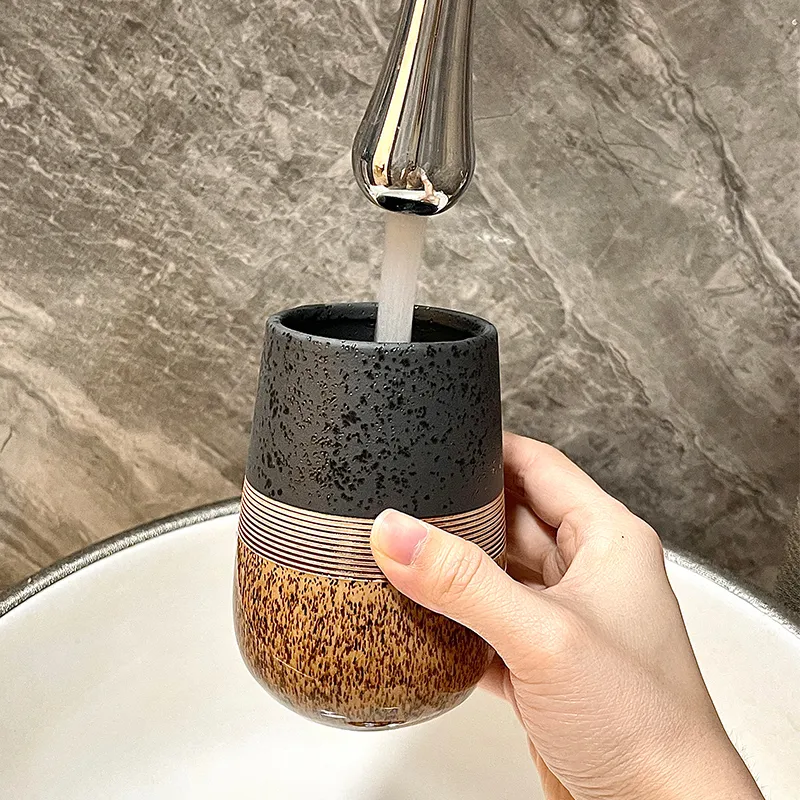
A bathroom tumbler may be used to hold water for rinsing after brushing. Ceramic is often selected for this purpose because it feels substantial, presents a premium appearance, and can coordinate with other countertop accessories.
When the tumbler is intended for rinsing, procurement teams should verify:
- Glaze quality and surface consistency
- Applicable lead and cadmium migration requirements
- Resistance to staining and repeated washing
- Smoothness of the rim
- Clear product-use documentation
The FDA notes that ceramicware with excessive extractable lead may be subject to regulatory action. Buyers importing ceramic products should therefore discuss the intended application, target market, testing requirements, and decorative processes before mass production. See the FDA’s guidance on ceramicware safety.
3. Organizing Small Bathroom Items
A bathroom tumbler can also organize frequently used items such as:
- Razors
- Makeup brushes
- Combs
- Cotton swabs
- Facial-care tools
- Small grooming accessories
This application makes the tumbler useful beyond oral care. Retailers can position it as a multipurpose vanity organizer, while hospitality buyers can use it to create a cleaner and more coordinated guest-bathroom presentation.
4. Completing a Bathroom Accessory Set
Bathroom tumblers are often sold as part of a coordinated set containing:
- موزع الصابون
- صحن الصابون
- حامل فرشاة الأسنان
- كوب الحمام
- Toilet brush holder
- Storage canister
For retailers and private-label brands, coordinated sets can provide a clearer product story and greater shelf impact than unrelated individual pieces. Matching colors, glazes, patterns, shapes, and decorative details also make it easier to build collections for different interior styles.
A custom bathroom tumbler can be developed to match an existing soap dispenser or incorporated into a completely new bathroom accessory series.
5. Supporting Hotel and Hospitality Projects
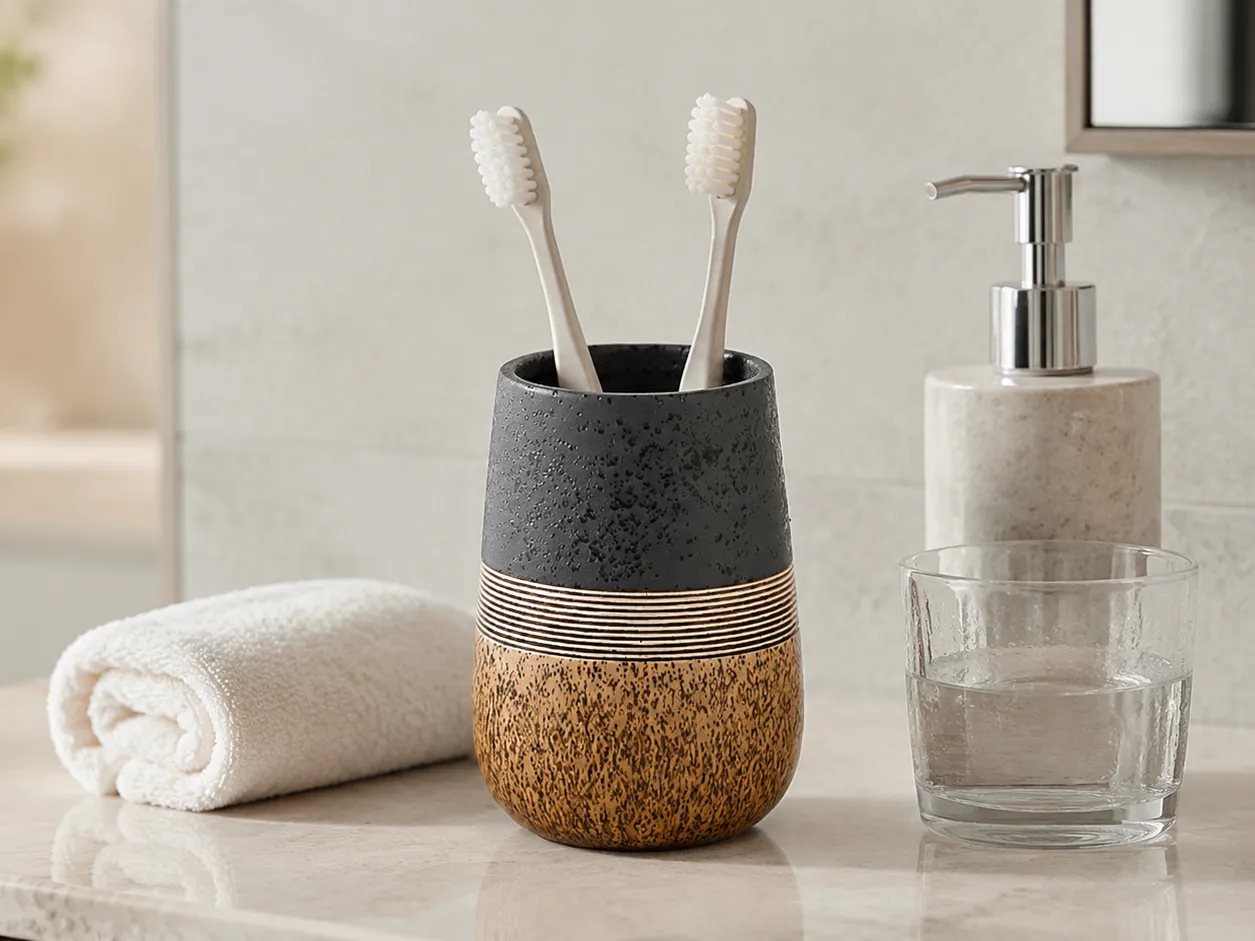
Hotels, resorts, serviced apartments, and guesthouses use bathroom tumblers to improve vanity organization and create a consistent guest experience.
Hospitality buyers commonly look for:
- Easy-clean surfaces
- Stable countertop placement
- Consistent color across production batches
- Simple replacement ordering
- Durable packaging for project delivery
- Designs that coordinate with the property’s interior
- Optional hotel logos or project branding
For hotel projects, practicality should be considered alongside appearance. Highly decorative shapes may look attractive but can be harder for housekeeping teams to clean efficiently.
6. Reinforcing Retail or Private-Label Branding
A bathroom tumbler can carry a brand identity through:
- Printed or decal logos
- Embossed or debossed marks
- Custom glaze colors
- Hand-painted patterns
- Textured surfaces
- Metallic accents
- Coordinated gift packaging
Working with an experienced bathroom tumbler manufacturer allows buyers to adapt a tumbler to a particular retail price point, design theme, target market, or seasonal collection.
Pros and Cons of Ceramic Bathroom Tumblers
Ceramic is widely used for mid-range and premium bathroom accessory collections, but buyers should consider both its advantages and limitations.
المزايا
مظهر فاخر:
Ceramic provides a solid, refined look suitable for hotels, homeware stores, interior brands, and private-label collections.
مرونة كبيرة في التصميم:
It supports glossy, matte, reactive, textured, decal, colored-glaze, and hand-finished surfaces.
Good countertop stability:
The weight of ceramic helps prevent the tumbler from moving or tipping during normal use.
Easy collection coordination:
The same material and finish can be applied to soap dispensers, soap dishes, toothbrush holders, and other accessories.
OEM/ODM potential:
Buyers can customize the color, shape, pattern, logo, finish, packaging, and set configuration.
Long-term perceived value:
Compared with lightweight disposable-looking materials, ceramic can support a stronger premium product position.
السلبيات
Higher breakage risk:
Ceramic may chip or break if dropped. Protective inner packaging and export carton testing are therefore important.
Heavier shipping weight:
Ceramic products generally cost more to transport than lightweight plastic alternatives.
Possible batch variation:
Kiln temperature, glaze flow, hand finishing, and raw materials can produce minor differences between batches.
Longer customization process:
Creating new molds, confirming glaze colors, producing samples, and completing firing tests can require more time than sourcing standard products.
Compliance must match intended use:
If the tumbler is promoted for rinsing or liquid contact, the glaze, decoration, testing, and product claims should meet the requirements of the destination market.
Ceramic vs. Glass, Resin and Plastic Tumblers
| المواد | Main advantages | Main limitations | Suitable buyers |
|---|---|---|---|
| السيراميك | Premium, stable and highly customizable | Breakable and heavier | Hotels, retailers and private labels |
| Glass | Clean, modern and visually light | Visible water marks and breakage risk | Modern hotels and décor retailers |
| الراتنج | Flexible shapes and decorative textures | Quality varies by formulation | Trend-led accessory brands |
| البلاستيك | Lightweight and economical | Lower premium perception | Mass-market and budget projects |
| Stainless steel | Durable and contemporary | Limited ceramic-style decoration | Commercial and modern interiors |
Ceramic is often the strongest option when the buyer prioritizes appearance, coordinated collections, glaze effects, and OEM branding. Plastic may be more appropriate when low weight and budget pricing are the primary requirements.
How to Choose a Wholesale Bathroom Tumbler
Before placing a wholesale bathroom tumbler order, buyers should review the following factors.
Intended Use
Decide whether the product will mainly hold toothbrushes, support rinsing, organize vanity items, or complete a bathroom set. Intended use affects the design, testing, capacity, and product description.
Material and Firing Quality
Ask the supplier about the ceramic body, firing temperature, water absorption, glaze process, and quality-control standards. These factors influence strength, appearance, and batch consistency.
Size and Capacity
Confirm the height, diameter, opening width, weight, and internal capacity. Request physical samples when possible because product usability cannot always be judged from photographs.
Surface Finish
Select a finish that matches the target market:
- Glossy glaze for easy cleaning and a polished look
- Matte glaze for contemporary collections
- Textured finish for handcrafted positioning
- Decal decoration for detailed patterns
- Hand-painted finish for artisan-style products
- Metallic accents for luxury bathroom collections
Cleaning and Drainage
Avoid overly complicated internal shapes that are difficult to clean. If the tumbler is primarily a toothbrush holder, consider whether the design provides adequate ventilation and convenient access.
Batch Consistency
Ask how the factory controls glaze color, shape, dimensions, decorative placement, and firing results. For chain stores and hotel projects, consistent replenishment can be as important as the initial sample.
Packaging Protection
Ceramic tumblers require protective packaging suitable for international transportation. Buyers should discuss:
- Individual inner boxes
- Molded inserts or dividers
- Export carton strength
- Drop-test requirements
- Retail-ready packaging
- Barcode and label placement
MOQ and Customization Level
Confirm whether the supplier supports:
- Existing designs in stock colors
- Low-volume logo customization
- Custom glaze colors
- Custom patterns and finishes
- New mold development
- Mixed product sets
- Customized retail packaging
Choosing an existing design with a new logo or color is usually faster and more economical than developing a completely new mold.
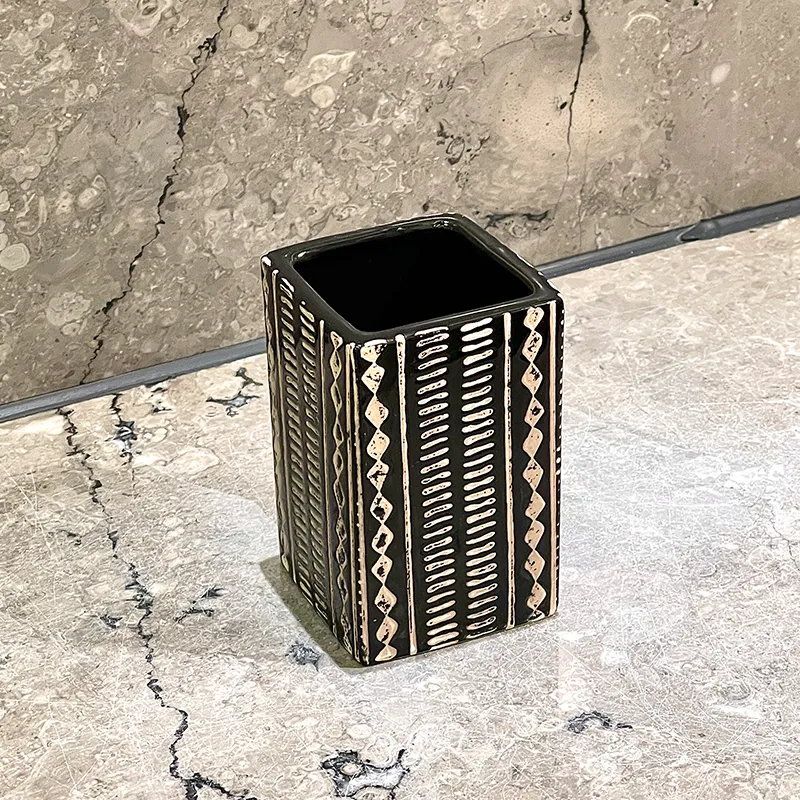
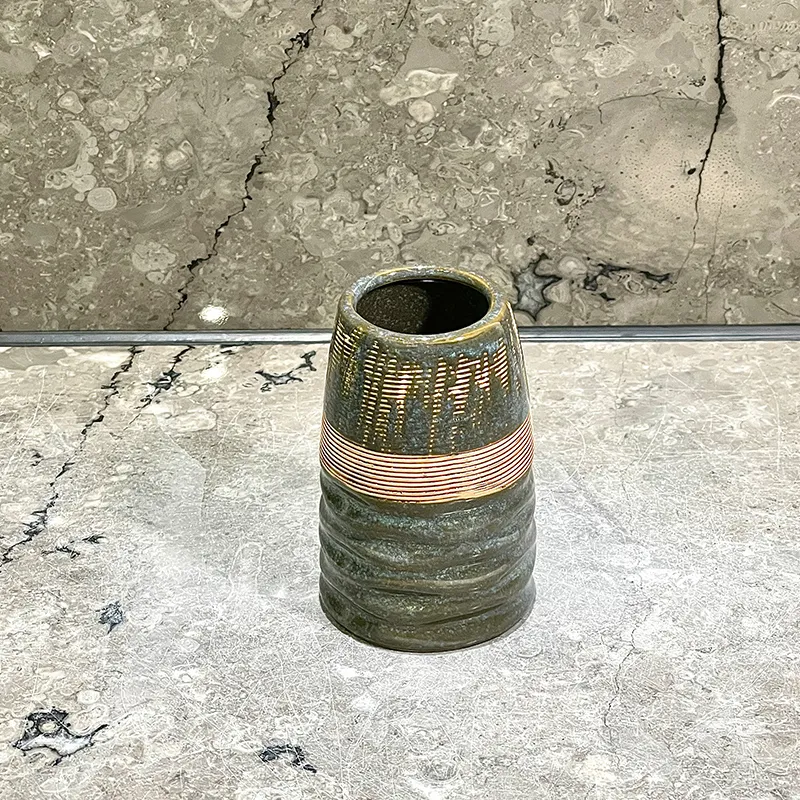
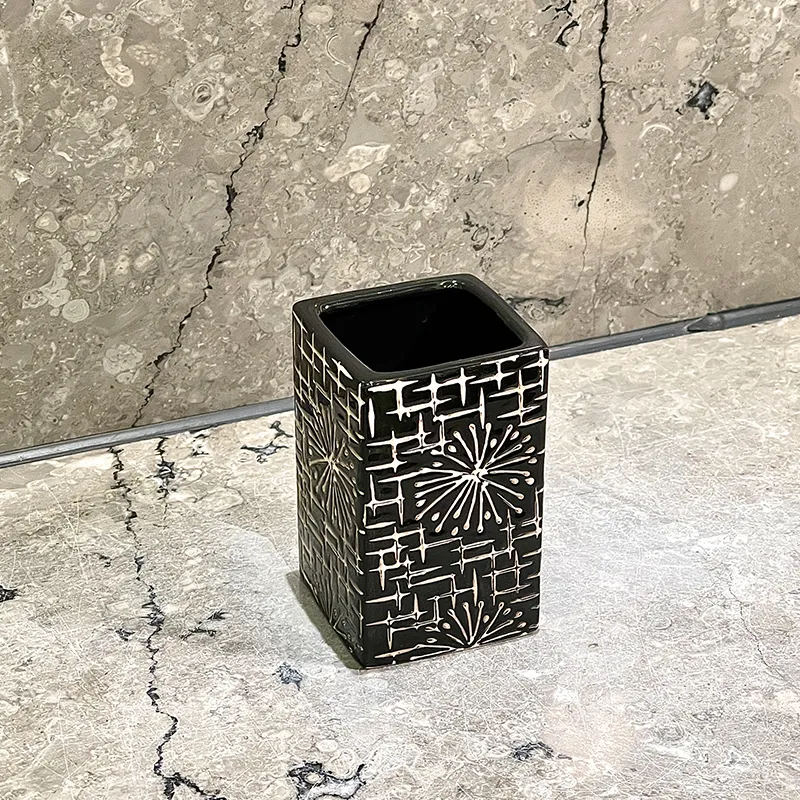
What Can Be Customized on a Bathroom Tumbler?
A professional custom bathroom tumbler program may include:
- Shape and dimensions
- Ceramic body and firing specification
- Glossy, matte or textured glaze
- Custom Pantone-based color development
- Decal or printed pattern
- Embossed or debossed logo
- Hand-painted decoration
- Electroplated or metallic details
- Matching soap dispensers and soap dishes
- Gift boxes and retail packaging
For a successful OEM/ODM project, buyers should provide reference images, target dimensions, expected order quantity, destination market, preferred finish, packaging requirements, and target price range.
How to Evaluate a Bathroom Tumbler Manufacturer
A reliable supplier should provide more than an attractive sample. B2B buyers should assess:
- الخبرة في مجال التصنيع: Does the factory specialize in ceramic bathroom accessories?
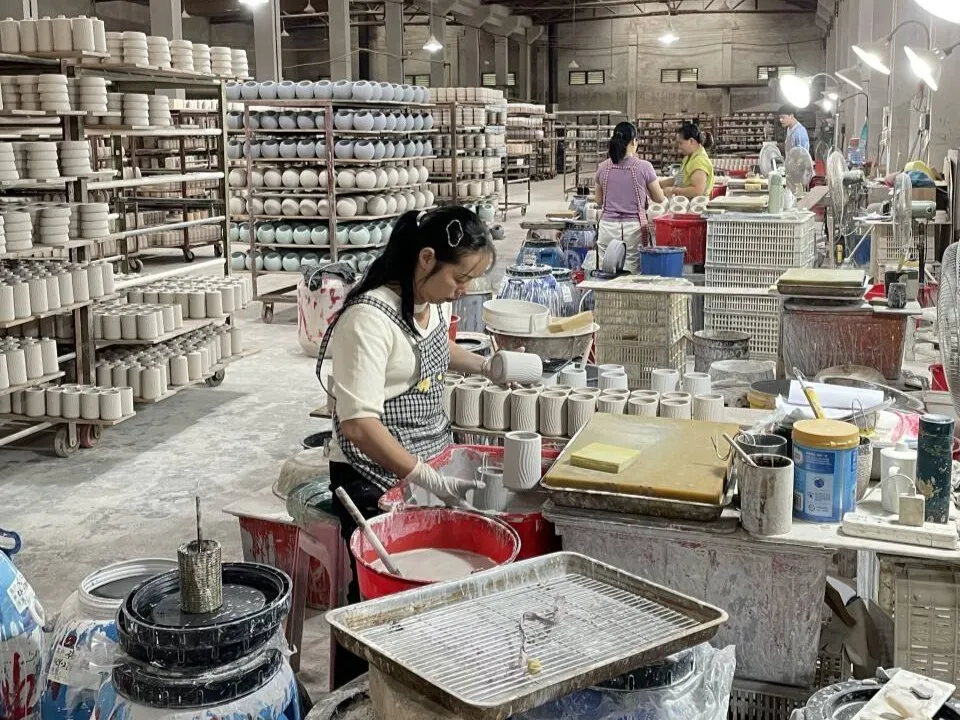
- Production capabilities: Which molding, glazing, decorating and firing processes are available?
- Quality control: How are dimensions, appearance, glaze defects and packaging inspected?
- Customization support: Can the factory develop colors, patterns, logos, molds and coordinated sets?
- Testing support: Can it arrange relevant testing based on intended use and destination?
- Capacity and lead time: Can production meet the required quantity and delivery schedule?
- Export experience: Does the supplier understand international packaging and shipping requirements?
- Communication: Are samples, specifications, and production changes documented clearly?
A dependable bathroom tumbler manufacturer should help buyers balance design, cost, functionality, compliance, packaging, and production feasibility.
الأسئلة الشائعة
Is a bathroom tumbler the same as a toothbrush holder?
Not always. A bathroom tumbler can hold toothbrushes, but it may also be used as a rinsing cup or small vanity organizer. A dedicated toothbrush holder may include divided openings or a more specialized structure.
Can a bathroom tumbler be used for mouth rinsing?
Yes, many bathroom tumblers are used for rinsing after brushing. Buyers should confirm that the product’s glaze, decoration, and testing are suitable for the intended use and destination market.
What is the best material for a bathroom tumbler?
The best material depends on the project. Ceramic offers a premium appearance and broad customization potential, while plastic is lightweight, glass looks modern, and resin supports complex decorative shapes.
Why are ceramic bathroom tumblers popular?
Ceramic tumblers are stable, easy to coordinate with other accessories, and available in many glaze colors, textures, patterns, and finishes. They are particularly suitable for hotels, retailers, distributors, and private-label brands.
How should a ceramic bathroom tumbler be cleaned?
Wash it regularly with warm water, mild detergent, and a soft cloth or sponge. Avoid harsh abrasives that may damage decorative or metallic finishes. Follow the manufacturer’s care instructions for hand-finished products.
Can I order a custom bathroom tumbler with my logo?
Yes. Depending on the design and order quantity, logos may be applied through decals, printing, embossing, debossing, or other decorative techniques.
Can bathroom tumblers be supplied as part of a matching set?
Yes. A tumbler can be coordinated with soap dispensers, soap dishes, toothbrush holders, toilet brush holders, trays, and storage canisters.
What should wholesale buyers confirm before ordering?
Confirm the intended use, dimensions, material, finish, sample approval, MOQ, unit packaging, testing requirements, production lead time, carton specifications, and acceptable quality standards.
Conclusion: Turn a Functional Tumbler into a Marketable Collection
A bathroom tumbler is used for rinsing, holding toothbrushes, organizing personal-care items, and completing coordinated bathroom accessory sets. For B2B buyers, its value also lies in design consistency, private-label branding, retail presentation, and suitability for hotel or residential projects.
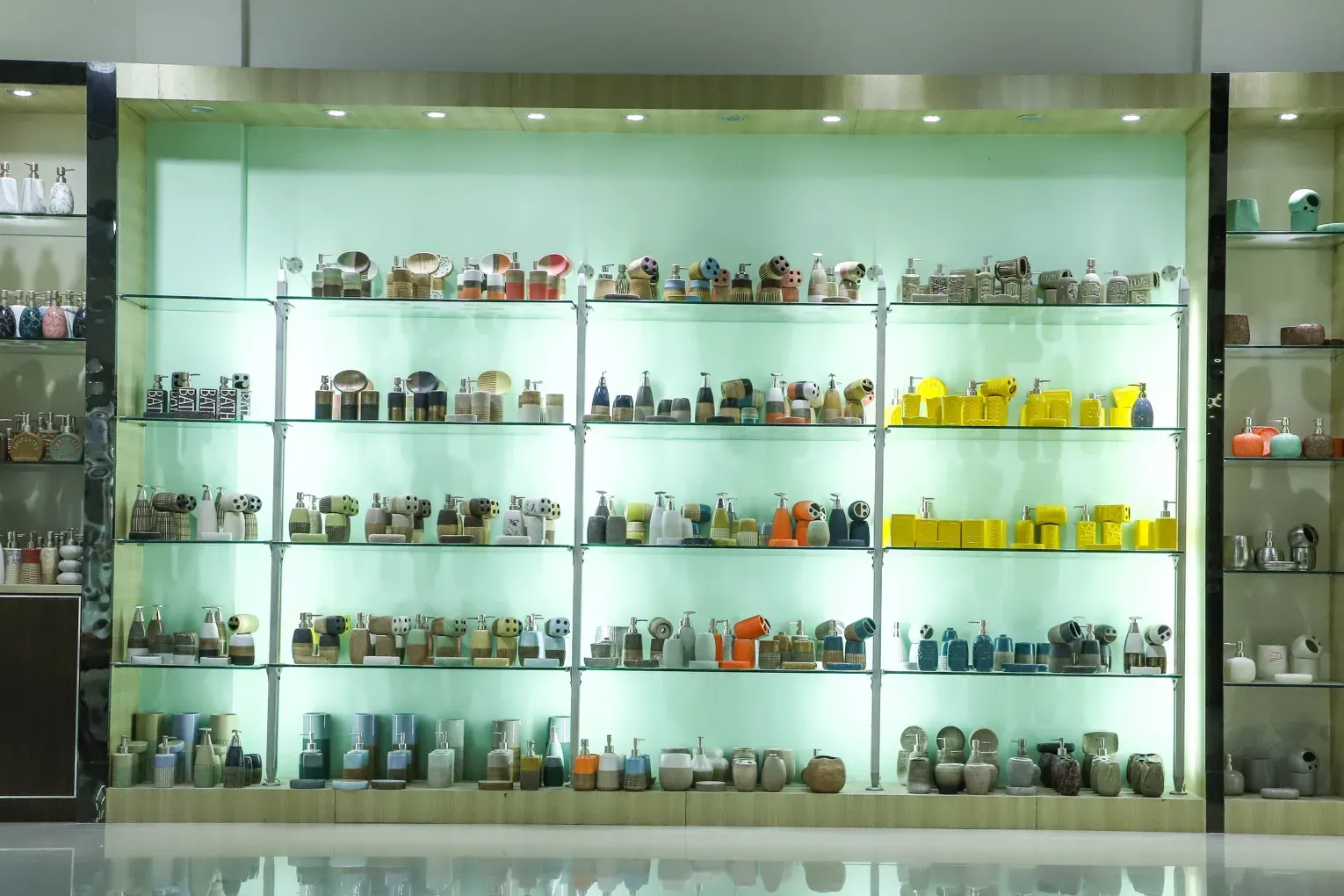
With more than 20 years of experience, سيراميك ييجيا is a trusted ceramic bathroom accessories and bathroom tumbler manufacturer based in Chaozhou, Guangdong—China’s renowned ceramic manufacturing center. Our modern factory covers more than 10,000 square meters and operates slip-casting, roller-forming, high-pressure-forming, and automated kiln production lines.
We specialize in medium- and high-temperature ceramics, including decal-decorated white porcelain, colored-glaze ceramics, and hand-brushed finishes. Supported by OEM/ODM capabilities, strict quality control, and thousands of showroom designs, Yigejia supplies ceramic bathroom accessories to Europe, the United States, the United Kingdom, Australia, South America, and Southeast Asia.
Whether you need an existing design, a custom bathroom tumbler, or a complete wholesale bathroom tumbler collection, welcome to contact Yigejia Ceramics to discuss samples, customization, bulk pricing, and long-term cooperation.